To define open rooms, use cabinets and bookcases strategically as visual dividers that still allow light and flow. Tall, open-front cabinets or wide bookcases create clear zones without closing off spaces, especially if filled with decorative items or storage baskets. Opt for styles that match your decor, and consider adjustable shelving for flexibility. By balancing practicality with style, you can craft a welcoming, organized space—keep exploring to discover how to perfect your layout.
Key Takeaways
- Use tall, open-front cabinets to create visual separation without closing off spaces.
- Display decorative items in cabinets to enhance zone definition and add aesthetic appeal.
- Incorporate bookcases as feature walls to showcase books, photos, or collectibles, adding personality.
- Choose customized sizes and configurations to maximize functionality while maintaining open flow.
- Balance furniture placement to define zones while preserving an airy, inviting atmosphere.
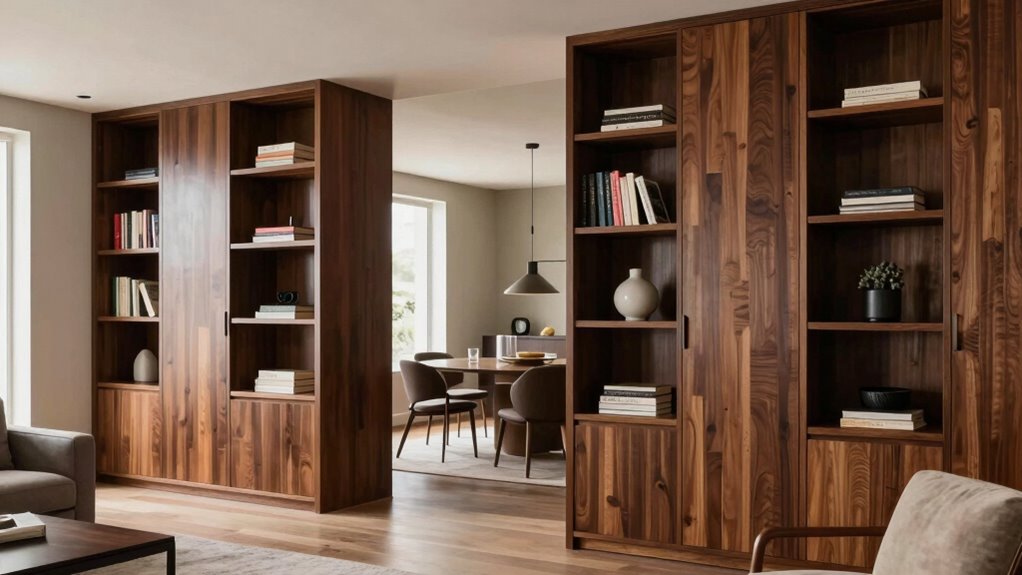
Open floor plans offer a sense of spaciousness, but they can also feel disjointed without proper zoning. To create a clear and inviting layout, you need to define different areas without sacrificing the openness you love. Cabinets and bookcases are perfect tools for this. They act as natural dividers that add structure while maintaining flow. When you choose the right pieces, you can carve out spaces for dining, lounging, or working, all while keeping the room feeling airy. Plus, they provide essential storage solutions that keep clutter out of sight, making your space more functional and organized.
Using cabinets and bookcases creates defined, airy zones that blend style with functionality.
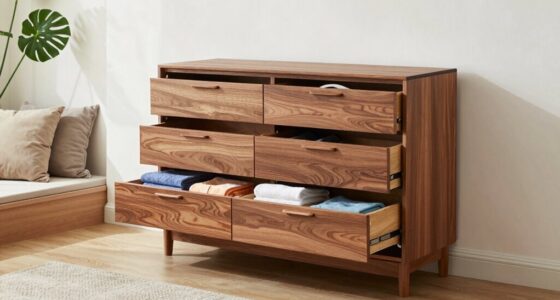
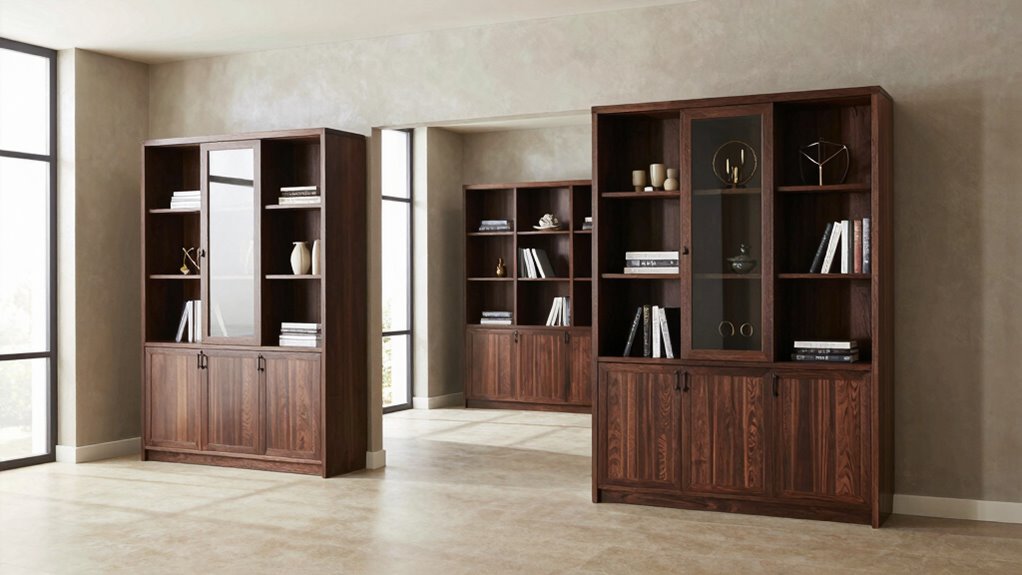
Using cabinets is a smart move to establish boundaries between zones. Tall, open-front cabinets work well for visual separation without closing off a space entirely. You can fill them with decorative accents like vases, artwork, or plants, which add personality and warmth. These accents make your cabinets feel less like storage units and more like design statements. When selecting cabinets, look for styles that complement your overall decor—sleek and modern, rustic, or traditional—so they blend seamlessly into your space. You can also use closed cabinets for hidden storage, helping you keep everyday items out of view and your open room looking tidy. Incorporating storage solutions within your cabinets can further enhance their practicality and help maximize their utility.
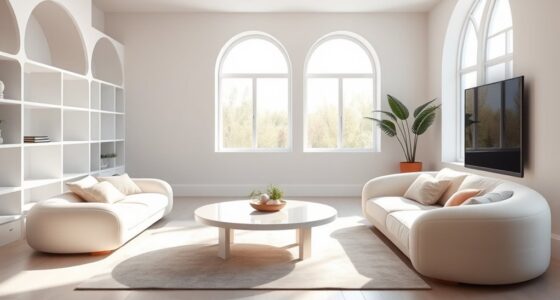
Bookcases serve a similar purpose but also bring an element of personality to your open room. They’re perfect for displaying books, collectibles, or framed photos, turning a simple partition into a feature wall. The open shelves allow light to pass through, preserving the room’s airy feel, while still defining a specific area. To maximize their potential, incorporate decorative accents on the shelves—think colorful books, unique sculptures, or art pieces—creating visual interest and personal touches. You can also mix in baskets or boxes for discreet storage, keeping clutter at bay and enhancing the aesthetic appeal. Additionally, choosing appropriate storage solutions within these units can further boost their functionality.
Both cabinets and bookcases give you the flexibility to customize your space. You can choose pieces that are tall and narrow to maximize floor space or opt for wider units if you want a more substantial division. Incorporate storage solutions within these units—like pull-out drawers or adjustable shelves—to keep everything organized. This way, you’re not just defining zones; you’re also making them functional. Ultimately, the key is balancing practicality with design. With the right cabinets and bookcases, you can create a well-zoned open room that feels welcoming, balanced, and full of personality.
open front tall cabinets for living room
As an affiliate, we earn on qualifying purchases.
As an affiliate, we earn on qualifying purchases.
Frequently Asked Questions
What Materials Are Best for Open Room Cabinets?
For open room cabinets, wood and metal are your best choices, offering both style and durability. Decorating tips suggest opting for sturdy materials that withstand daily use and match your decor. Solid hardwoods like oak or walnut provide longevity and a classic look, while metal frames add a modern touch. Prioritize material durability to guarantee your cabinets remain functional and attractive over time, making them a smart and stylish addition to your open space.
How Do I Choose the Right Size for Cabinets?
To choose the right size for cabinets, consider your space and how you plan to use them for cabinet organization and space optimization. Measure your area accurately, leaving enough room for easy access and airflow. Think about what you’ll store—larger cabinets work well for bulk items, while smaller ones suit decorative or frequently used items. Opt for a size that balances functionality with the room’s overall look.
Can Cabinets Improve Room Acoustics?
Did you know that soft surfaces like cabinets can absorb up to 50% more sound than hard surfaces? Cabinets can definitely improve room acoustics by providing sound absorption and reducing echoes, making your space more comfortable. They act as acoustic enhancers, especially when filled with books or soft materials. So, strategically placing cabinets can create a quieter, more balanced environment, enhancing overall sound quality in your open room.
How to Style Cabinets for a Modern Look?
To style cabinets for a modern look, start with sleek, minimalist designs. Choose cabinets with clean lines and simple shapes. Add decorative hardware in matte black or brushed metal to create a contemporary touch. Guarantee color coordination by matching the cabinet color with your room’s palette, like neutral tones or bold contrasts. Keep accessories minimal, and consider open shelving for display to enhance the modern aesthetic.
What Lighting Options Work Best Inside Cabinets?
Think of interior illumination as the soul of your cabinets—bright enough to showcase your treasures yet subtle enough to create ambiance. LED lighting works best inside cabinets, offering energy-efficient, customizable options. Under-shelf LEDs or strip lights highlight each shelf, while puck lights add focused illumination. These choices help you display your items beautifully and make your space feel warm and inviting, turning your cabinets into functional art pieces.
decorative bookcases for open floor plan
As an affiliate, we earn on qualifying purchases.
As an affiliate, we earn on qualifying purchases.
Conclusion
Using cabinets and bookcases to define open rooms allows you to create distinct spaces without sacrificing flow. You can organize, divide, and decorate—all with a single piece. You can showcase your favorite books and collectibles, you can add storage and style, and you can highlight your personality and your needs. Cabinets and bookcases aren’t just furniture; they’re versatile tools to shape your space, to craft your environment, and to make your open room truly your own.
adjustable shelving units for room dividers
As an affiliate, we earn on qualifying purchases.
As an affiliate, we earn on qualifying purchases.
storage cabinets with display shelves
As an affiliate, we earn on qualifying purchases.
As an affiliate, we earn on qualifying purchases.