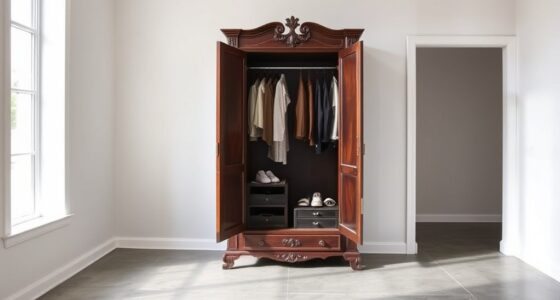
Choosing between custom furniture and store-bought options depends on your priorities. Custom pieces offer personalized design, higher craftsmanship, and a perfect fit but come with longer wait times and higher costs. Store-bought furniture provides immediate availability, affordability, and a wide variety of styles, though it may lack the same durability and custom fit. If you want to explore the pros, cons, and details further, you’ll find valuable insights to help make your decision.
Key Takeaways
- Custom furniture offers personalized design, better fit, and higher craftsmanship but requires longer wait times and higher costs.
- Store-bought furniture provides instant availability, affordability, and diverse styles but may lack perfect fit and durability.
- Custom pieces use high-quality materials for durability, whereas mass-produced options might have inferior materials and construction issues.
- Investing in custom furniture emphasizes quality and longevity, while store-bought options focus on quick, budget-friendly solutions.
- Consider your timeline, budget, and need for personalization when choosing between custom and store-bought furniture.
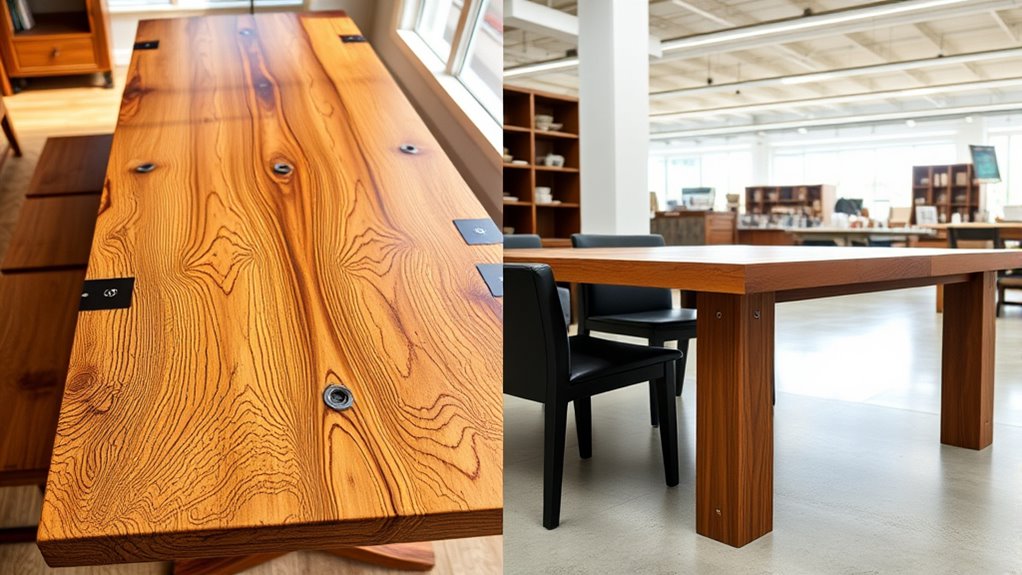
When choosing furniture for your home, you might find yourself weighing the benefits of custom pieces against store-bought options. Custom furniture offers the chance to bring your unique vision to life, often showcasing handmade craftsmanship that highlights attention to detail and quality. These pieces are crafted specifically for you, ensuring every aspect aligns with your style, space, and functional needs. Handmade craftsmanship means skilled artisans spend time perfecting each item, creating furniture that’s not only beautiful but durable and one-of-a-kind. In contrast, store-bought furniture is produced through mass production processes, which prioritize efficiency and cost-effectiveness. Mass-produced items are made in large quantities, often resulting in more affordable prices but less emphasis on individuality or meticulous craftsmanship.
Custom furniture reflects your personal style through handcrafted quality and unique design.
Opting for custom furniture means you’re investing in quality over quantity. Handmade craftsmanship tends to use higher-quality materials and more precise construction techniques, which can translate into furniture that lasts for years. Since these pieces are built to your specifications, you get the perfect fit for your space and a design that reflects your personality. However, custom furniture usually requires a longer wait time, sometimes several weeks or months, depending on the complexity of your order. It also tends to be pricier, as you’re paying for the craftsmanship and personalized service rather than mass-market affordability. On the other hand, store-bought options are readily available, often from big-box retailers, making it easy to furnish your home quickly. These pieces are generally more budget-friendly because mass production keeps costs down, but they can lack the uniqueness and quality found in handmade pieces.
When considering durability, custom furniture often outperforms store-bought options because craftsmanship and material selection are prioritized. Handmade pieces are built with care, reducing the likelihood of quick wear and tear. Conversely, mass-produced furniture might be more susceptible to issues like loose joints or inferior materials, especially if you opt for cheaper options. Your decision might also hinge on how important aesthetics are to you. Custom furniture can be tailored precisely to your taste, offering endless possibilities for design, finish, and size. Store-bought furniture provides convenience and a wide variety of styles, but it may not always fit your space perfectly or match your decor seamlessly. Moreover, focusing on personalized design allows you to create a truly unique living environment that reflects your individual style and needs.
Ultimately, weighing the benefits of handmade craftsmanship against the efficiency of mass production helps you decide whether to invest in a bespoke piece or select a readily available, store-bought option. Both have their merits, but understanding these differences ensures you make an informed choice that aligns with your priorities and lifestyle.
Frequently Asked Questions
How Long Does Custom Furniture Typically Take to Produce?
When you’re wondering how long custom furniture takes to produce, it typically depends on the manufacturing timeline and design flexibility. On average, you can expect it to take anywhere from 6 to 12 weeks, depending on complexity and materials. You have more control over the design details, but remember, intricate designs or special materials may extend the timeline. Planning ahead guarantees your custom piece arrives when you need it.
Are There Eco-Friendly Options for Custom Furniture?
You can definitely find eco-friendly options for custom furniture. By choosing sustainable materials like reclaimed wood or bamboo, you reduce environmental impact. Look for green certifications such as FSC or Greenguard to verify your furniture meets eco standards. Custom pieces often allow you to select eco-conscious materials, making your furniture both stylish and sustainable. So, with some research, you can enjoy personalized furniture that’s good for the planet.
What Warranties or Guarantees Come With Store-Bought Furniture?
When you buy store-bought furniture, you usually get warranty coverage that protects against defects or damages for a certain period. Many brands also offer satisfaction guarantees, allowing returns or exchanges if you’re not happy with your purchase. Be sure to read the warranty policy carefully, as coverage varies by retailer and product. This way, you know what protections you have should issues arise after your purchase.
Can Custom Furniture Be Easily Modified or Repaired Later?
Ironically, while custom furniture might seem like a perfect fit, you’ll find surprisingly good modification flexibility and repairability ease. Unlike store-bought pieces, which often resist changes, custom items are designed with future tweaks in mind. You can easily alter or repair your custom furniture later, making it adaptable to your evolving style or needs. This ongoing versatility ensures your investment remains functional and personalized over time.
How Do Pricing Differences Impact Long-Term Value?
You should consider how pricing differences impact long-term value, especially regarding price fluctuation and investment return. Custom furniture often costs more initially but tends to offer better durability and timeless style, boosting its long-term worth. Store-bought pieces may be cheaper upfront but can wear out faster. Your choice depends on balancing initial costs with potential future savings, ensuring you get the best investment return over time.
Conclusion
Choosing between custom furniture and store-bought is like picking between a tailored suit and a ready-made one. Custom pieces are your unique signature, fitting perfectly into your space like a puzzle piece, while store-bought options are quick, convenient snapshots of style. Think of custom as a personalized garden, blooming with your dreams, and store-bought as a well-organized market stall. Whichever path you choose, make sure it echoes your personality and transforms your home into a reflection of you.