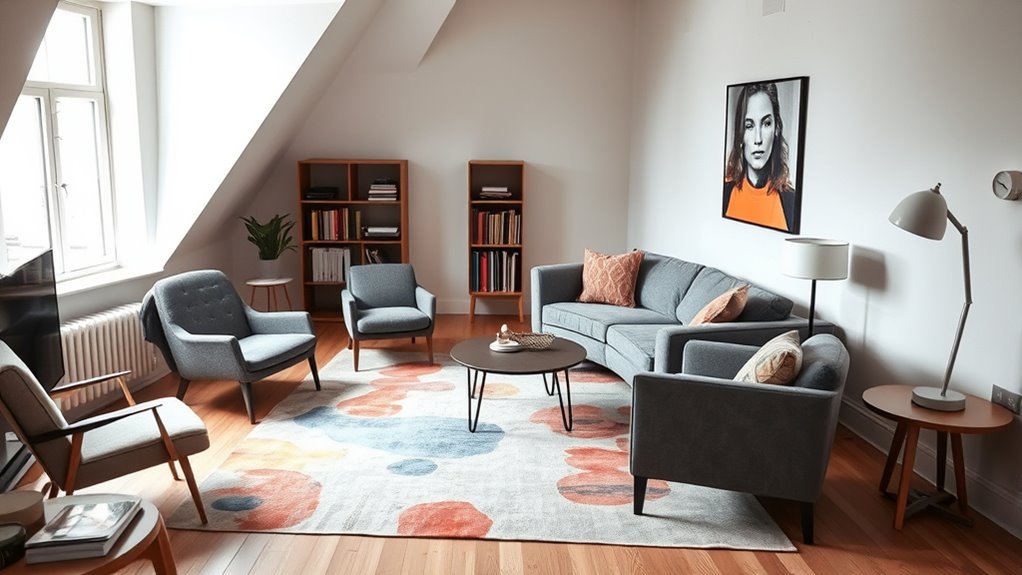

To arrange furniture in an awkwardly shaped living room, start by measuring and mapping out your space to identify focal points and tricky angles. Focus on creating a smooth flow and using multi-purpose, flexible furniture to maximize functionality. Emphasize vertical spaces with tall shelves and good lighting to make the room feel larger. Incorporate creative solutions to fit unique angles and make the space inviting—discover more tips to transform your layout seamlessly.
Key Takeaways
- Measure and sketch the space to identify awkward angles and narrow areas for tailored furniture placement.
- Highlight focal points and arrange seating to naturally face or frame these features for visual balance.
- Use custom or flexible furniture, like modular pieces, to adapt to irregular room shapes effectively.
- Incorporate vertical elements such as tall shelving and artwork to draw attention upward and create a sense of space.
- Follow the room’s lines with rugs and layout seating to complement angles, enhancing cohesion and comfort.
Assess and Map Out Your Space

Before you start rearranging furniture, it is crucial to carefully evaluate and map out your space. Take measurements of the entire room, including corners, doorways, and windows. This helps you understand the room’s proportions and plan effective furniture placement. Sketch a floor plan or use online tools to visualize different arrangements. Focus on optimizing space utilization by considering how each piece fits without overcrowding. Identify any awkward angles or narrow areas that may limit furniture options. This step allows you to see potential problem spots and determine the best way to utilize every inch. By thoroughly assessing your space first, you set a strong foundation for creating a functional, balanced layout that maximizes your living room’s potential. Incorporating vertical storage solutions can further enhance space efficiency and help manage clutter effectively.
Focus on Function and Focal Points

Once you’ve mapped out your space, the next step is to prioritize how you’ll use it and identify your room’s main focal points. This helps guide furniture placement and creates visual harmony. Focus on key areas, like a fireplace or a large window, and arrange seating to highlight these features. Use color coordination to unify your decor, making the space feel cohesive despite its shape. Incorporate decorative accents—such as artwork, rugs, or lighting—to draw attention to focal points and add personality. Consider the flow of movement, ensuring furniture doesn’t block primary sights or pathways. Here’s a quick guide:
| Focal Point | Design Tip |
|---|---|
| Fireplace or TV | Arrange seating to face or frame it naturally |
| Windows or Views | Position furniture to maximize visual access |
| Architectural Features | Use decorative accents to emphasize unique elements |
Additionally, integrating unique and wicked planters can serve as eye-catching decor, enhancing the room’s character and drawing attention to focal points.
Use Flexible and Multi-Purpose Furniture

Have you considered using flexible and multi-purpose furniture to make the most of your awkwardly shaped living room? Modular pieces are perfect because they can be rearranged to fit your space and needs. For example, modular sofas allow you to create different seating arrangements, even in tight or irregular areas. Multi-purpose furniture saves space and adds functionality—think ottomans with hidden storage or coffee tables that double as desks. These pieces help reduce clutter while maximizing utility. By choosing versatile furniture, you can adapt your layout easily, making the room feel more open and organized. Incorporating a growth mindset towards designing your space enables you to experiment with different configurations and find what works best for your unique layout. The flexibility allows you to tailor your space over time, ensuring your living room remains stylish and practical despite its awkward shape.
Emphasize Vertical Space and Lighting

To make your awkwardly shaped living room feel more spacious, focus on emphasizing vertical space and lighting. Use the ceiling height to your advantage by installing tall shelving or vertical artwork that draws the eye upward. Light-colored walls can also enhance the sense of openness, so opt for neutral or soft hues that reflect light and make the room feel larger. Incorporate layered lighting—overhead fixtures, wall sconces, and floor lamps—to brighten dark corners and create depth. Bright, well-lit spaces trick the eye into perceiving a bigger room. Additionally, hanging curtains closer to the ceiling can add to the illusion of height. Maximizing vertical space is essential in small or oddly shaped rooms to create a sense of openness and functionality. By maximizing vertical elements and optimizing lighting, you’ll create a more open, inviting living room despite its awkward shape.
Incorporate Creative Solutions for Unique Angles

Embracing the room’s unique angles can turn potential obstacles into design opportunities. Instead of fighting the shape, use it to highlight your style with creative solutions. For example, hang custom wall art that fits the angles perfectly, making the space feel intentional. Incorporate decorative rugs that follow the room’s lines, visually grounding the furniture and creating a cohesive look. To maximize the space, consider these tips:
- Use multi-functional furniture that fits awkward corners without cluttering.
- Arrange seating to follow the room’s angles, encouraging conversation and flow.
- Integrate statement pieces like custom wall art or bold rugs to draw attention and unify the space.
- Be mindful of emotional distance in the layout, ensuring the arrangement fosters connection and comfort among occupants.
These strategies help you turn unusual angles into a stylish, functional living room.
Frequently Asked Questions
How Can I Make an Awkward Corner More Functional?
You can make an awkward corner more functional by adding corner storage solutions like shelves or cabinets that maximize space. Consider using multifunctional furniture, such as an ottoman with hidden storage or a corner sofa that provides extra seating and storage. These pieces help utilize the space efficiently while keeping your living area organized and cozy. Don’t forget to keep the layout open for easy movement and a balanced look.
What Color Schemes Work Best for Small or Irregular Spaces?
You should consider color schemes that make small or irregular spaces feel more open and cohesive. Opt for monochrome schemes to create a seamless look that visually expands the area. Incorporate color contrast with accents to add depth without overwhelming the space. Light, neutral tones reflect more light and make the room feel larger, while strategic pops of color can highlight focal points, making your awkwardly shaped room feel more balanced and inviting.
How Do I Choose the Right Scale of Furniture?
Choosing the right scale of furniture is like fitting puzzle pieces together smoothly. You want furniture size to match your space’s proportions, ensuring it doesn’t overwhelm or get lost. Focus on scale proportionality; smaller rooms need more petite pieces, while larger spaces can handle bigger, statement furniture. Measure your room carefully, and select pieces that complement the room’s dimensions, creating harmony instead of chaos.
Are There Specific Rugs That Suit Weirdly Shaped Rooms?
You should choose area rugs with bold geometric patterns to add visual interest and define spaces in your oddly shaped room. Look for rugs that complement your room’s shape, such as elongated or irregularly shaped designs, to create harmony. Avoid overly small rugs, which can make spaces feel disjointed. Instead, opt for larger, statement pieces that anchor your furniture and help unify the room’s unique layout.
How Can I Create a Cozy Vibe Despite Space Constraints?
Imagine you have a small, oddly shaped living room. To create a cozy vibe, you can add warm decorative lighting, like fairy lights or a table lamp, to soften the space. Hang wall art to add personality and depth, making the room feel inviting. Keep furniture close to create intimate zones, and use soft textiles. These touches make the space feel warm and welcoming, despite space constraints.
Conclusion
Remember, your living room is a blank canvas waiting for your touch. By carefully evaluating your space, focusing on functionality, and thinking creatively, you can turn awkward angles into opportunities for charm. Like a puzzle piece fitting perfectly, your furniture can transform even the most challenging shapes into a welcoming haven. Embrace the challenge, and let your imagination be the brush that paints your perfect, harmonious living space. Your dream room is just a few clever arrangements away.