
TL;DR

Get furniture and decor delivered free with Prime
- Fast, free delivery on millions of items
- Prime Video, Amazon Music and more included
- Member-only deals all year
A Hunker report describes a DIY bird feeder made from a repurposed glass jar, wooden spoon, wire and jute. The spoon serves as a perch, while the jar holds seed; the report also advises regular cleaning and careful placement near windows.
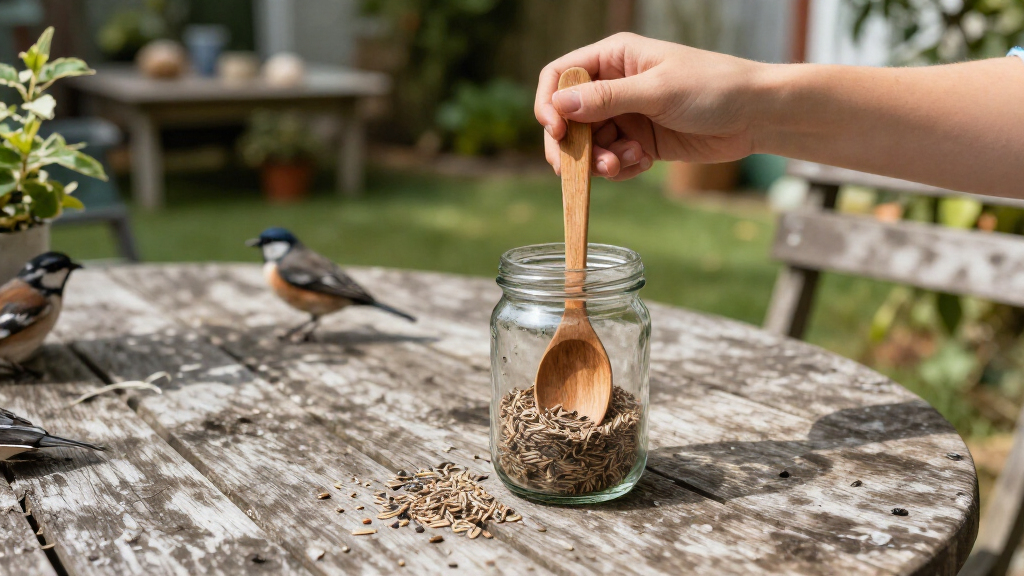
Hunker has published instructions for turning a Mason jar or repurposed glass food jar into a hanging bird feeder, using a wooden spoon as a perch. The DIY project also uses wire and jute to secure and suspend the jar, offering a way to reuse household materials while providing birds with access to seed.
The design positions the jar on its side, with the spoon attached lengthwise and its bowl extending near the jar’s open end. The spoon creates a place for birds to rest while feeding. Garden wire wrapped around the jar’s upper and lower sections helps hold the spoon in place, according to the Hunker instructions.
The listed supplies include a glass jar, wooden spoon, jute, garden wire and bendable aluminum wire, along with two decorative wooden beads, paint suitable for glass, scissors, paint brushes and a glue gun. The guide suggests securing the jute around the garden wire, painting the jar and adding the aluminum wire and beads to make a hanging handle. Once the components are dry and assembled, the jar can be filled with bird seed.
Hunker says the feeder should be cleaned regularly, especially as colder weather brings more birds to it. The report recommends placing it either within about three feet of a window or at least 30 feet away, and keeping native plants and, where possible, trees nearby for cover. It does not provide test results or measurements for how much seed the design holds.
A Reuse Project With Care Needs
The project gives an old food jar a new use and can provide a small, accessible feeding point in a yard or compact outdoor space. Its materials are presented as items a person may already have, although the instructions also call for craft supplies such as wire, paint and a glue gun. The source does not compare the cost with commercially made feeders.
Practical upkeep matters as much as appearance. Hunker advises regular cleaning, particularly during periods of heavier use, and describes the feeder as easy to access and clean. Its placement guidance also draws attention to window-collision risk and the value of nearby plants or trees. The article does not explain a cleaning method or establish that this particular construction has been tested for safety or durability.
Products Worth Considering

Philips Hue Festavia 130-Foot Indoor/Outdoor Smart String Lights, 500 LEDs

Sony BRAVIA 5 85-Inch Mini LED 4K HDR Smart TV (K-85XR50)

Coway Mighty AP-1512HH(W) Air Purifier, White
As an affiliate, we earn on qualifying purchases.
How the Jar Feeder Is Built
The Hunker report presents the project as a simple way to make a rustic, farmhouse-style feeder from a Mason jar or another glass food jar. It credits Anna King of makinghomematters with demonstrating the design. The source says the jar hangs sideways from a hook, allowing birds to reach seed through the open end while using the spoon as a perch.
The build has three main parts: the jar holds the seed, the spoon is fastened along the jar, and wire forms the suspension. The instructions use garden wire to stabilize the spoon and jute to cover or decorate that wire; bendable aluminum wire and beads form the handle. Paint is optional and can be applied in a chosen color or style. The report suggests colorful paint may attract birds, but provides no evidence or testing to support that suggestion.
“The wooden spoon acts as a perch for birds.”
— Hunker report
Durability and Bird Use Unreported
The supplied report does not state how long the jar, adhesives, paint or wire will withstand outdoor exposure, or how securely the finished feeder should be attached to a hook. It also gives no dimensions, seed capacity or construction test results. The recommendation that colorful paint may encourage birds to return is a suggestion in the article, not a reported finding.
The source does not specify which seed types are appropriate for particular local birds, nor does it give detailed cleaning instructions. Its window-distance guidance is included, but the report does not explain how to assess other location-specific risks. Those details may depend on the feeder’s setting and the birds in the area.
Assembly, Placement and Upkeep
Readers following the guide can assemble the jar, spoon and wire components, allow any paint and glue to dry, then add seed and hang the feeder. The Hunker report recommends selecting a location that follows its window-distance guidance and has native plants or nearby trees where possible.
After installation, the next step is routine inspection and cleaning, particularly during colder periods when more birds may visit. The source offers no schedule or follow-up findings on how well the feeder performs, so its durability and use by birds remain unreported.
Key Questions
What materials does the DIY bird feeder use?
The Hunker instructions list a glass jar, wooden spoon, garden wire, jute and bendable aluminum wire, plus two wooden beads, glass-suitable paint and basic craft tools. Bird seed is needed to fill the feeder.
How does the wooden spoon fit into the design?
The spoon is attached lengthwise to the jar, with its bowl extending near the open end. It serves as a perch for birds as they reach the seed.
Where does the report recommend hanging the feeder?
Hunker recommends placing it either about three feet from a window or at least 30 feet away. It also suggests keeping native plants nearby and trees close enough to offer birds cover.
Does the feeder need regular cleaning?
Yes. The report says the feeder should be cleaned regularly, especially in colder weather when more birds may visit. It does not give a specific cleaning schedule or method.
Has the design been tested for durability?
The supplied report gives no durability testing or performance results. It does not say how well the materials hold up outdoors or how much seed the jar can contain.
Source: hunker.com