
TL;DR
A Hunker report describes an Instagram creator’s DIY table runner, made by sewing vintage handkerchiefs together. The project offers a way to reuse thrifted fabric, but the finished runner’s durability depends on the condition of the handkerchiefs and the sewing method.
Instagram creator Chickie Wu made a table runner by sewing together vintage handkerchiefs, according to a report by Hunker. The project presents an alternative to buying a new runner and gives readers a way to reuse thrifted fabric, though the source does not provide testing or durability results for the finished piece.

Get furniture and decor delivered free with Prime
- Fast, free delivery on millions of items
- Prime Video, Amazon Music and more included
- Member-only deals all year
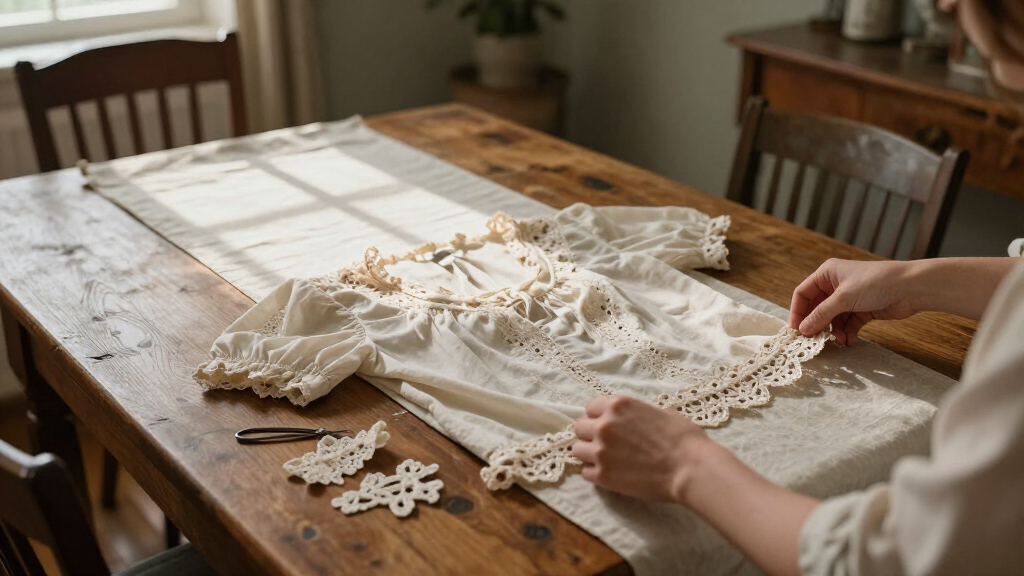
Wu shared the project on social media after finding an assortment of vintage handkerchiefs at a local thrift store, Hunker reported. Joined edge to edge, the small pieces of fabric become a longer centerpiece for a dining table. The final appearance depends on the handkerchiefs selected: matching patterns can create a more coordinated look, while different prints and sizes can produce a deliberately mismatched one.
Hunker’s instructions recommend checking that the fabric is in good enough condition to sew and withstand washing. Before stitching, the report suggests washing older handkerchiefs in cold water with a hand-wash approach and a gentle, phosphate-free detergent, then allowing them to dry. It advises using a sharp needle, which the report says is less likely than a dull one to damage older fabric.
The handkerchiefs can be lined up end to end and connected with a simple invisible seam stitch. Hunker recommends measuring the table or other surface before shopping to estimate how many pieces will be needed. For a more even shape, wider pieces can be hemmed; leaving pieces at their original sizes keeps a more irregular outline. The report also suggests combining vintage and contemporary fabrics, including different patterns and materials.
A Reuse Project With Personal Style
The idea turns a collection of small textiles into a single household item, making it relevant to people who want to reuse fabric rather than buy a finished runner. Because handkerchiefs vary in color, pattern, size and condition, the maker can shape the runner around an existing table or a preferred decor style instead of following a fixed product design.
There are practical limits: the result depends on finding enough suitable pieces and joining them securely. Older or fragile fabric may not tolerate sewing or repeated laundering. Hunker’s instructions offer a starting point, not a guarantee that every vintage handkerchief will be appropriate for the project.
Products Worth Considering

Sonos Era 100 SL Compact Microphone-Free Speaker, Black

Philips Hue Play Floor Lamp, RGBWWIC LED, 53 Inch, Black

eufy Security SoloCam S340 3K Dual-Lens Solar Security Camera
As an affiliate, we earn on qualifying purchases.
From Thrifted Hankies to Table Decor
Hunker frames the project as a homemade alternative to purchasing a table runner. Its report notes that runners can be used with placemats and can add decoration to a table even when it is not being used. The article also mentions that some people prefer runners to formal tablecloths, which may require more laundering and ironing.
The DIY follows a simple assembly approach: source fabric, clean and dry it, then sew the pieces together. Hunker says thrift stores are one option for finding handkerchiefs and points to Etsy sellers as another possible source, including sellers who offer collections of complementary patterns. The report does not identify a specific seller or list prices.
““Make sure that even if they’re vintage, the fabric isn’t too delicate to be sewn together.””
— Hunker’s DIY instructions
Fabric Condition Sets the Limits
The report does not give a full materials list, measurements, photographs or step-by-step demonstration details beyond its written instructions. It also does not say how long Wu’s runner took to make, how much it cost, or how the finished item holds up after repeated use and washing.
It is not clear whether all vintage handkerchiefs are washable or suitable for sewing; age alone does not establish fabric strength or care requirements. The source advises gentle washing and selecting sturdy-enough fabric, but does not provide a method for identifying fiber content or treating stains. Readers may need to assess each piece individually, and delicate or valuable textiles may be better left unaltered.
Measure, Source and Test the Fabric
Anyone considering the project can start by measuring the intended table area and looking for enough handkerchiefs in compatible or intentionally varied patterns. Before committing to the full runner, inspect the fabric and test a small, inconspicuous area if its care requirements are uncertain. The source’s suggested sequence is to wash gently, dry fully, arrange the pieces, and then sew them together with a sharp needle.
No follow-up from Wu or additional results are included in Hunker’s report. The next practical step for a maker is to decide whether to preserve the pieces’ original sizes or hem them for a more uniform outline, then check the seams and fabric after assembly before putting the runner into regular use.
Key Questions
What is the vintage handkerchief table runner DIY?
It is a runner made by sewing multiple vintage handkerchiefs together edge to edge. Hunker reported that Instagram creator Chickie Wu shared her version of the project.
Where can I find handkerchiefs for the project?
Hunker suggests looking at local thrift stores or online marketplaces such as Etsy. The report recommends checking the fabric’s condition before buying.
How should vintage handkerchiefs be prepared?
The report recommends a gentle wash in cold water with hand-wash treatment and a phosphate-free detergent, followed by drying. Care needs can vary by fabric, so the source does not establish that every vintage piece can be washed safely.
Do the handkerchiefs need to be the same size?
No. Hunker says makers can leave different-sized pieces as they are for an irregular look or hem wider handkerchiefs to create a more uniform runner shape.
What is not known about the finished runner?
The report does not provide a cost, completion time or evidence about how well the runner holds up through repeated use and laundering. Its durability will depend on fabric condition and construction.
Source: rss