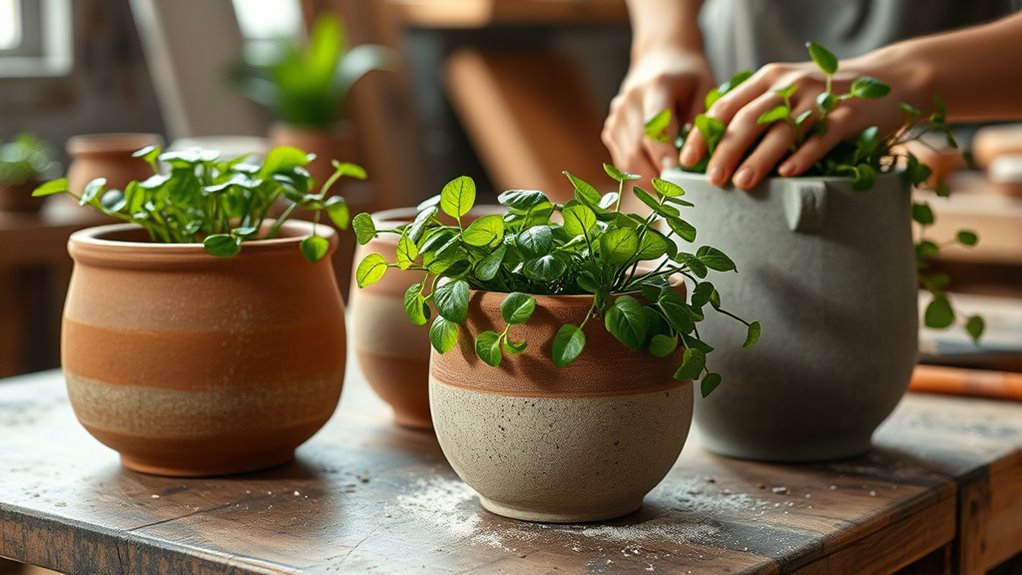

When crafting your own terracotta or concrete planters, you can customize them to suit your indoor space perfectly. With terracotta, shape the clay by hand or on a wheel, then paint or carve for a personal touch. For concrete, mix and mold the material, embedding decorative elements or adding pigments for color. Both materials allow you to create unique, stylish containers that enhance your plants and home decor—stick around to discover more tips and ideas for your DIY projects.
Key Takeaways
- Choose suitable materials like clay for terracotta or molds for concrete, considering weight and porosity.
- Shape the planters by hand or using molds, then dry thoroughly before firing or curing.
- Personalize with painting, carving, glazing, or embedding decorative elements during or after curing.
- Ensure proper drainage by adding holes, especially for terracotta, to prevent overwatering.
- Match your planter material to your plant’s watering needs and interior decor style for optimal results.

Creating your own planters for indoor plants is a rewarding way to personalize your space and guarantee your greenery thrives. When you craft your own terracotta or concrete planters, you not only add a unique touch to your home but also take control of plant care and the overall aesthetic. These materials offer a natural, rustic charm that can complement any interior style, serving as decorative accents that elevate your room’s visual appeal. Building your own planters allows you to choose the size, shape, and finish, ensuring each piece fits perfectly with your decor and meets your specific plant needs.
Starting with terracotta is ideal if you want a lightweight, breathable planter. Its porous nature promotes healthy plant roots by allowing excess moisture to evaporate, reducing the risk of overwatering. To craft a terracotta planter, you’ll need a mold, clay, and some basic tools. You can shape the clay by hand or use a wheel, then let it dry thoroughly before firing it in a kiln. Once hardened, you can personalize your planter by adding decorative accents—painting, carving, or glazing—to match your interior style. When it’s time to plant, remember that terracotta’s porosity means your plants may need more frequent watering, so adjusting your plant care routine accordingly is key. Additionally, understanding the contrast ratio of your planter’s surface can help you select the right finishing technique to enhance its visual appeal.
Starting with terracotta is perfect for lightweight, breathable planters that promote healthy roots.
Concrete planters bring a modern, industrial vibe to your indoor garden. They’re durable, heavy, and versatile, offering a sturdy base that can be customized with various textures and finishes. To make a concrete planter, you’ll need a mold, concrete mix, water, and some basic tools. Mix the concrete according to package instructions, pour it into your mold, and smooth the surface. For decorative accents, you can embed stones, glass, or metal pieces into the concrete while it’s still wet. Additionally, you might add pigments to create colored concrete or carve patterns once it’s set. When caring for plants in concrete planters, keep in mind they tend to retain heat, so avoid placing them in direct sunlight for extended periods, and monitor watering to prevent root rot. Both terracotta and concrete planters allow for a high degree of customization, giving you the opportunity to incorporate decorative accents that reflect your personality and style. Whether you choose the earthy warmth of terracotta or the sleek modernity of concrete, crafting your own planters ensures your indoor plants are not just healthy but also beautiful focal points in your home. With a little effort, you can create functional, eye-catching pieces that enhance your plant care routine and add unique decorative accents to your living space.
Frequently Asked Questions
Can I Customize the Color of My Terracotta or Concrete Planters?
Yes, you can personalize the color of your terracotta or concrete planters. With color customization, you can choose from various finish options like paint, stain, or sealers to match your decor. For terracotta, use outdoor or specialized paints to guarantee durability. Concrete planters can be painted or stained with specific finishes designed for concrete surfaces, giving you the flexibility to create unique, personalized indoor plant containers.
What Tools Are Best for Shaping Concrete Planters at Home?
You should use basic molding techniques like silicone molds or DIY forms to shape your concrete planters at home. For detailed shaping, carve with tools like clay sculpting instruments or even a rotary tool. After your planter sets, apply polishing methods such as sanding with fine-grit sandpaper or polishing pads to smooth the surface. These tools and techniques help you achieve professional-looking, customized concrete planters easily.
How Do I Prevent Cracking in Homemade Concrete Planters?
Cracking in your homemade concrete planters? It’s almost poetic—like they’re cracking under pressure, right? To prevent this, focus on humidity control and proper mixing. Keep the humidity steady during curing, and mix your concrete thoroughly to avoid weak spots. Also, avoid rapid drying by covering your planters with plastic. These simple steps help guarantee your planters stay intact, not cracked and broken, just like your patience.
Are There Eco-Friendly Alternatives to Traditional Concrete or Terracotta?
You can explore eco-friendly alternatives like biodegradable pots made from natural fibers or recycled materials such as reclaimed wood, bamboo, or glass. These options reduce environmental impact and are safe for indoor plants. By choosing biodegradable or recycled planters, you support sustainability while still providing a stylish home for your plants. They’re often lightweight, durable, and break down naturally, making them an excellent eco-conscious choice for your indoor gardening needs.
How Do I Seal Indoor Planters to Improve Longevity?
To improve your indoor planters’ longevity, you should use effective sealing techniques. Start by cleaning the surface thoroughly, then apply a waterproof coating or sealant designed for porous materials like terracotta or concrete. Make sure to evenly coat all interior and exterior surfaces, allowing proper drying time. This creates a protective barrier that prevents water absorption and damage, helping your planters last longer and stay looking great.
Conclusion
Now that you’ve crafted your own terracotta or concrete planters, you’re planting the seeds for a lush indoor oasis. Your personalized pots are like blank canvases waiting to burst into life, turning your space into a vibrant garden sanctuary. With each plant thriving in your handmade creation, you’ll see your home bloom with beauty and purpose. Remember, your craftsmanship is the root that nurtures growth—watch your indoor jungle flourish and flourish.