To create pattern-drenched rooms with coordinated textiles, focus on mixing bold patterns like florals, geometrics, and polka dots while balancing them with softer textures and subdued fabrics. Use strategic color mixing—combining contrasting and complementary hues—to guide the eye and establish flow. Layer different textures such as velvets, linens, and knits to add depth without overwhelming the space. Keep your pattern and texture choices harmonious, and your vibrant room will feel lively yet cohesive. Discover how to perfect this balance.
Key Takeaways
- Use bold, varied patterns in textiles to energize and unify the space while maintaining visual balance.
- Mix different colors strategically, combining contrasting and complementary hues to create movement and harmony.
- Combine large-scale floral patterns with smaller geometric prints for dynamic pattern mixing without overwhelming the room.
- Incorporate diverse textures such as velvets, linens, and knits to add depth and tactile interest to the textile palette.
- Harmonize bold patterns with softer, understated textiles to craft a layered, inviting, and cohesive environment.
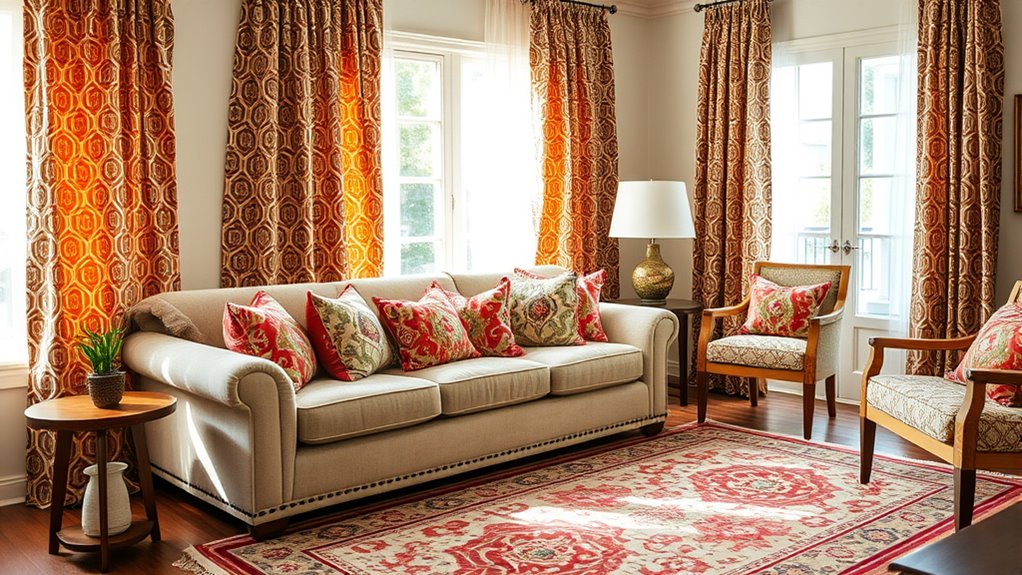
Transforming a room into a vibrant, cohesive space begins with coordinated textiles that embrace bold patterns. The key to achieving this lively yet harmonious environment lies in your ability to master color mixing and fabric textures. When selecting textiles, think about how different hues interact and how their combinations can energize or unify your space. You want to create a visual rhythm, so consider mixing contrasting and complementary colors strategically. For example, pairing deep navy with crisp whites, or combining warm mustard with cool teals, allows your textiles to dance with each other without clashing. Use color mixing intentionally to guide the eye through the room, establishing focal points and flow. Don’t shy away from mixing patterns, but do so with an eye for balance—pair large-scale florals with smaller geometric prints, or stripes with polka dots. This interplay keeps the room dynamic without feeling chaotic.
Equally important is the tactile experience offered by fabric textures. Incorporate a variety of textures to add depth and interest. Smooth satins, plush velvets, rougher linen, and soft knits each bring a distinct feel and visual weight, helping to layer your textiles seamlessly. Textures can soften bold patterns or give them more structure, depending on your goal. For instance, a velvet cushion with a busy floral pattern can add richness, while a sleek silk drape in a bold hue can elevate the overall sophistication of the space. Mixing textures also prevents your room from looking flat—by combining matte and shiny finishes, you introduce subtle contrasts that make each pattern pop. Feel free to experiment with different textile weights and weaves; heavier fabrics ground the space, while lighter ones add airiness. Incorporating fabric textures thoughtfully enhances visual interest and tactile engagement.
When coordinating textiles, consider how fabric textures and color mixing work together. For instance, if you’ve chosen a vibrant geometric wallpaper, balance it with softer, more subdued textiles in plush or matte finishes. Conversely, if your textiles feature bold patterns, opt for more understated textures to keep the room from feeling overwhelming. The goal is to create a layered, textured tapestry that invites touch and visual engagement. Keep in mind that patterns and textures should complement each other, not compete. By thoughtfully blending color mixing techniques with diverse fabric textures, you craft a room that’s not just visually stimulating but also comfortably inviting. This balance between bold patterns, harmonious colors, and varied textures is what transforms your space into a pattern-drenched haven that feels lively, curated, and uniquely yours.

HPUK Throw Pillow Covers 18×18, Set of 4, Blue Textured Couch Pillow Covers
- Room Refresh in Minutes: Add a blue accent to any space
- Set of 4 Covers: Includes four 18×18 inch pillow covers
- Variety of Designs: Two patterned and two solid covers
As an affiliate, we earn on qualifying purchases.
As an affiliate, we earn on qualifying purchases.
Frequently Asked Questions
How Can I Incorporate Pattern-Drenched Design on a Budget?
You can incorporate pattern-drenched design on a budget by using DIY projects and affordable wall treatments. Opt for removable wallpaper or stencils to create bold patterns without costly renovations. Mix and match textiles like throw pillows, curtains, and rugs in coordinating patterns for a layered look. Thrift stores are great for finding unique fabrics and accessories. With some creativity and effort, you’ll achieve a vibrant, coordinated space without breaking the bank.
What Fabric Types Work Best for Coordinated Textiles?
You should choose fabric types with fiber blends like cotton-linen or polyester blends, as they offer great fabric durability and are easy to coordinate. These blends resist wear, fading, and stains, making them perfect for creating consistent patterns across your textiles. Opt for durable fabrics that hold their shape and color, ensuring your coordinated look stays vibrant and fresh over time without breaking the bank.
How Do I Balance Bold Patterns With Neutral Elements?
Think of your room as a symphony, where bold patterns are the soloists and neutral elements are the steady rhythm. To balance them, choose patterns with varied scales—large for impact, small for subtlety—and guarantee their colors harmonize. This way, the bold patterns dance without overwhelming, while the neutrals provide a calming backdrop. Together, they create a room that’s lively yet balanced, inviting you to relax and enjoy.
Can Patterned Textiles Be Used in Small or Dark Rooms?
Yes, patterned textiles work well in small or dark rooms. To enhance light and boost visual impact, choose lighter patterns or those with reflective elements. Use these textiles on accent walls, cushions, or curtains to add depth without overwhelming the space. Incorporate mirrors or strategic lighting to further brighten the room. This approach creates a lively, inviting atmosphere while maintaining a cozy feel.
What Are Tips for Mixing Multiple Patterns Successfully?
Imagine you’re a Renaissance painter blending bold colors—pattern mixing works similarly. To succeed, start with a unifying color palette and vary pattern scales. Mix small with large prints for visual balance, and keep patterns within the same style or theme. Don’t overdo it; allow some breathing space so each pattern stands out. Trust your eye, and you’ll craft a lively, harmonious space that feels intentional and stylish.

Terracotta Boho Blackout Curtains for Bedroom, Bohemian Pom Pom Double Layer Patterned Drapes, Rust Burnt Orange Sheer Overlay Western Curtains for Living Room 84 Inches Long 2 Panels Set
- Elegant Pom-Pom Pattern: Adds textured charm to your space
- Double Layer Design: Sheer overlay with privacy backing
- Light & Heat Blocking: Provides 70-80% blackout and insulation
As an affiliate, we earn on qualifying purchases.
As an affiliate, we earn on qualifying purchases.
Conclusion
Think of your room as a canvas awaiting a master painter’s touch. By thoughtfully coordinating textiles, you craft a tapestry that tells your unique story. Each pattern becomes a brushstroke, adding depth and character, transforming your space into a vivid garden of visual delight. Remember, you hold the palette—your choices breathe life into the room, turning it into a vibrant mosaic where every detail sings in harmony, inviting you to live amidst your personal masterpiece.

Chezmoi Collection Amara 3-Piece Boho Stripe Full Comforter Set – Floral Colorful Bohemian Printed Microfiber Lightweight Bedding Set
- Set Includes: Comforter and 2 shams
- Full Size Dimensions: Comforter 86×88 inches
- Design Style: Boho floral and geometric patterns
As an affiliate, we earn on qualifying purchases.
As an affiliate, we earn on qualifying purchases.

MIULEE Velvet Throw Pillow Covers 18×18 Inch Pack of 2 Dark Blue
- Luxurious Velvet Fabric: Soft plush texture on both sides
- Versatile Home Decor: Suitable for various rooms and occasions
- Invisible Zipper Design: Sleek, hidden zipper for easy use
As an affiliate, we earn on qualifying purchases.
As an affiliate, we earn on qualifying purchases.