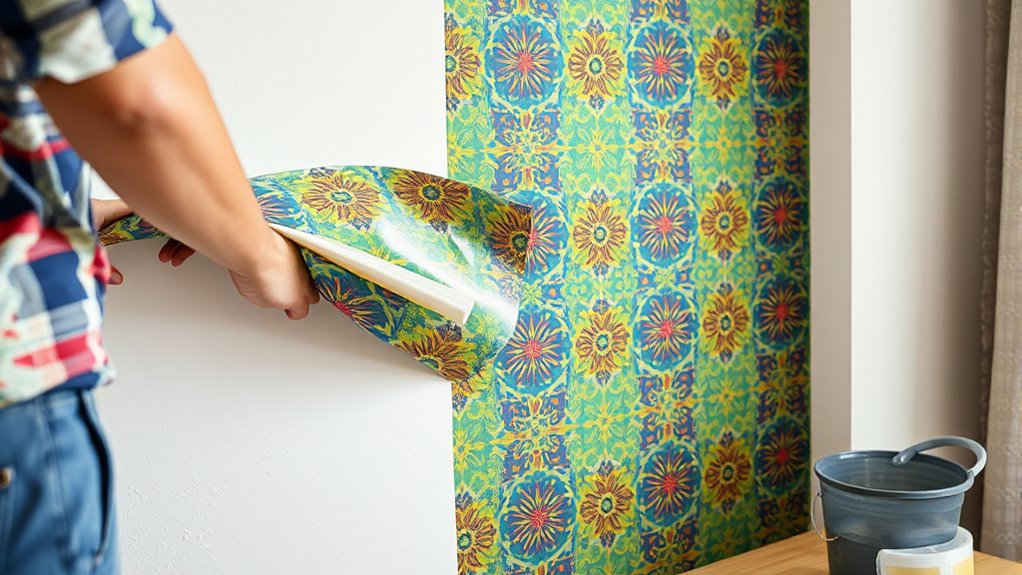

To install peel-and-stick wallpaper without a mess, start by prepping your workspace—clear furniture, clean the walls, and gather tools like a smoothing tool, level, and measuring tape. Measure carefully and plan pattern placement before peeling. Work slowly, smoothing each strip from the center outward to avoid air bubbles. Use precise cuts at edges and corners, and keep everything organized. Stick with these steps, and you’ll master a clean, professional look every time.
Key Takeaways
- Prepare a clean, smooth surface by thoroughly cleaning walls and removing dust or grease before application.
- Measure and cut wallpaper strips with extra length, aligning patterns carefully for seamless results.
- Peel and apply the backing gradually, smoothing from the center outward to prevent air bubbles and wrinkles.
- Use a squeegee or smoothing tool to press firmly and remove air pockets during application.
- Trim excess material neatly along edges and clean any adhesive residue immediately for a professional finish.
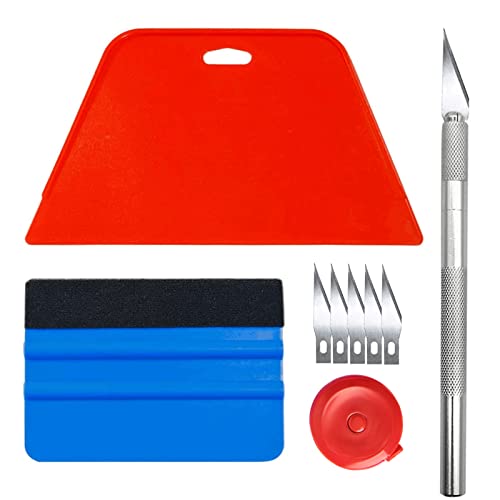
Art3d Smoothing Tool Kit for Applying Peel and Stick Wallpaper, Vinyl Backsplash Tile
- Complete tool set: Includes knife, smoothers, and measuring tape
- Bubble and crease removal: Red and blue squeegees smooth surfaces effectively
- Versatile application: Suitable for wallpaper, backsplash, and more
As an affiliate, we earn on qualifying purchases.
As an affiliate, we earn on qualifying purchases.
Preparing Your Workspace and Walls
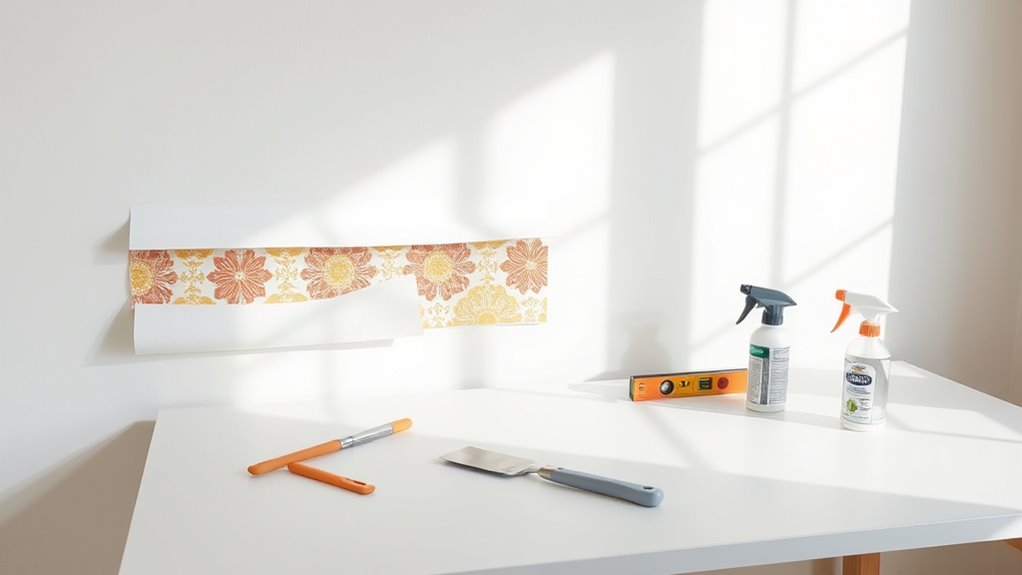
Before you begin applying peel-and-stick wallpaper, it’s essential to prepare your workspace and walls properly. Clear the area of furniture and cover the floor with drop cloths to catch any mess. Gather your tools, like a level, measuring tape, and smoothing tools, so everything’s within reach. Pay close attention to your walls’ textures; smooth surfaces like drywall or painted walls make application easier, while textured walls may require extra prep or primer. Clean the walls thoroughly to remove dust, dirt, and grease, ensuring the adhesive sticks well. Check wallpaper patterns for any repeat or alignment issues, and plan your starting point accordingly. Proper preparation minimizes mistakes and helps your wallpaper adhere smoothly for a flawless finish. Additionally, understanding your wall surface can help you determine the best application techniques and adhesives for a successful project.

Wallpaper Tools Kit Wallpaper Smoothing Tool Vinyl Tool Wallpaper Squeegee Seam Roller Tape Measure,snitty Vinyl Cutter and Craft Knife with 5 Replacement Blades for Vinyl Wallpaper
- Professional Bubble-Free Finish: Complete 6-piece wallpaper application kit
- Versatile Tools for Various Surfaces: Includes squeegees, seam roller, and craft knife
- Ideal for DIY Peel & Stick Projects: Perfect for temporary wallpaper and lining
As an affiliate, we earn on qualifying purchases.
As an affiliate, we earn on qualifying purchases.
Choosing the Right Peel-and-Stick Wallpaper
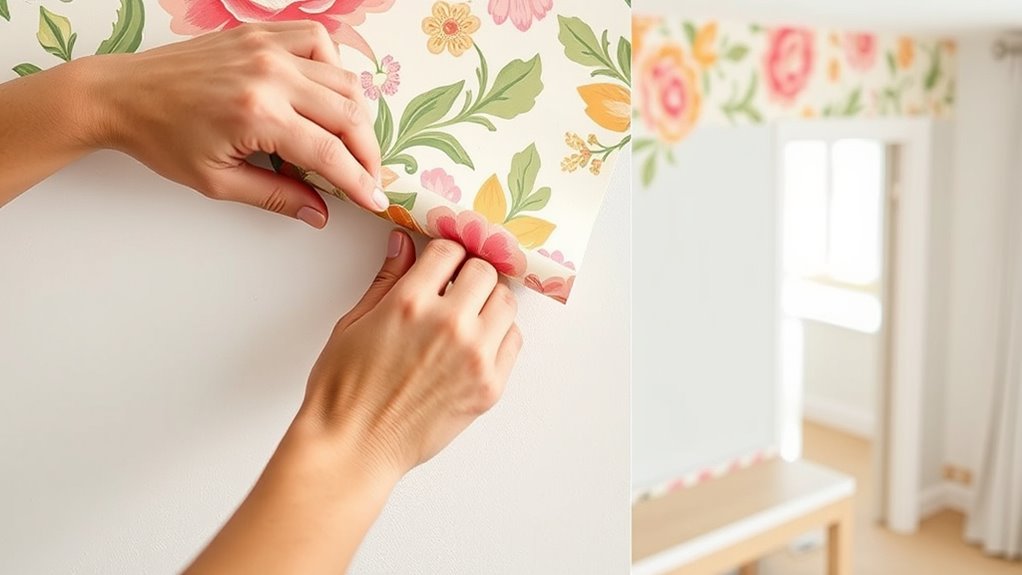
Choosing the right peel-and-stick wallpaper starts with understanding your space and style preferences. Consider the room’s size, lighting, and existing decor to select a pattern that complements your environment. Pattern matching is essential—look for wallpapers with repeat designs that align easily, reducing waste and ensuring a seamless look. When it comes to color coordination, pick hues that enhance your space’s mood and coordinate with furniture and accessories. If your room is small, opt for lighter shades and subtle patterns to create an open feel. For larger spaces or bold styles, vibrant colors and striking patterns work well. Take your time to explore options that fit your aesthetic and practical needs, ensuring your choice elevates your space without overwhelming it. Additionally, paying attention to decor style can help you select a wallpaper that harmonizes with your overall farmhouse bedroom ambiance.
Art3d Smoothing Tool Kit for Applying Peel and Stick Wallpaper, Vinyl Backsplash Tile
- Complete tool set: Includes knife, smoothers, and measuring tape
- Bubble and crease removal: Red and blue squeegees smooth surfaces effectively
- Versatile application: Suitable for wallpaper, backsplash, and more
As an affiliate, we earn on qualifying purchases.
As an affiliate, we earn on qualifying purchases.
Gathering Essential Tools and Supplies
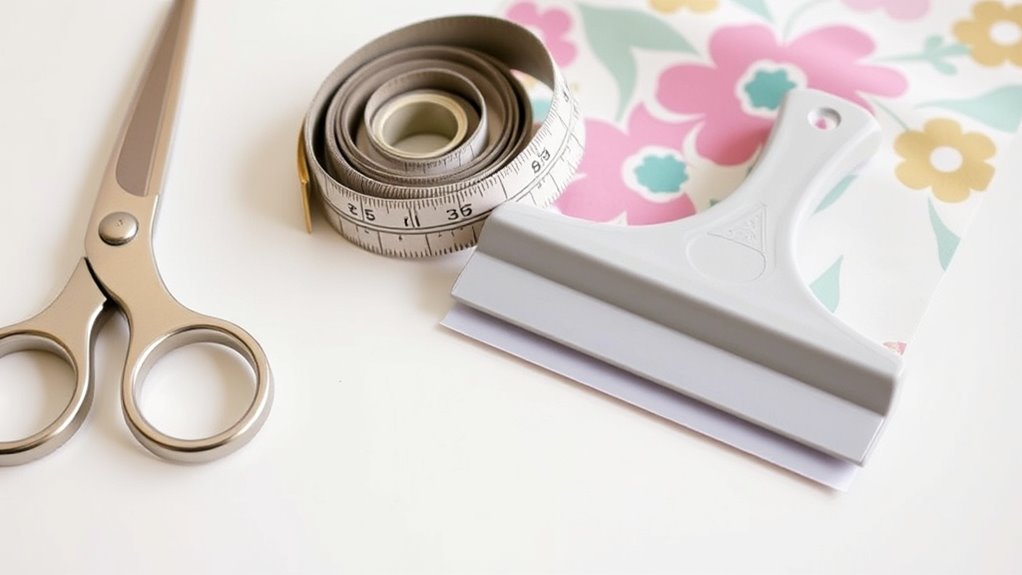
To guarantee a smooth installation process, gathering all the necessary tools and supplies beforehand is vital. You’ll need items like a smoothing tool, scissors, and a level for precise pattern matching. Additionally, selecting the right adhesive type is essential—some wallpapers have peel-and-stick backing, while others may require a compatible adhesive. Having these supplies ready reduces mistakes and messes. Understanding the essential oils that promote a calm environment can also help you stay relaxed during the process.

Savogran 10621 Trisodium Phosphate (TSP) 1LB (16oz)
- Heavy-Duty Multi-Purpose Cleaner: Effective for tough cleaning jobs
- Used by Industry Professionals: Trusted for painting prep and cleaning
- Prepares Surfaces for Repainting: Removes stains and dirt for smooth paint
As an affiliate, we earn on qualifying purchases.
As an affiliate, we earn on qualifying purchases.
Measuring and Planning Your Pattern Placement
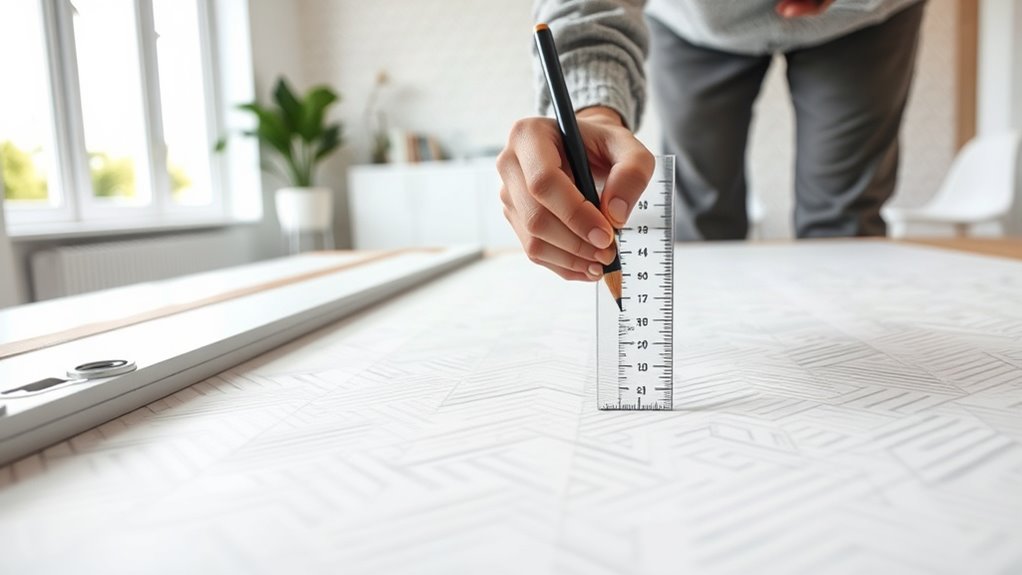
Have you measured your wall and wallpaper pattern carefully? Accurate measurement is essential to guarantee proper pattern alignment and avoid wasted material. Start by measuring the width and height of your wall, noting any outlets or trim that could affect placement. When planning your pattern placement, consider how the design will match across strips, especially if the pattern is directional. Use a tape measure and level to mark straight guidelines, ensuring measurement accuracy. If your wallpaper has a repeating pattern, determine the pattern repeat length and plan your cuts accordingly, so the pattern aligns seamlessly. Taking your time during this step prevents mismatches and helps achieve a professional look. Proper measurement and thoughtful planning are the keys to a smooth, satisfying installation. Incorporating industry best practices can further enhance your results and ensure a polished finish.
Cleaning and Smoothing the Surface
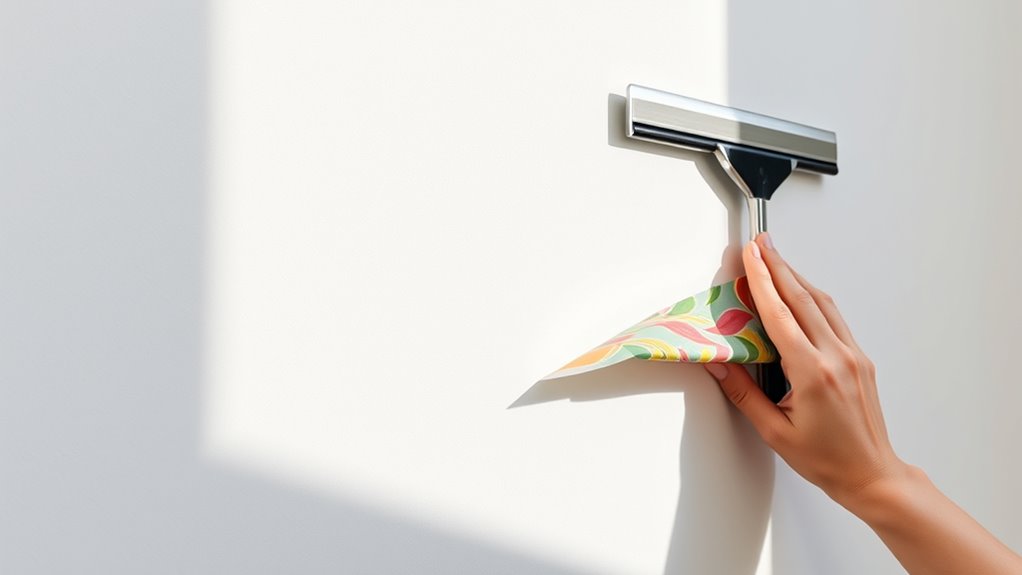
Before applying the wallpaper, you need to prepare the surface thoroughly to guarantee it’s clean and smooth. Any dust, dirt, or bumps can cause bubbles or uneven placement. Use a smoothing tool to press out air bubbles and create a flat, even surface for better adhesion. Incorporating surface preparation techniques can further improve the results and ensure a seamless finish.
Prepare the Surface Thoroughly
Ensuring your wall surface is clean and smooth is vital for a successful peel-and-stick wallpaper application. Proper surface preparation guarantees better adhesion and reduces bubbles or wrinkles. Before applying, clean the wall thoroughly to remove dust, grease, and dirt. Conduct an adhesion testing by sticking a small piece of wallpaper to ensure it bonds well. If it doesn’t adhere properly, address issues like unevenness or residual paint. Use the table below to check essential surface prep steps:
| Step | Purpose |
|---|---|
| Clean thoroughly | Remove dust and grease |
| Smooth out imperfections | Ensure flat surface |
| Test adhesion | Confirm wallpaper sticks well |
| Repair as needed | Fix bumps or uneven spots |
Taking these steps ensures a flawless finish with your peel-and-stick wallpaper. Additionally, verifying the surface’s compatibility with adhesive materials can help prevent future issues.
Use a Smoothing Tool
Using a smoothing tool is essential for achieving a flawless finish with your peel-and-stick wallpaper. The smoothing technique helps eliminate air bubbles and wrinkles, ensuring a clean look. When selecting a tool, choose a plastic squeegee or a wallpaper smoothing tool designed for delicate surfaces. Start at the center of your wallpaper panel and gently press outward, working from the middle to the edges. Apply firm, even pressure to push out air and ensure good adhesion. Be careful not to tear or crease the material. Consistent use of your smoothing tool will help you achieve a smooth, professional appearance. Remember, proper tool selection and technique are key to avoiding bubbles and wrinkles, making your wallpaper look seamless and polished. Understanding the key components of sound design can also help you create a more visually appealing space that complements your wallpaper.
Cutting and Trimming the Wallpaper Panels
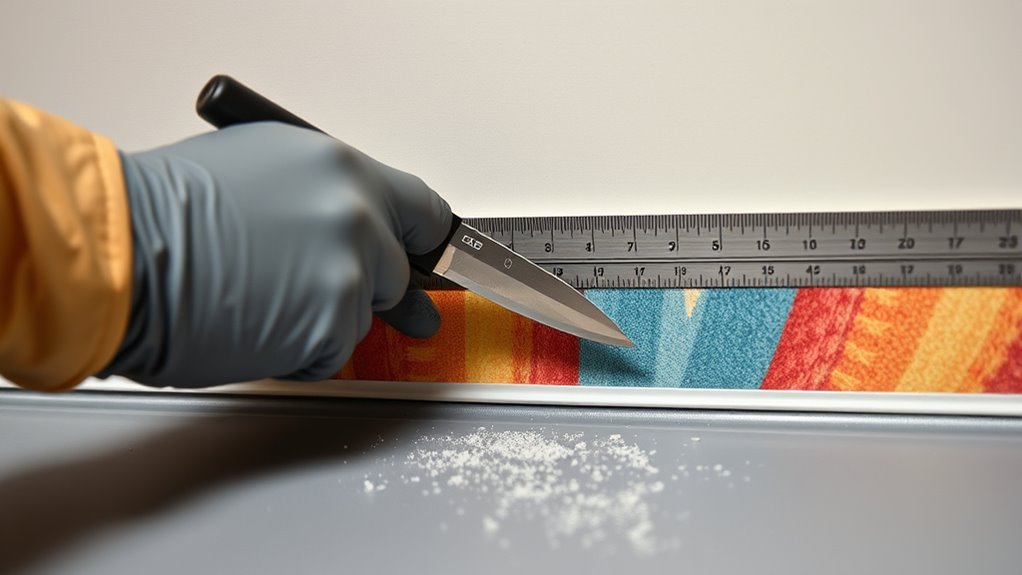
To guarantee your wallpaper fits perfectly, you’ll need to carefully cut and trim each panel. Use sharp scissors or a utility knife for precision cutting, ensuring clean edges. Employ effective trimming techniques to remove excess material and match wall measurements accurately. Here’s a quick guide to help:
| Step | Tip |
|---|---|
| Measuring | Double-check dimensions before cutting |
| Cutting | Use a straight edge for clean lines |
| Trimming | Remove small overlaps for a perfect fit |
Focus on steady hands and precise measurements to avoid mistakes. Proper trimming not only enhances appearance but also ensures the adhesive sticks evenly. Taking your time with precision cutting and trimming techniques will make the entire wallpaper installation smoother and more professional-looking.
Applying the Wallpaper With Precision
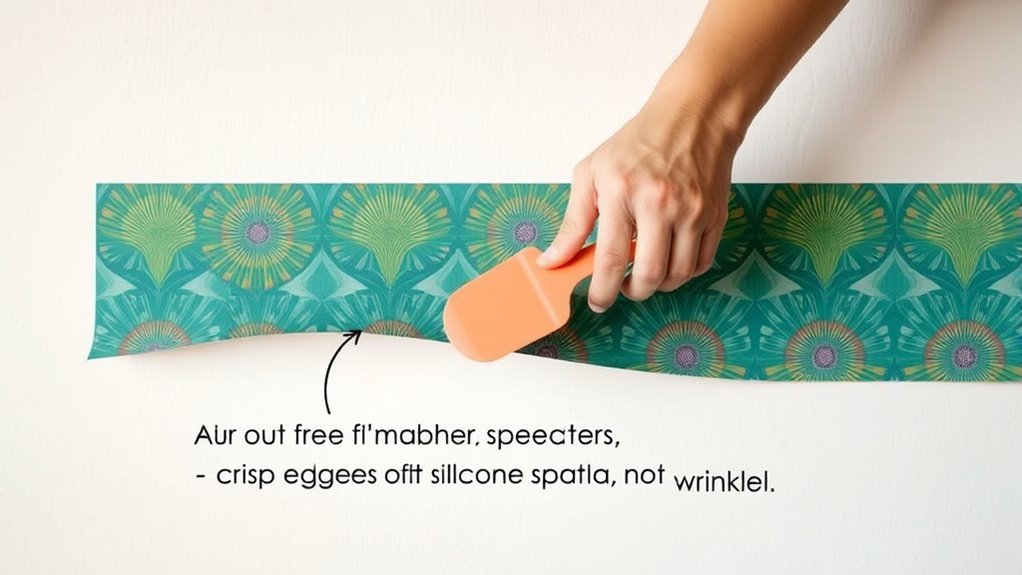
Once your wallpaper panels are cut and trimmed to fit perfectly, it’s time to carefully apply them to the wall. Start by peeling back a small section of the backing, then align the edge with your wall’s corner or guideline. Focus on wall pattern alignment, making sure the patterns match seamlessly across panels. As you press the wallpaper onto the wall, maintain a steady hand to ensure even adhesion. Check that the adhesive consistency is even across the panel—if it’s too thick or thin, it can cause misalignment or bubbles. Work slowly, smoothing the wallpaper from the center outward, keeping the pattern aligned and consistent. Precision during this step helps prevent wrinkles, ensuring a smooth, professional-looking finish. Regularly inspecting your tools and workspace can also help maintain application quality and achieve optimal results.
Eliminating Air Bubbles and Wrinkles
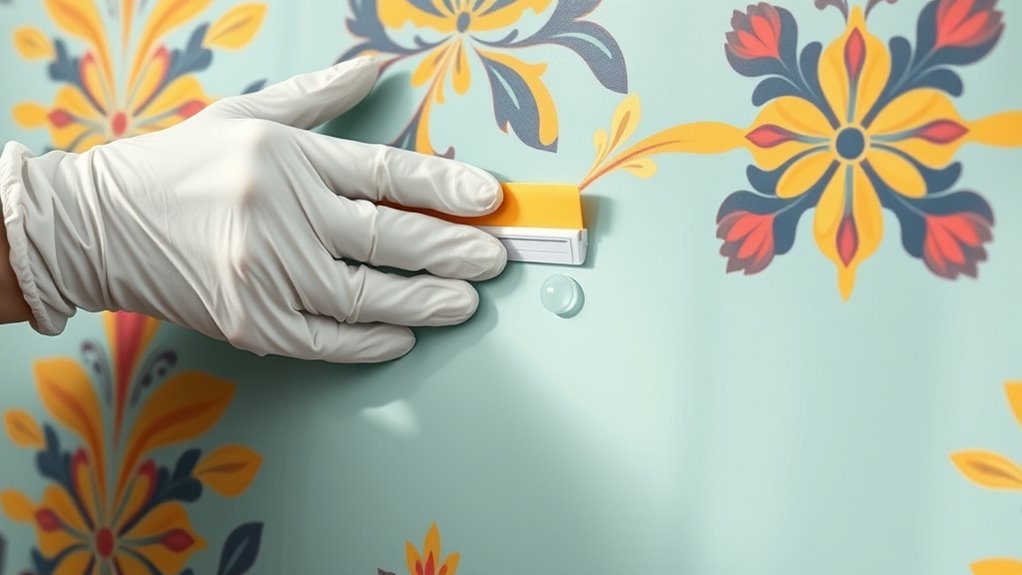
As you smooth the wallpaper onto the wall, it’s crucial to address air bubbles and wrinkles immediately. To do air bubble removal, gently lift the wallpaper where a bubble forms and smooth it out with your fingers or a squeegee. Work from the center of the bubble toward the edges to push out trapped air. For wrinkles, lift the affected section carefully and reapply the wallpaper, smoothing it firmly as you go. Prevent wrinkles by applying consistent, even pressure and avoiding overstretching the material. Regularly check for air bubbles and wrinkles during installation, addressing them promptly. This proactive approach ensures a smooth, professional-looking finish and helps the wallpaper adhere perfectly without imperfections.
Handling Edges and Corners Seamlessly
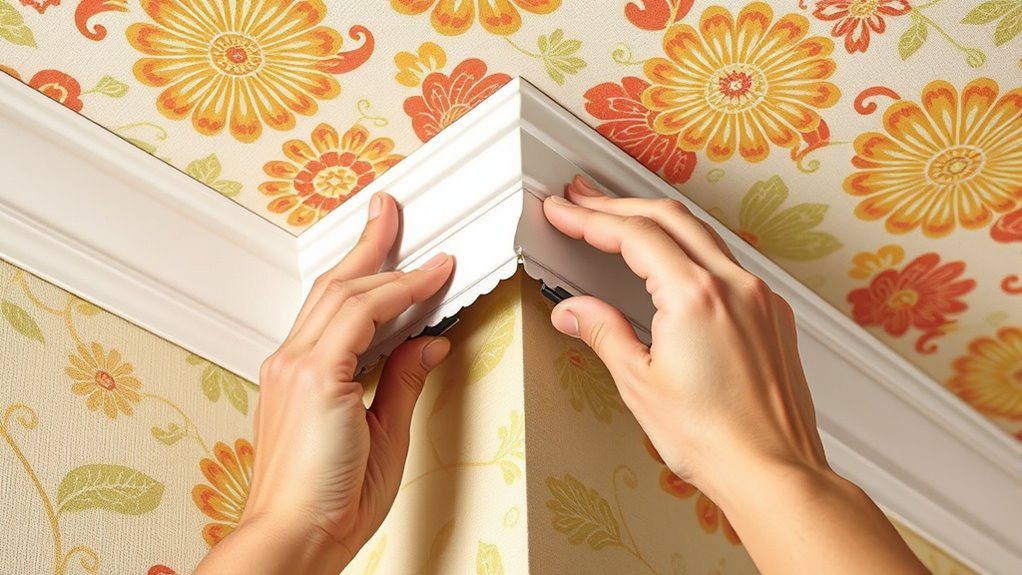
When working on edges and corners, take your time to handle them carefully to guarantee a clean finish. Use the right tools, like a seam roller or a craft knife, to make precise cuts and smooth out any gaps. Properly tackling these areas helps your wallpaper look seamless and professional. Additionally, paying attention to proper edge handling ensures your wallpaper adheres smoothly and avoids peeling over time.
Tackle Edges Carefully
Handling edges and corners carefully is crucial to achieving a seamless look with your peel-and-stick wallpaper. To guarantee a smooth finish, focus on proper edge sealing by pressing down firmly along the edges to prevent peeling or air bubbles. When finishing corners, fold the wallpaper neatly and smooth out any wrinkles, making sure the material adheres evenly. Use your fingers or a smoothing tool to press the edges and corners firmly into place, which helps create a clean, professional appearance. Take your time and avoid rushing through these steps, as careless handling can lead to gaps or tears. Proper corner finishing not only enhances the aesthetic but also prolongs the lifespan of your wallpaper. With attention to detail, your walls will look flawless and polished.
Use Proper Tools
Using the right tools is essential for handling edges and corners seamlessly. Choose tools suited for your adhesive types—whether a smoothing squeegee or a plastic putty knife—to prevent damage and guarantee a tight seal. These tools help you press edges firmly, avoiding air bubbles or wrinkles. For pattern matching, use a level or a measuring tape to align sections accurately before applying the wallpaper. A craft knife or utility blade is perfect for trimming excess along edges and corners, giving a clean, professional look. Proper tools allow you to work precisely, preventing tears or misalignment. Always keep your tools clean and sharp, and take your time to handle each edge and corner carefully. This ensures a smooth, seamless finish that lasts.
Final Touches and Clean-Up Tips
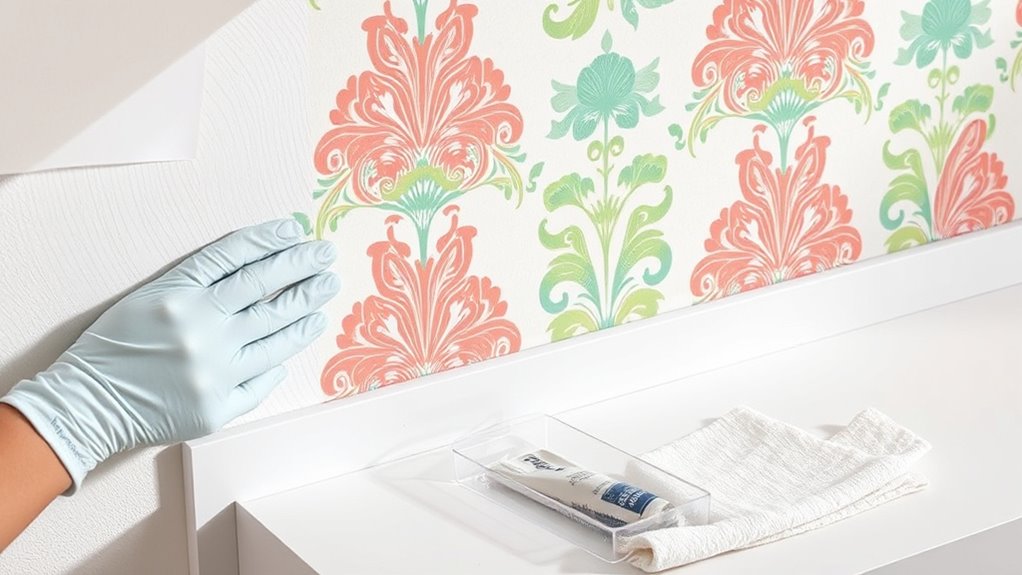
Once you’ve carefully aligned and smoothed out the wallpaper, it’s time to focus on final touches and clean-up. Check the edges for any air bubbles or loose spots and gently press them down with a smoothing tool. To add decorative accents, consider framing the wallpaper with trim or hanging artwork nearby to enhance its visual appeal. Protect your walls by trimming excess material neatly with a sharp blade, avoiding damage to the surface underneath. Wipe away any adhesive residue or dust with a damp cloth, ensuring a clean, polished look. Keep your workspace tidy by disposing of scraps properly. Finally, resist the urge to peel or scratch the wallpaper during the drying process, and enjoy your beautifully transformed space!
Frequently Asked Questions
Can Peel-And-Stick Wallpaper Be Repositioned After Initial Application?
Yes, you can usually reposition peel-and-stick wallpaper after initial application. When considering removal techniques, gently peel back the wallpaper from one edge and reapply it, smoothing out bubbles as you go. Repositioning tips include working slowly and carefully to avoid tearing. Keep in mind, some brands may have limited reusability, so test a small section first to confirm it sticks well after repositioning.
How Long Does Peel-And-Stick Wallpaper Typically Last Before Needing Replacement?
Sure, peel-and-stick wallpaper lasts forever—just kidding! The actual lifespan depends on factors like wallpaper durability and how well you care for it. Typically, you can expect the lifespan of peel and stick to range from 3 to 7 years, but high-quality options may last longer. So, if you’re hoping for a permanent solution, you might need to plan for occasional replacements or touch-ups.
Is Peel-And-Stick Wallpaper Suitable for Textured or Uneven Walls?
Peel-and-stick wallpaper isn’t ideal for textured or uneven walls, as wall texture compatibility can cause bubbles and poor adhesion. For best results, you should smooth out the surface and clean it thoroughly before installing. Surface preparation tips include sanding down rough patches and applying a primer if needed. If your walls are heavily textured, consider using a different wallpaper type or smoothing the surface for a better, long-lasting finish.
Can I Remove Peel-And-Stick Wallpaper Without Damaging the Paint Underneath?
Imagine peeling away the wallpaper, revealing the wall beneath—can you do it without damage? With gentle removing techniques, you can. Start by preparing the wall with a warm, damp cloth to loosen the adhesive. Carefully lift edges, working slowly to avoid pulling paint. Using a plastic scraper helps. Patience and proper wall preparation are key, ensuring you remove the wallpaper smoothly without harming the paint underneath.
Are There Specific Patterns or Colors Best Suited for Small or Busy Rooms?
When choosing peel-and-stick wallpaper for small or busy rooms, you should consider simple pattern choices and calm color schemes. Light, subtle patterns help enlarge the space visually, while busy patterns can make it feel cluttered. Opt for soft, neutral colors or gentle pastels to create a soothing atmosphere. Avoid overly bold or dark hues that can make the room feel cramped. This way, your space feels open and inviting.
Conclusion
And there you have it—your walls now look effortlessly gorgeous, all thanks to your newfound wallpaper wizardry. Who knew that with a little patience and some basic tools, you’d become the Picasso of peel-and-stick art? Just remember, if you accidentally create a masterpiece of bubbles or crooked lines, you can always pretend it’s modern art. Now go ahead, enjoy your beautifully decorated space—mess-free and fabulous, of course.