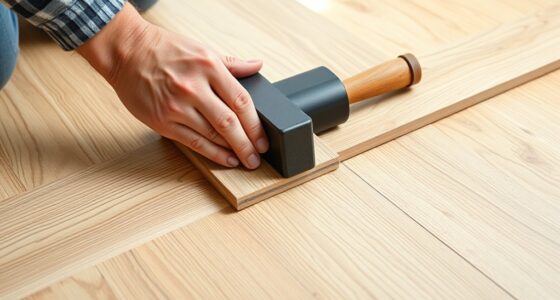
To patch small drywall holes, start by cleaning the area and trimming any ragged edges with a utility knife. Fill the hole with spackle or joint compound using a putty knife, then smooth and feather the edges to blend with the wall. Let it dry, lightly sand to remove bumps, and apply a second coat if needed. Finish by priming and painting for a seamless look. If you want detailed tips on each step, continue exploring.
Key Takeaways
- Clean and trim the hole edges with a utility knife for a smooth, even opening.
- For small holes, apply pre-mixed spackle or joint compound directly into the damage.
- Use a putty knife to fill the hole with drywall compound, feathering edges to blend with the wall.
- Allow the compound to dry completely, then lightly sand for a smooth finish.
- Prime and paint the repaired area for a seamless, professional appearance.

Small drywall holes can be quick to fix if you follow the right steps. The key is having the right drywall tools and repair materials on hand. With a few simple supplies, you can restore your wall’s smooth surface without much hassle. Start by gathering a utility knife, putty knife, sanding sponge, drywall compound, and a small piece of drywall or patching compound designed for repairs. Having these tools ready makes the process more efficient.
First, clean out the hole. Use the utility knife to gently trim any loose or ragged edges around the damage. This will create a clean, even opening, making it easier to patch. If the hole is very small, you might not need a patch; instead, you can use a pre-mixed spackle or joint compound. For larger holes, cut a small piece of drywall that matches the thickness of your wall. Using drywall tools like a drywall saw helps you trim the patch to fit snugly into the hole. Apply a thin layer of repair materials over the patch, pressing it firmly into place. Be sure to smooth out the edges to blend with the surrounding wall.
Once the patch is in position, cover the entire area with drywall compound using your putty knife. Feather the edges outward to create a seamless shift between the patch and the existing drywall. Allow the compound to dry completely, which typically takes a few hours or overnight, depending on the product’s instructions. After it dries, lightly sand the area with a sanding sponge or fine-grit sandpaper to smooth out any ridges or bumps. Wipe away dust with a damp cloth before proceeding. Understanding the importance of proper surface prep ensures a more professional finish and durability of the repair.
If necessary, apply a second coat of drywall compound to further blend the patch with the wall’s surface. Once you’re satisfied with the smoothness and level of the repair, prime and paint the patched area to match the rest of your wall. This final step will hide any signs of the repair and restore the wall’s appearance.
Frequently Asked Questions
Can I Use Household Glue Instead of Spackle?
Using household glue instead of spackle isn’t ideal for patching small drywall holes. Household glue isn’t designed to fill gaps or provide a smooth, durable finish like spackle does. As a spackle alternative, you might consider joint compound or a dedicated patching product. These options are specifically formulated to adhere well, dry smoothly, and blend seamlessly with your wall, giving you a professional-looking repair.
How Long Does Drywall Mud Take to Dry?
You might think drywall mud dries instantly, but the reality is quite different. The drywall drying time can vary, typically taking 24 hours for a complete dry, depending on thickness and humidity. During the mud drying process, patience is key—rushing it can cause cracks. So, if you’re keen to finish, remember that the drying process isn’t quick, but it’s essential for a smooth, lasting repair.
Is It Necessary to Sand After Applying Patch?
After applying your patch, you should sand it to guarantee a smooth surface. Proper surface preparation involves using the right sanding techniques, like gentle, even strokes with fine-grit sandpaper. This step helps eliminate ridges or uneven spots, making the patch blend seamlessly with the surrounding wall. Skipping sanding can result in a rough finish and visible imperfections, so take your time to prepare the surface properly for painting or finishing.
Can I Repair Larger Holes Without Replacing Drywall?
Think of your wall as a canvas, and larger holes as incomplete masterpieces. Yes, you can repair bigger holes without replacing drywall by using patching compounds and mesh tape, but wall size considerations matter. It’s more cost-effective to assess repair cost analysis beforehand—sometimes replacing a section is better than patching repeatedly. With careful work, your wall can regain its integrity, much like restoring a treasured painting’s original beauty.
What Tools Are Essential for Drywall Repair?
For drywall repair, you need essential tools like drywall tape and joint compound. You’ll also want a putty knife to apply the compound smoothly and sandpaper for finishing. A utility knife helps trim damaged drywall, and a drywall saw makes clean cuts if needed. These tools guarantee your patch blends seamlessly, giving your wall a professional look. With the right tools, small repairs become quick and easy.
Conclusion
Patching small drywall holes is a straightforward task that can save your walls from further damage. By using the right materials and techniques, you can achieve a seamless repair that blends perfectly with your wall. Remarkably, some experts believe that applying a primer before painting can enhance adhesion and durability, proving that small details make a big difference. With patience and the right approach, you’ll find that even the tiniest holes can be fixed effortlessly, restoring your wall’s smooth appearance.