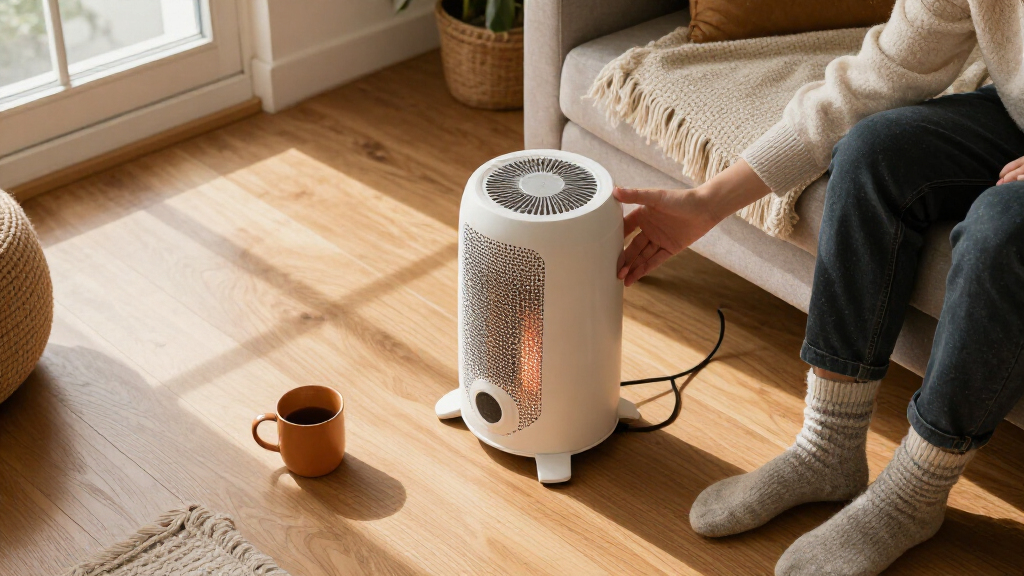

Use this guide to set up and operate a portable electric space heater for supplemental warmth. It is for anyone using a plug-in heater at home or in a workplace, including first-time users. You will check the heater, choose a safe location, connect it correctly, set the controls, and shut it down. Allow 10-15 minutes for setup; operating time depends on how long you need heat. Read the instructions supplied with your model, since controls and safety features differ.

Get furniture and decor delivered free with Prime
- Fast, free delivery on millions of items
- Prime Video, Amazon Music and more included
- Member-only deals all year

DREO Atom One Space Heater
- ✔ Maximum output: 1500W
- ✔ Heating method: PTC ceramic, forced air
- ✔ Thermostat range: 41°F–95°F, 1°F increments

Hykolity 1,500 Watt Radiant Quartz Tower Space Heater
- ✔ Maximum output: 1500W
- ✔ Heating method: Radiant quartz, with built-in fan
- ✔ Heat settings: 500W, 1000W, 1500W

ORAVIONA Greenhouse Heater, 1500W
- ✔ Maximum output: 1500W
- ✔ Heating method: PTC ceramic, forced air
- ✔ Heat settings: 750W and 1500W
Difficulty: Beginner | Time: 10-15 minutes to set up; operating time varies
What You’ll Need
Tools & Materials:
- Portable electric space heater with its manufacturer’s instructions
- A clear, level, dry floor area near a suitable wall outlet
- Working smoke alarms in the home
Knowledge:
- Basic ability to identify the heater’s controls and power cord
- Awareness of the room’s outlets and walkways
Use the heater only indoors and for the purpose described by its manufacturer. Check the label and manual for voltage, operating limits, and required clearances. Do not use a heater with a damaged cord, plug, casing, or controls.
DREO Atom One Space Heater
The DREO Atom One is our top pick for buyers who want an indoor heater that can adapt to changing room comfort. Its digital thermostat adjusts from 41°F to 95°F in one-degree increments, offering finer temperature setting than Hykolity’s Min-Max thermostat or ORAVIONA’s conventional thermostat knob. The 70-degree oscillation also moves warm airflow across a broader area than a fixed heater, which is useful when a desk, chair, or small room needs more even coverage.Its 1500W PTC ceramic element and forced-air design are aimed at quick, circulated warmth. DREO also lists five modes, including Eco and fan-only, plus a 12-hour timer and remote. That is the broadest control package here, and the brushless motor and airflow design are presented as a quieter option for bedrooms or workspaces. Buyers who want the more direct radiant feel of quartz may prefer Hykolity, while those aiming heat at a particular angle in a utility space may find ORAVIONA’s tilt more useful.The tradeoff is that this is still a portable supplemental heater, not a substitute for a home’s main heating system. Its smart controls may be unnecessary for someone who only wants a simple switch and a concentrated warm spot. The provided specifications list 200-square-foot coverage, but actual comfort will depend on insulation, room layout, and conditions. For most indoor buyers choosing among these three, DREO offers the strongest balance of precise control and shared-room airflow.
Pros:
- Digital thermostat adjusts in 1°F increments from 41°F to 95°F.
- 70-degree oscillation spreads forced airflow across a wider area.
- Includes remote, 12-hour timer, Eco mode, and fan-only mode.
- Lists tip-over and overheat protection, plus V-0 flame-retardant materials.
Cons:
- The array of modes and controls may be more than some buyers need.
- Forced-air heat may not suit people who prefer the direct feel of radiant warmth.
- Coverage and comfort depend on room conditions; it is a supplemental heater.
Best for: People who want a feature-rich portable heater for a bedroom, home office, or other indoor room.
Not ideal for: Buyers who prefer radiant heat aimed directly at one person, or who want a simple heater with minimal controls.
Bottom line: Choose the DREO Atom One for the most adaptable indoor comfort and the most detailed temperature control in this comparison.
“Choose the DREO Atom One for the most adaptable indoor comfort and the most detailed temperature control in this comparison.”
Hykolity 1,500 Watt Radiant Quartz Tower Space Heater
If you want selectable power and a radiant-style heater, the Hykolity quartz tower is the clearest alternative to DREO’s fan-driven room approach. Three quartz heating tubes deliver radiant heat, while the 500W, 1000W, and 1500W settings provide more defined output steps than ORAVIONA’s two heating levels. That range gives buyers a way to choose a lower setting for milder conditions or a higher one when they want more heat from the unit.The tower is about 24 inches tall, with an adjustable Min-Max thermostat and a built-in fan described as helping move warm air. Hykolity lists operation at 45 dB, as well as tip-over shutoff, overheat protection, and flame-retardant housing. These details make it a reasonable fit for a home office or a nearby seating area where a portable floor unit can be positioned carefully. Compared with DREO, it has fewer stated convenience features: there is no listed remote, timer, or oscillation. Compared with ORAVIONA, it offers a third heat level but lacks the stated adjustable airflow angle.The product description’s use of “indoor and outdoor” does not give enough detail to conclude that the heater is weatherproof or suitable for damp locations. Treat it as an indoor heater unless its manual says otherwise. The tower footprint and radiant heating style may also be less appealing if you want one compact device to circulate warmth around a room. Hykolity makes the most sense when power selection and radiant heat matter more than advanced scheduling or oscillation.
Pros:
- Quartz radiant element with three heat settings: 500W, 1000W, and 1500W.
- Adjustable Min-Max thermostat and a built-in fan.
- Lists both tip-over shutoff and overheat protection.
- Flame-retardant housing is specified in the product description.
Cons:
- No remote, timer, or oscillation is listed.
- At roughly 24 inches tall, it takes more vertical space than a compact tabletop unit.
- Outdoor suitability and weather resistance are not established by the supplied details.
Best for: Buyers who want a portable indoor tower with radiant heat and three distinct power settings.
Not ideal for: Anyone seeking a remote, timer, or oscillation, or needing confirmed weather resistance for outdoor use.
Bottom line: Pick Hykolity when you want radiant quartz warmth and three power levels, and can do without DREO’s wider set of room controls.
“Pick Hykolity when you want radiant quartz warmth and three power levels, and can do without DREO’s wider set of room controls.”
ORAVIONA Greenhouse Heater, 1500W
The ORAVIONA greenhouse heater is the specialist option in this roundup. Its defining feature is a 0°–135° adjustable airflow angle, which can direct warmth upward or toward a particular area from a stable floor position. That makes its design a closer match for a greenhouse, grow tent, garage, or workshop than the DREO, whose main advantage is oscillating comfort for indoor rooms. The 25W fan-only mode is another practical difference: it can circulate air without using either heat setting.ORAVIONA offers 750W and 1500W heating through a PTC ceramic element, with a mode knob and thermostat knob on top. A built-in handle, wide U-shaped frame, and anti-slip design are listed for repositioning and stability. The controls are less precise than DREO’s digital thermostat, and there is no listed timer or oscillation. Hykolity gives buyers three heating levels and a taller radiant tower; ORAVIONA instead prioritizes aiming airflow and changing the heater’s orientation.We place it third for general electric space heating because its stated strengths are more specialized, and the provided details do not specify a thermostat temperature range or environmental rating. The product is described for patio use, but that alone does not establish resistance to rain, moisture, or outdoor exposure. Follow the manual’s placement and clearance requirements, especially around plants, stored materials, and other nearby items. For a buyer whose priority is a small utility space and adjustable airflow, its angle range and fan-only setting may matter more than the broader controls on DREO.
Pros:
- Airflow angle adjusts from 0° to 135°.
- Offers 750W and 1500W heat settings plus 25W fan-only operation.
- Top-mounted mode and thermostat knobs are easy to access.
- Lists a handle, wide U-shaped frame, anti-slip design, and overheat protection.
Cons:
- No digital temperature range, timer, or oscillation is listed.
- Only two heating levels are specified, compared with Hykolity’s three.
- The description does not establish weatherproofing for exposed outdoor use.
Best for: People seeking an adjustable-angle supplemental heater for a greenhouse, grow tent, garage, or workshop, subject to the manufacturer’s use instructions.
Not ideal for: Buyers who need a precise digital thermostat, room oscillation, or documented protection from rain and damp conditions.
Bottom line: Choose ORAVIONA when adjustable airflow and a fan-only setting fit your utility space better than room-focused controls.
“Choose ORAVIONA when adjustable airflow and a fan-only setting fit your utility space better than room-focused controls.”
As an Amazon Associate we earn from qualifying purchases.
Before You Start
Keep the heater at least 3 feet (about 1 metre) from bedding, curtains, furniture, clothing, paper, and other items that can burn, unless the manufacturer specifies a greater clearance. Keep it away from water and areas where it could be knocked over. Never leave a running heater unattended, and turn it off before leaving the room or going to sleep. A space heater supplements heating; do not use it to dry clothes or heat food.
Check that the outlet is in good condition and that the heater’s plug fits securely. Plug the heater directly into a wall outlet. Do not use an extension cord, power strip, or adapter. If you are unsure whether the outlet or circuit can support the heater, check the manual or ask a qualified electrician.
Step-by-Step Instructions
Step 1: Inspect the heater and cord
Unplug the heater, then check its casing, plug, and full length of cord for cracks, fraying, looseness, scorch marks, or other damage. Check the air intake and outlet for dust or anything blocking them. Read the manual to identify the clearance, placement, and operating instructions for your model.
Tip: Do not operate a damaged heater or attempt an electrical repair yourself. Contact the manufacturer or a qualified repair professional.
Check: The heater, plug, and cord have no visible damage, and its vents are clear.
Step 2: Choose a clear, level location
Place the heater upright on a firm, level, dry floor where it cannot be easily bumped. Leave at least 3 feet (about 1 metre) between the heater and anything that can burn, or use a greater distance if the manual requires it. Keep the heater out of doorways, walking paths, and places where children or pets might touch it or pull its cord.
Tip: Do not place the heater on a bed, sofa, table, or other raised or soft surface unless the manufacturer explicitly permits that placement.
Check: The heater stands steadily, its air vents have room to operate, and nearby objects and walkways are clear.
Step 3: Connect it directly to a wall outlet
With the heater’s controls set to off, plug it into a nearby wall outlet. Make sure the plug is seated securely. Keep the cord visible and out of walkways; do not run it beneath rugs, furniture, or doorways. Do not connect the heater through an extension cord, power strip, or adapter.
Tip: Stop if the plug feels loose, the outlet is discoloured, or you notice a burning smell, buzzing, or unusual heat at the outlet. Unplug the heater if you can do so safely and have the outlet checked.
Check: The plug is firmly in a sound wall outlet, and the cord is not trapped or creating a trip hazard.
Step 4: Start the heater on a low setting
Use the power and heat controls as described in the manual. Start with the lowest heat setting, then raise it only if the room needs more warmth. If the heater has a thermostat, set it to a comfortable temperature and allow the room time to warm instead of turning the control repeatedly.
Tip: Do not cover the heater or block its intake or outlet while it is running. Keep children and pets at a safe distance from hot surfaces and the air outlet.
Check: The heater operates as the manual describes, with clear airflow and no smoke, sparks, or burning smell.
Step 5: Monitor the room while it runs
Stay in the room while the heater is on and check that it remains upright and unobstructed. Keep flammable items and people away from hot surfaces. If the room becomes too warm, lower the thermostat or switch the heater off. Do not leave it running unattended, even if it has a thermostat or tip-over shutoff.
Tip: Stop using the heater if it repeatedly switches off, makes unusual noises, produces smoke, or gives off a burning smell. See the troubleshooting section before using it again.
Check: The room warms to a comfortable level, and the heater stays stable and clear while you supervise it.
Step 6: Switch off and unplug after use
Turn the heater off with its controls before leaving the room or going to sleep. Let it cool according to the manual before moving, cleaning, or storing it. Unplug it by holding the plug, not pulling the cord. Store it in a dry place with its cord loosely arranged, not wrapped tightly around the heater unless the manual allows that.
Tip: Do not touch the heating element or attempt to clean inside the heater while it is connected to power.
Check: The heater is off, cool before handling, and unplugged before it is moved or stored.
Common Mistakes to Avoid
- Connecting the heater to an extension cord or power strip. — Plug it directly into a suitable wall outlet. If the outlet is too far away, move the heater or have a qualified electrician assess the setup.
- Placing the heater close to curtains, bedding, furniture, or clothing. — Keep at least 3 feet (about 1 metre) of clearance on all sides, or follow the greater distance specified in the manual.
- Leaving the heater on while sleeping or away from the room. — Switch it off whenever you leave the room or go to bed. Stay present while it operates.
- Covering the heater or using it to dry items. — Keep its intake and outlet uncovered, and dry clothes or other items by another method.
Troubleshooting
Problem: The heater does not turn on.
Solution: Set its controls to off and check that the plug is secure in the wall outlet. Check the manual for reset instructions or a required tip-over position. If the outlet appears damaged or the heater still will not start, stop and contact the manufacturer or a qualified electrician.
Problem: The heater switches off during use.
Solution: Turn it off and unplug it. After it cools, check that it stands upright and that its intake and outlet are clear. Follow the manual’s guidance for any overheat reset. If it switches off again, discontinue use and have it checked.
Problem: The room is not warming enough.
Solution: Confirm that the heater is set to the intended heat level and that airflow is not blocked. Close doors or windows if appropriate and safe, while keeping the required clearance. Do not place the heater nearer to flammable items or use another heater on the same outlet without checking its instructions and circuit capacity.
Problem: You notice a burning smell, smoke, sparks, or a hot plug.
Solution: Switch the heater off and unplug it only if you can do so safely. Keep people away and do not use it again. If there is fire or smoke that does not stop, leave the area and contact emergency services. Otherwise, have the heater or outlet checked by a qualified professional.
What Success Looks Like
The heater is undamaged, upright on a stable floor, and at least 3 feet (about 1 metre) from flammable items or farther if its manual requires it. It is plugged directly into a suitable wall outlet with a clear, undamaged cord. It warms the room on an appropriate setting without blocked airflow, smoke, sparks, burning smells, or unusual outlet heat. You remain in the room while it runs and turn it off before leaving or sleeping.
Next Steps
After the heater cools, check it periodically for dust or damage and clean it only as the manual directs. Keep the manual accessible, maintain working smoke alarms, and unplug the heater before cleaning or storing it. If the heater or outlet shows damage or abnormal operation, stop using it and contact the manufacturer, a qualified repair professional, or an electrician as appropriate.
Frequently Asked Questions
Can I leave an electric space heater on overnight?
No. Turn it off before going to sleep. Keep it supervised while it operates, and follow the manufacturer’s instructions for your model.
Can I plug a space heater into a power strip?
No. Plug the heater directly into a suitable wall outlet. Do not use a power strip, extension cord, or adapter.
How far should a space heater be from furniture and curtains?
Keep at least 3 feet (about 1 metre) of clearance from items that can burn, including bedding and curtains. Follow your manual if it specifies a greater distance.
Why does my heater keep turning itself off?
It may have activated a tip-over or overheat shutoff. Turn it off, unplug it, and let it cool. Check its position and clear the vents according to the manual. If shutoffs continue, stop using it and arrange a professional check.