TL;DR

Get furniture and decor delivered free with Prime
- Fast, free delivery on millions of items
- Prime Video, Amazon Music and more included
- Member-only deals all year
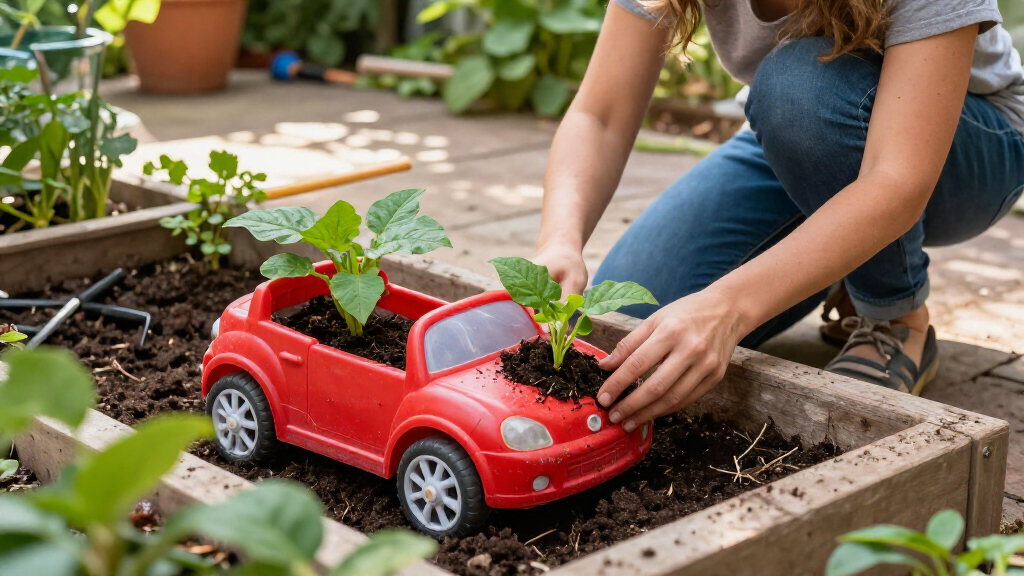
A creator featured on HGTV’s Facebook page repurposed her children’s old plastic water table as an elevated flower garden. The project used drilled drainage holes, soil and seeds, with the children decorating plastic animal toys as plant markers; the original report does not identify the creator or provide a publication date for the social post.
A creator featured on HGTV’s Facebook page turned her children’s old plastic water table into an elevated flower garden, replacing its usual water-play function with soil and plants. The project shows one way to reuse a household toy as a small raised bed, while also giving children a role in planting and labeling the garden.
According to Hunker’s report, the creator began by drilling drainage holes into the water table. She then used silicone sealant to attach a plastic flower pot at the center, filled both the pot and the table’s basin with soil, and prepared the surface for planting. The source describes the work as requiring little construction compared with building a conventional raised bed, though it does not provide a time estimate or cost.
The creator and her daughter planted sunflowers, English lavender and zinnias, which the report describes as easy-to-grow seeds. The children also painted plastic animal toys a terra-cotta color and wrote plant names on them to use as markers. These details are reported by Hunker from the HGTV Facebook feature; the supplied report does not include a direct statement from the creator or a link to the original post.
Hunker’s practical guidance emphasizes that a water table is designed to hold water, so drainage needs attention before it is used as a planter. The basin needs holes that allow excess water to escape, and the attached pot needs its own drainage opening. The report also advises checking that sealant does not obstruct the pot’s drainage and inspecting the plastic for cracks or other damage before reuse.
A Toy Reused as a Small Garden
The project offers an example of upcycling an existing household item rather than buying materials or constructing a raised bed from scratch. Its elevated shape can make a planting area accessible to children and help define a small garden space, while the shared planting and marker-making activities give younger participants practical tasks.
The conversion is not simply a matter of filling a water toy with dirt. Water tables retain water by design, while most garden plants need excess moisture to drain away. The project’s usefulness therefore depends on adequate drainage, sound plastic and plant choices suited to the available light and space. It is a small-scale idea, not evidence that every water table will work as a durable or safe planter.
For readers, the main takeaway is the possibility of adapting a familiar object while keeping the limitations visible. A reused table may suit flowers or other appropriately sized plants, but its dimensions, condition and drainage capacity will shape what can grow in it. The source does not report how the garden performed over time.
raised garden bed soil for flowers
As an affiliate, we earn on qualifying purchases.
As an affiliate, we earn on qualifying purchases.
How the Water Table Was Adapted
Hunker frames the idea as one example of giving a household container a second use, alongside items such as kiddie pools, sandboxes and plastic storage bins. The specific item in this report was an old children’s water table. Its basin provided the planting area, while its existing elevated structure avoided the need to build a bed frame from the ground up.
The report lists an old water table, a drill, silicone sealant, a plastic flower pot, and seeds or small plants among the materials. It suggests loose, well-draining growing media, including either equal parts topsoil, organic matter and coarse sand, or a mix of 70% topsoil and 30% compost. Those are recommendations in the article, not a reported test of which blend the creator used.
Hunker also advises matching plants by sunlight and watering needs and following seed-packet spacing instructions. Container soil can dry faster than soil in the ground, the report says, so gardeners should check it regularly and water when the top inch feels dry. Occasional fertilizing may also be needed to replenish nutrients.
“The project requires “very little construction compared to building a traditional raised bed from scratch.””
— Hunker’s report
easy to grow flower seeds sunflower lavender zinnia
As an affiliate, we earn on qualifying purchases.
As an affiliate, we earn on qualifying purchases.
Durability and Growing Results Unknown
The available report does not state when the Facebook post appeared, identify the creator by name, or provide measurements for the water table, the number of drainage holes or the amount of soil used. It also does not say whether the creator tested the table’s long-term stability under the weight of wet soil.
No later update is provided on seed germination, flowering, drainage performance or how the plastic held up outdoors. The source does not specify the table’s material or whether it was designed for extended outdoor exposure. Those details matter to anyone considering a similar reuse, so the example should not be read as proof that every toy table is suitable for planting.
outdoor garden plant markers for kids
As an affiliate, we earn on qualifying purchases.
As an affiliate, we earn on qualifying purchases.
Checks Before Planting in a Toy
The report does not announce a follow-up or a next milestone for the featured garden. For anyone adapting a similar item, the steps described begin with cleaning and inspecting the table, then making sure the basin and any attached pot can drain freely. The plastic should be free of cracks or damage, and sealant should not cover drainage openings.
After planting, the source recommends monitoring moisture, especially because container soil may dry faster than an in-ground bed. Gardeners should check the top inch of soil, water thoroughly when it feels dry, and follow plant-specific spacing and care guidance. The featured garden’s longer-term results remain unreported.
clear waterproof silicone sealant for plastic
As an affiliate, we earn on qualifying purchases.
As an affiliate, we earn on qualifying purchases.
Key Questions
What did the creator turn into a garden bed?
She repurposed her children’s old plastic water table as an elevated planting bed, according to Hunker’s report about a feature on HGTV’s Facebook page.
Which plants were included?
The creator and her daughter planted sunflowers, English lavender and zinnias, the report says. It does not provide further information about how the plants grew.
Why does the table need drainage holes?
A water table is made to hold water. Drainage holes help excess water leave the soil, reducing the risk of waterlogged soil and root rot, according to Hunker. An attached pot also needs an unobstructed drainage hole.
What soil mix does the report suggest?
Hunker suggests either equal parts topsoil, organic matter and coarse sand, or a blend of 70% topsoil and 30% compost. The report does not say which mix the creator used.
Did the report say whether the garden lasted?
No. The supplied report describes the conversion and planting but does not provide long-term results, such as plant growth, drainage performance or the table’s durability outdoors.
Source: rss
Halloween Picks
halloween
As an affiliate, we earn on qualifying purchases.