
TL;DR
Electric space heaters convert electricity into heat for a single room or small area. Most plug-in models draw up to about 1,500 watts, so a heater running at full power for an hour uses 1.5 kilowatt-hours; the cost depends on your electricity rate and how often its thermostat runs. Choose a heater for the kind of warmth you want, keep it at least 3 feet from combustible materials when the manual allows, and turn it off when you leave or go to sleep.
A chilly home office can feel like a walk-in fridge even when the rest of your house is comfortable. An electric space heater can warm that one room without turning up the heat everywhere, but its convenience comes with a meter that keeps counting and a hot appliance that needs thoughtful placement.

Get furniture and decor delivered free with Prime
- Fast, free delivery on millions of items
- Prime Video, Amazon Music and more included
- Member-only deals all year
Here, you’ll learn what electric space heaters are, how ceramic, infrared, and oil-filled models differ, and how to estimate what one might cost to run. You’ll also get practical safety steps, because a heater belongs in an open, clear spot—not tucked beside a curtain or buried under a coat.
Think of a space heater as a small, targeted campfire that runs on electricity: useful when you sit nearby, but a poor substitute for heating the whole house. The right choice depends on your room, your electricity price, and the kind of warmth you want.
A 1,500-watt heater running at full power uses 1.5 kWh per hour; multiply by your electricity rate to estimate the cost.
Ceramic heaters often warm air quickly, infrared models warm people and objects nearby, and oil-filled radiators release heat gradually.
Targeted heating may help when it replaces some whole-home heating; adding a heater while leaving central heat unchanged can increase energy use.
Keep at least 3 feet of clearance from combustible items when the manual permits, and plug the heater directly into a suitable wall outlet.
Turn the heater off when you leave the room or go to sleep unless its instructions and local fire-safety guidance specifically say otherwise.
What electric space heaters do to warm a room
Electric space heaters convert electricity into heat for a single room or small area, usually by passing current through a resistance element that warms up. A fan can push the warm air around, while a reflector can aim heat toward you and nearby surfaces. That is why one heater can feel like a quick desk-side fix while another slowly warms the air across a quiet bedroom.
A 1,500-watt heater running at full power for one hour uses 1.5 kilowatt-hours of electricity. Multiply that by your local price per kilowatt-hour to estimate the energy cost: if your rate were 30 cents per kWh, that hour would use 45 cents of electricity at full power. A thermostat may cycle the unit off and on, so actual use can be lower; the setting, insulation, room size, and drafts all matter.
Nearly all electricity used by a typical plug-in resistance heater becomes heat in the room, but that does not make it cheap to run. A heat pump can deliver several units of heat for each unit of electricity under suitable conditions, which can make it a more economical choice for heating a larger space. For instance, warming your occupied study while lowering the central thermostat may make sense; running a space heater all day while whole-home heating stays unchanged may raise your bill. [1]
The heater is more like a desk lamp for warmth than a furnace: it helps where you point it, but it cannot make every distant corner equally comfortable. Its usefulness depends on targeting heat where someone actually spends time.
Products Worth Considering

eufy Baby Monitor E21 with 4K UHD Camera and 5-Inch 720p Screen

Roborock Qrevo 2 Pro Robot Vacuum and Mop with 20,000 Pa Suction

Philips Hue Bridge Pro Smart Lighting Hub, 1-Pack
As an affiliate, we earn on qualifying purchases.
Pick a heater that matches the warmth you want
Electric space heaters come in several types, and each trades quick warmth, quiet operation, and lingering heat differently. “Ceramic,” “infrared,” and “oil-filled” describe how a unit heats; the labels alone do not guarantee quality or low running costs. A ceramic heater may use a fan and convection together, so categories can overlap.
| Type | How it feels | Useful example |
|---|---|---|
| Ceramic | Often heats quickly; many models use a fan. | A chilly home office where you want warm air soon. |
| Radiant or infrared | Warms people and objects directly nearby. | A drafty room where you sit in one spot. |
| Oil-filled radiator | Warms gradually and continues releasing heat after switch-off. | A quiet reading room where a slow, steady feel suits you. |
| Convection or panel | Warms circulating room air; panel models have a low-profile design. | A room where you prefer gentle air heating over a fan. |
Imagine you’re working at a desk near a cold window: radiant heat can feel pleasant on your hands and face even while the rest of the air stays cool. In a small room where you want the air to warm quickly, a fan-assisted ceramic model may feel more immediate. If quiet matters, an oil-filled radiator or fan-free convection heater may suit you better, though you’ll wait longer for the warmth to spread.
Room size, ceiling height, insulation, and drafts all change the result. Manufacturer sizing guidance gives you a starting point, not a promise that every corner will feel warm. For example, a heater that feels fine in a snug, well-insulated bedroom may struggle in a high-ceilinged room with a leaky window. Pick for the spot and routine you have, not just the name on the box.
Estimate the running cost before the room gets cold
You can estimate a heater’s energy cost by multiplying its power in kilowatts by the hours it runs and your price per kilowatt-hour. The calculation is: watts ÷ 1,000 × hours used × electricity price per kWh. For example, a 1,500-watt heater running for four hours at 30 cents per kWh uses 6 kWh, or about $1.80 of electricity at full power.
This gives you a clear starting point, not an exact bill prediction. Many heaters cycle off once the room reaches the thermostat setting, so a four-hour session may use less than four hours at full power. Lower settings, drafts, a cold exterior wall, and your desired temperature also affect how often the heating element runs. A small room with the door closed can need less heat than a large, drafty space.
Targeted warmth works best when it replaces some whole-home heating. Say you work from a spare bedroom for three hours each morning: lowering your central thermostat while warming that room may help control the total energy used. If the central heating keeps running at its usual setting and you add a portable heater too, you’re paying to heat the room twice.
A space heater can warm a single room or small area, but it is usually a poor tool for heating a whole house. Running multiple portable heaters can cost more and put heavy demand on household circuits. Compare your estimate with your heating system and local electricity prices; the cheapest choice depends on the home, the weather, and how long people need warmth.
Use these steps to keep heater use safer
Safe use starts with placement and the manufacturer’s instructions. Portable heaters can cause fires or burns if you use them carelessly, so give the unit open space and a stable surface. A commonly recommended clearance is at least 3 feet (about 1 meter) from bedding, curtains, furniture, paper, and other combustible materials; check your model’s manual and local fire-safety guidance for its specific directions.
- Set the heater on a firm, level surface where it cannot tip easily.
- Plug it directly into a suitable wall outlet. Avoid extension cords and power strips unless the manufacturer explicitly permits them.
- Keep the heater away from water, and keep its air intake and outlet clear.
- Check the plug, cord, and unit. Stop using it if anything is damaged, unusually hot, or smells like burning.
- Turn it off when leaving the room or going to sleep unless the manufacturer’s directions and local fire guidance specifically say otherwise.
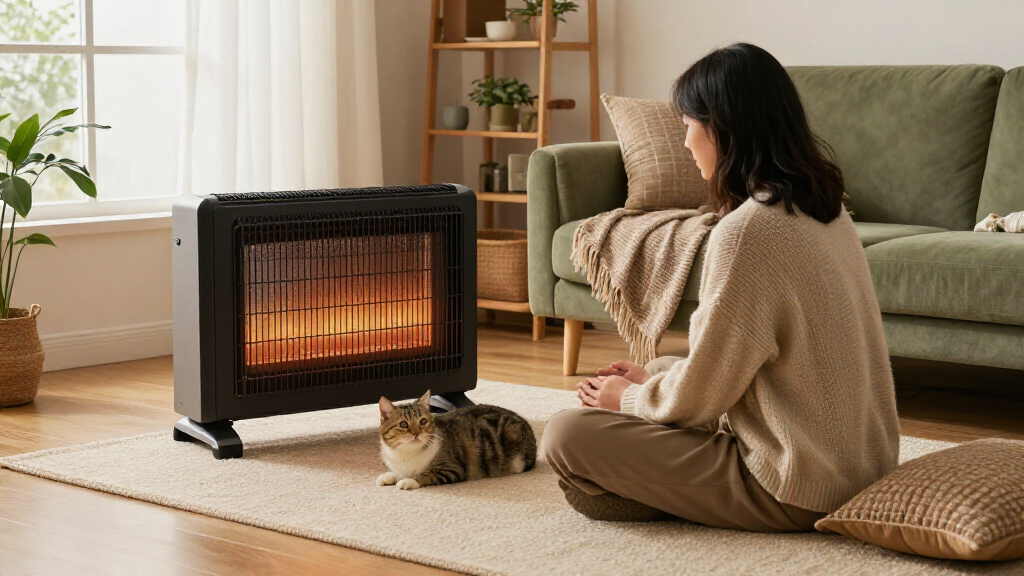
For example, placing a heater beside a sofa may feel convenient on a cold evening, but a blanket slipping down can block the airflow or touch a hot surface. Keep children and pets away, especially if the heater has hot exposed surfaces; direct heat can also burn someone with limited mobility or sensation. Never use the appliance to dry clothes or cover any part of it.
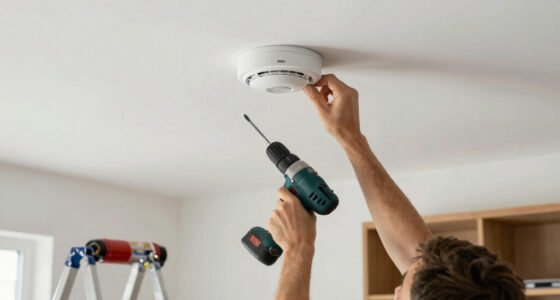
Look for recognized safety certification for the market where you live, plus features such as tip-over shutoff and overheat protection. Those features can reduce certain risks, but they cannot make unsafe placement safe. Keep working smoke alarms in your home, and follow the manual and local fire advice because requirements can vary by model and location. [2]
Know when a heater’s behavior needs your attention
A heater switching off and back on can be normal when its thermostat cycles to hold a temperature. It may also shut down because airflow is blocked, a tip-over switch has engaged, or the unit is overheating. The pattern matters: regular pauses in a warm room may be ordinary, while repeated shutdowns in a cold room deserve a closer look.
If the heater stops unexpectedly, turn it off and check the manual before restarting it. Make sure its air intake and outlet are clear, and confirm that it sits upright on a level surface. For example, a heater pushed close to a wall or covered by a long curtain may not get the airflow it needs. Do not bypass a safety switch or keep forcing a unit to run.
Stop using the heater if you notice a burning smell, damaged cord, unusually hot plug, or visible damage. Unplug it if safe to do so and follow the manufacturer’s advice; a faulty plug or connection can overheat. If you are unsure whether an outlet or circuit can handle the appliance, ask a licensed electrician rather than changing household wiring yourself.
Electric resistance heaters do not burn fuel, so they do not produce combustion exhaust and do not need combustion ventilation. They still need the open space specified by the manufacturer around air openings, and you should keep them well away from water. Think of those openings as the heater’s breathing room: block them, and normal heat can build where it should not.
Make your heater useful without heating empty space
A space heater works best as temporary, targeted warmth when someone is using the room. Put it in the occupied area with safe clearance, set a comfortable thermostat level, and consider lowering the main heating system if your household can do so comfortably. That approach keeps the heater’s job small: warming the room you need instead of trying to heat every corner.
Picture a Saturday morning: you want to read in a cold den for an hour, while the rest of the house feels fine. A nearby radiant heater may warm you directly; a small ceramic model may suit you if you want the air to feel warmer too. Once you leave, turn it off. That routine is easier to manage than letting it run for hours in an empty room.
Controls can help you follow that routine. Some models offer timers, thermostats, remote controls, oscillation, or child locks. These features can make it easier to target warmth and set a stopping time, but a timer or app does not replace safe placement or supervision. A “low-energy” label also cannot override the heater’s power draw or the price of your electricity.
Costs, product standards, and recalls vary by place and can change. If you’re choosing a specific model, check current guidance from the relevant safety agency or product-safety database where you live. For a whole home, compare a portable heater with your existing heating system; a properly designed heat pump may use electricity more effectively for broad heating, depending on the climate and installation.
Frequently Asked Questions
How much does it cost to run a 1,500-watt space heater?
A 1,500-watt heater running at full power for one hour uses 1.5 kWh. Multiply 1.5 by your electricity price per kWh; at 30 cents per kWh, that is about 45 cents for the hour. Thermostat cycling can reduce actual use.
Are electric space heaters energy-efficient?
Most plug-in resistance heaters turn nearly all the electricity they use into heat in the room. That does not mean they use less energy than every alternative: a heat pump can deliver several units of heat per unit of electricity in suitable conditions.
Which heater is best: ceramic, infrared, or oil-filled?
It depends on how you want to feel the warmth. Ceramic models often heat air quickly, infrared warms people and objects nearby, and oil-filled radiators heat gradually and continue releasing heat after you switch them off.
Can I leave a space heater on overnight?
The safest general practice is to turn a portable heater off when you go to sleep or leave the room. Follow the model’s manual and local fire-safety advice, and keep working smoke alarms in your home.
Can I plug my heater into an extension cord or power strip?
Usually, heater manufacturers advise plugging a portable heater directly into a suitable wall outlet. A high electrical load can overheat an unsuitable cord or connection, so follow the heater’s manual and ask a licensed electrician if you have concerns about the outlet or circuit.
Conclusion
Choose a heater for the room and routine you actually have, then estimate its cost from wattage, runtime, and your electricity rate. Keep it clear of fabrics, use a suitable wall outlet, and switch it off when you leave or go to sleep unless its instructions and local fire-safety guidance say otherwise.
A little pool of warmth can make a cold morning feel kinder. Keep that pool where you need it, and give the heater plenty of open space.