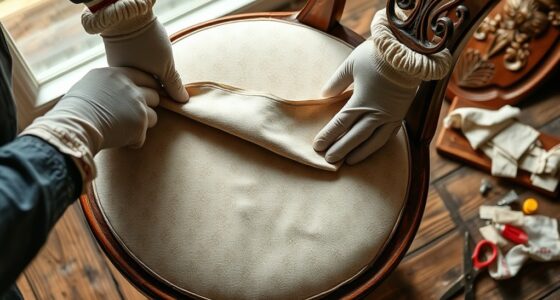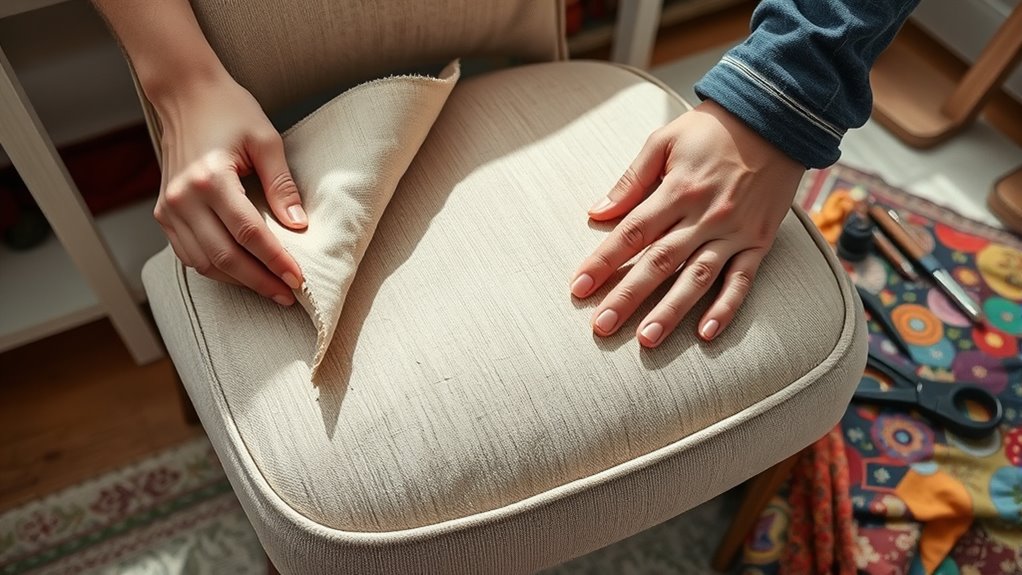

To recover seat cushions yourself, start by choosing durable, comfortable fabric that matches your decor. Measure your old foam accurately and replace it with high-density foam for support. Add a layer of batting for extra softness, then carefully stretch and staple the fabric tightly around the cushion, smoothing out wrinkles. Pay attention to neat edges and secure attachments for a professional look. Keep going to discover detailed tips and tricks that will make your project easier and more successful.
Key Takeaways
- Measure and cut new foam to fit the cushion for proper support and comfort.
- Choose durable, comfortable fabric that complements your decor and suits cushion use.
- Remove old fabric carefully, then add a layer of batting for a smooth, plush finish.
- Attach the new fabric tightly using a staple gun, folding edges for a clean look.
- Take your time and focus on neat, even staples for a professional, durable result.
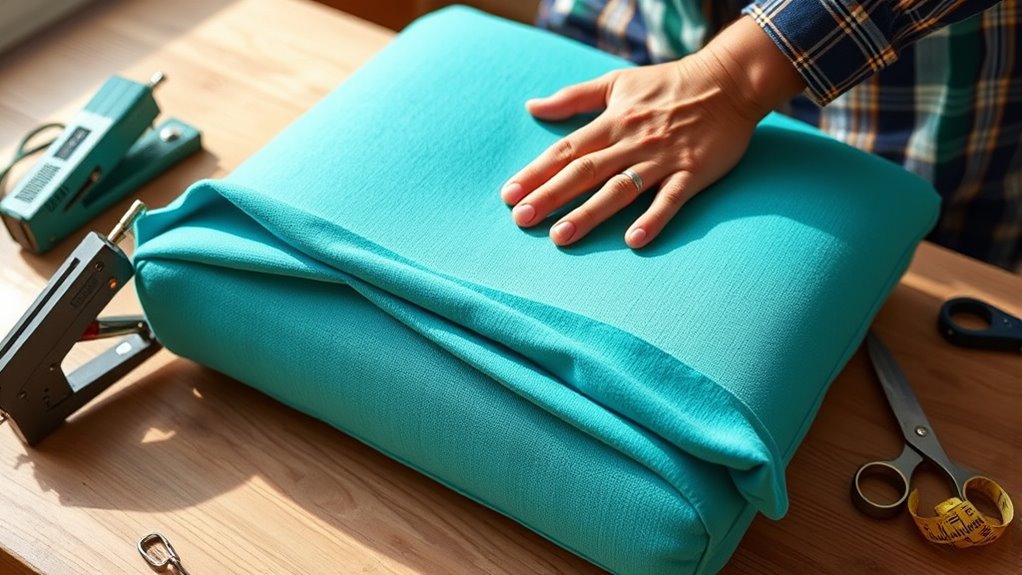
Are you ready to breathe new life into old furniture? Restoring your seat cushions is a rewarding project that can transform a worn piece into something fresh and inviting. The first step is choosing the right fabric, which plays a vital role in your cushion’s durability and appearance. When selecting fabric, consider the room’s style, the cushion’s use, and how much wear and tear it will endure. Durable upholstery fabric like heavy-duty cotton, linen, or synthetic blends ensures longevity, especially if the cushion gets frequent use. Pick a fabric that complements your decor and feels comfortable to sit on. Once you’ve selected your fabric, it’s time to think about foam replacement. Over time, seat foam compresses and loses its shape, making cushions sag and lose their support. Replacing the foam is one of the easiest ways to give your cushions a fresh, plump feel. Measure the existing foam carefully, noting its width, length, and thickness to get a replacement that fits perfectly. High-density foam offers good support and resilience, making it ideal for seat cushions. If you prefer a softer feel, you can opt for medium-density foam, but keep in mind it may compress more quickly. Cutting the foam to size is straightforward with a serrated knife or electric knife, and many foam suppliers will cut it to your specifications if you provide measurements. Before attaching the new foam, consider adding a layer of batting for extra comfort and a smooth finish. This also helps the fabric sit better and prevents the foam from showing through. When it’s time to reupholster, remove the old fabric carefully, keeping track of how it’s attached—whether stapled, tacked, or glued. Use a staple gun for attaching the new fabric, pulling it tight as you go to avoid wrinkles or sagging. Make sure to secure the fabric evenly and neatly, folding and tucking edges for a clean look. Tightly fasten the fabric around the edges, ensuring the foam stays in place and the cushion looks professional. Incorporating proper preparation into your project can significantly improve the final result. With some patience and attention to detail, you can refresh your cushions and extend the life of your furniture. Replacing the foam and choosing the right fabric are key steps in this process, making your seat cushions comfortable, supportive, and visually appealing. Once finished, you’ll enjoy sitting on your revitalized furniture, knowing you created it yourself with a simple, satisfying DIY project.
Frequently Asked Questions
What Types of Fabric Are Best for Seat Cushion Recovery?
When choosing fabric for seat cushion recovery, you should consider fabric durability and color selection. Opt for tightly woven, durable fabrics like performance linen, polyester blends, or microfiber, which withstand daily use. Pick colors that match your decor and hide stains, especially if you have kids or pets. Avoid delicate fabrics that wear quickly or stain easily. Ultimately, selecting the right fabric guarantees your cushions stay beautiful and functional over time.
How Do I Choose the Right Foam Thickness for Comfort?
When it comes to choosing foam thickness for comfort, the devil’s in the details. You want a foam with the right density to support your weight without sagging, and the firmness should match your preferred feel—softer for lounging or firmer for support. Usually, thicker foam provides more cushioning, but consider your cushion’s purpose and your comfort needs to find the sweet spot for a cozy seat.
Can I Recover Cushions Without Sewing Skills?
You can definitely recover cushions without sewing skills by exploring sewing alternatives and beginner-friendly techniques. Use adhesive sprays, staple guns, or fabric glue to secure your fabric instead of sewing. These methods are simple, quick, and effective, making the project accessible for beginners. Just guarantee you choose the right fabric and follow instructions carefully. With patience, you’ll have a refreshed cushion without needing sewing expertise.
How Do I Remove Stubborn Stains From Upholstery Fabric?
Removing stubborn stains from upholstery fabric is like tackling a tough puzzle. Start with stain removal techniques by gently blotting (don’t rub) to lift the stain. Use fabric cleaning solutions suitable for your fabric type, like a mixture of mild detergent and water or a specialized upholstery cleaner. Test any solution on a hidden area first. Repeat as needed, and always blot dry to prevent water marks or damage.
What Tools Are Essential for Beginner Upholstery Projects?
When starting upholstery projects, you need essential tools like a staple remover to easily detach old fabric and fabric scissors for precise cuts. These tools make your work smoother and more efficient, helping you handle staples and fabric with confidence. You’ll also want a staple gun, measuring tape, and a screwdriver. With these basics, you’ll be ready to transform your furniture and tackle your upholstery projects with ease.
Conclusion
Now that you’ve learned the basics, you’re like a skilled artist ready to breathe new life into tired cushions. With a little patience and a touch of creativity, you can turn worn-out furniture into a masterpiece that tells your story. Think of each project as planting a seed—soon, your space will blossom with fresh, inviting charm. So roll up your sleeves and let your DIY spirit shine; your transformed cushions are just a stitch away!