
TL;DR

Get furniture and decor delivered free with Prime
- Fast, free delivery on millions of items
- Prime Video, Amazon Music and more included
- Member-only deals all year
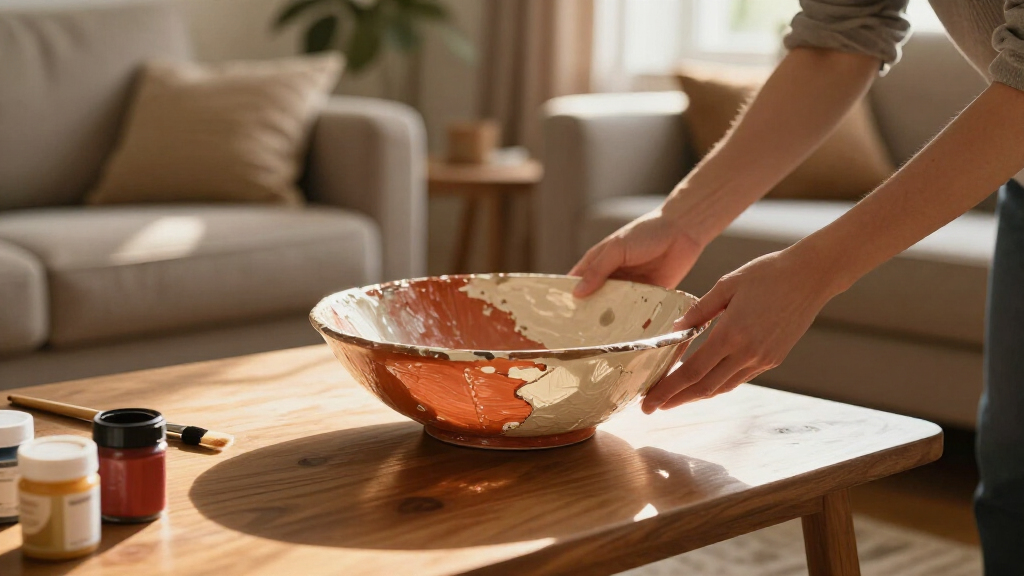
A Hunker DIY report describes turning seven lightweight, round woven thrift-store coasters into a bowl-shaped coffee-table accent by stitching them together with raffia or thread. The finished piece is intended for decoration, not storage: it may be unstable and has gaps that can let small items fall through.
Hunker has outlined a do-it-yourself project that turns seven thrifted woven coasters into a bowl-shaped coffee-table accent, using raffia or thread to connect the pieces. The project offers a way to repurpose lightweight coasters, but the report cautions that the result is decorative rather than sturdy and has openings too large to hold small objects reliably.
The design is based on a bowl created by Tina Le, according to Hunker. It uses seven round coasters: one forms the base, while six make up the surrounding sides. The report says rattan-style coasters are suited to the method because raffia can pass through the spaces in their weave. Other lightweight woven materials, including cotton, may also work. Heavier materials such as ceramic are less suitable because the outer coasters need to remain upright.
To assemble the basic version, arrange three coasters in a row, then add the remaining four on either side, positioning them between the center circles. Use raffia or thread through the coaster edges to join the pieces. The coasters are then shaped into a bowl: Hunker suggests draping them over a separate bowl and using tape to hold their positions while stitching the adjoining edges. The report recommends two stitches at each meeting point for added stability and says rope or ribbon around the outside can help hold the shape. Hot glue is another option for joining the pieces.
Before assembly, clean thrifted coasters by brushing or vacuuming away loose debris. If wiping is needed, Hunker advises using a soft cloth with soapy water and limiting moisture on materials such as rattan, which can mold if left wet. Let the coasters dry completely before joining them. Once assembled, the bowl can sit on a coffee table as an accent; Hunker also suggests placing a small potted houseplant in its center. That suggestion does not change the report’s warning that the bowl is not a sturdy container.
A Repurposing Project With Limits
The project gives thrift shoppers a specific way to reuse ordinary woven coasters rather than leaving an unusual set unused. It also relies on a small number of common materials—coasters and raffia or thread—while allowing the maker to adapt the finish to a room or existing decor. Those features make the idea practical as a low-stakes decorative craft, rather than a solution for functional storage.
The limitation matters when deciding where to use the finished piece. Hunker says the assembled bowl will not be very sturdy, and the spaces between its coasters can let small items fall through. It is better suited to display than to holding keys, jewelry, or other loose objects. Anyone making the project should treat the bowl as a visual accent and avoid relying on it to support valuable, fragile, or heavy items.
As an affiliate, we earn on qualifying purchases.
How the Seven-Coaster Design Works
The source report frames the project as a response to a familiar thrift-store problem: finding an item with potential but no obvious use. In this design, a set of round coasters becomes a shallow, open-sided bowl through its arrangement and the way the pieces are fastened. The shape comes from the outer ring of coasters being drawn upward around a single coaster at the center, rather than from bending one large piece of material.
Hunker describes several ways to change the look or add support. Makers can attach trim, macrame-style fringe, beads, bows, or fabric cutouts, or add rope around each coaster’s edge for a more defined outline. Small rope coasters could be glued over some gaps, though the report does not say that this would make the bowl suitable for holding small items. A rattan placemat or vintage wicker paper-plate holder can instead serve as a wider base, with coasters attached around it; the number needed depends on the base’s diameter. Wooden beads, blocks, or a platform are also offered as possible base details.
“The bowl is “more decorative than functional.””
— Hunker’s report on the DIY
As an affiliate, we earn on qualifying purchases.
Durability Depends on Materials
The report does not provide load testing, dimensions, or a durability estimate for the finished bowl. It also does not establish how well different coaster materials, thread types, stitching methods, or hot glue will hold up with use. The stated weakness is clear, but the degree of instability will depend on the materials and how carefully the pieces are joined.
Hunker’s instructions describe a decorative project, not a tested container. The report does not say that adding a rope border, trim, or a wider base will eliminate the gaps or make the bowl suitable for practical storage. Those additions are presented as design variations, not as verified fixes for the bowl’s limitations.
As an affiliate, we earn on qualifying purchases.
Choose Coasters Before Assembly
For someone planning to try the project, the next step is to find seven lightweight, round coasters with edges that can be joined, then choose raffia, thread, or hot glue. Check the material and clean it gently; if water is used, allow the pieces to dry completely before attaching them. A separate bowl can help hold the outer coasters in position while they are stitched.
After assembly, use the piece as a display accent and judge its stability before placing anything inside. Makers can add decorative trim or adapt the design with a broader base, but should not assume those changes make it secure for small or valuable objects. Hunker provides no follow-up testing or reported results for these variations.
As an affiliate, we earn on qualifying purchases.
Key Questions
How many coasters does the basic bowl use?
The design uses seven round coasters: one in the center and six around it to form the sides.
What materials can join the coasters?
Hunker describes stitching with raffia or thread and says hot glue is another option. For woven coasters, the open weave can make it possible to pass raffia through the edges.
Can the bowl hold small items?
It is not recommended for that purpose. Hunker says the bowl is not very sturdy and has gaps through which small objects can fall.
How should thrifted coasters be cleaned first?
Brush or vacuum loose debris. If needed, wipe with a soft cloth and soapy water, using little moisture on rattan or similar materials. Let the coasters dry completely before assembly.
Can the design be customized?
Yes. The report suggests trim, fringe, beads, bows, fabric cutouts, rope details, or a wider base such as a rattan placemat. These options change the appearance, but the report does not establish that they make the bowl sturdy enough for storage.
Source: rss
Halloween Picks
halloween
As an affiliate, we earn on qualifying purchases.