TL;DR
Many homes feature staircases that seem to lead nowhere, baffling homeowners and visitors alike. Experts are now analyzing these structures to understand their purpose and significance, revealing insights into architectural history and design choices.
Many homes feature staircases that appear to lead to no functional space, prompting questions about their purpose and origin. Experts and homeowners are now examining these structures to understand their historical and architectural significance, making it a topic of growing interest in the field of home design and renovation.
Staircases leading to nowhere are found in various homes, especially older or historically styled properties. These structures often end abruptly or open into walls, with their origins traced back to architectural trends from different periods. According to architectural historians, some of these staircases were originally intended as functional elements, later rendered obsolete by renovations or changes in building use.
Recent studies and inspections suggest that many of these ‘dead-end’ staircases served specific purposes in past eras, such as access to attics, servant quarters, or hidden storage spaces. Over time, modifications to homes—like the removal of upper floors or interior redesigns—left these staircases disconnected from usable space, leading to their current appearance as leading to nowhere.
Homeowners and renovators are increasingly curious about these features, as they can impact property value and renovation plans. Experts advise caution and professional assessment before altering or removing these structures, to preserve historical integrity and ensure safety.
Why Understanding These Staircases Matters for Homeowners
Recognizing the purpose of staircases that lead nowhere can help homeowners preserve historical features and avoid costly mistakes during renovations. These structures are often remnants of past architectural practices, and understanding their origins can inform respectful restoration or adaptive reuse. Additionally, such staircases can influence property valuation and compliance with safety standards, making their assessment important for buyers and sellers alike.
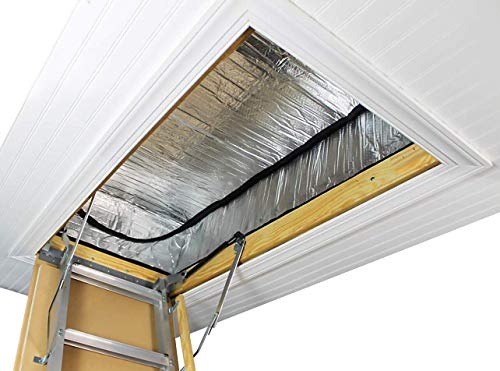
Premium Energy Saving Attic Door Insulation Stairway Cover Stair Ladder Opening Attic Tent with Easy Access Zipper 25" x 54" x 11"
[ Premium ] Constructed of of Aluminum Material with insulation inside to allow for an all year round…
As an affiliate, we earn on qualifying purchases.
As an affiliate, we earn on qualifying purchases.
Historical and Architectural Origins of Dead-End Staircases
Staircases that lead to no current functional space are not a modern phenomenon. Historically, they appeared in homes from the Victorian era through the early 20th century, often serving as access points to attics, servants’ quarters, or secret rooms. Changes in building codes, interior redesigns, and the removal of upper floors have rendered many of these staircases obsolete, leaving behind architectural curiosities.
Recent interest in these features has been fueled by homeowners seeking to understand their properties’ histories and architects aiming to document architectural evolution. Some of these staircases are considered aesthetic or nostalgic features, while others have practical origins that are now hidden beneath layers of renovation.
Experts emphasize that each staircase’s history can vary widely depending on its location and the building’s age, making professional assessment crucial for accurate interpretation.
“Many of these staircases are remnants of a bygone era, serving purposes that are no longer relevant but still tell a story about past living arrangements.”
— an anonymous researcher
historical staircase restoration kit
As an affiliate, we earn on qualifying purchases.
As an affiliate, we earn on qualifying purchases.
Unresolved Questions About the Purpose of Some Staircases
While many dead-end staircases have documented historical purposes, some remain mysterious, with their original function unclear. It is not yet confirmed whether all such structures were intentional design features or later additions, and some may have been modified over time without documentation.
Further research and detailed inspections are needed to determine the full range of reasons behind these staircases, especially in homes with limited historical records.

SKYGLEAM Stair Storage Basket 2-Pack with Handles, Collapsible & Anti-Slip Staircase Organizer for Carpeted & Wooden Stairs – Perfect for Clothes, Books, Toys, Tools, and Magazines (16" Step)
Fits 16" Steps — Anti-Slip & Stable: Special anti-slip backing and a form-fitting base keep the basket secure…
As an affiliate, we earn on qualifying purchases.
As an affiliate, we earn on qualifying purchases.
Future Steps in Research and Home Restoration
Experts plan to conduct more detailed surveys and historical analyses of homes featuring these staircases. Homeowners are encouraged to consult preservation specialists before making structural changes. As understanding deepens, guidelines may emerge for safely preserving or repurposing these architectural features, balancing historical integrity with modern safety standards.

Roving Cove Stair Banister Guard 15ft x 3ft, Railing Safety Net for Baby Proofing, Child Safety Stairway Cover, Balcony Mesh Netting, Pearl White
Safety Net for Baby Proofing and Childproofing Stairs and Balcony. HEAVY-DUTY FABRIC: Heavy-grade fabric resistant to pulls and…
As an affiliate, we earn on qualifying purchases.
As an affiliate, we earn on qualifying purchases.
Key Questions
Are staircases leading to nowhere dangerous?
Not necessarily. Many are structurally sound but disconnected from current living spaces. However, they can pose safety risks if not properly assessed, especially if they are deteriorated or lead to unstable areas.
Can these staircases be restored or repurposed?
Yes, with professional evaluation, some staircases can be restored or integrated into modern layouts, preserving historical features while improving functionality.
Why do some homes still have these staircases?
They are remnants of past architectural designs, often left behind during renovations or due to changes in building use over time.
Should I remove a staircase that leads nowhere?
Not without consulting a structural engineer or preservation specialist, as it may have historical value or structural importance that isn’t immediately apparent.
What should I do if I find a staircase leading nowhere in my home?
Have a professional inspection to assess its safety and historical significance before deciding on renovation or removal.
Source: rss