To design for aging in place with DIY accessibility upgrades, start by removing thresholds and clutter to prevent falls. Widen doorways and install lever-style handles for easier navigation. Add grab bars in bathrooms and slip-resistant mats in wet areas for safety. Use smart home devices like motion sensors and voice assistants for convenience. These simple, cost-effective modifications help you stay independent longer while creating a safer home environment—explore more to learn how to implement these upgrades effectively.
Key Takeaways
- Implement simple modifications like grab bars and lever handles to improve safety and ease of use.
- Widen doorways and remove thresholds to facilitate mobility aid access throughout the home.
- Use smart home devices for remote control of lighting, thermostats, and security to enhance convenience and safety.
- Secure loose cords, add non-slip mats, and declutter to prevent accidents and falls.
- Plan for future mobility needs by installing ramps, stairlifts, and adaptable fixtures that support long-term independence.
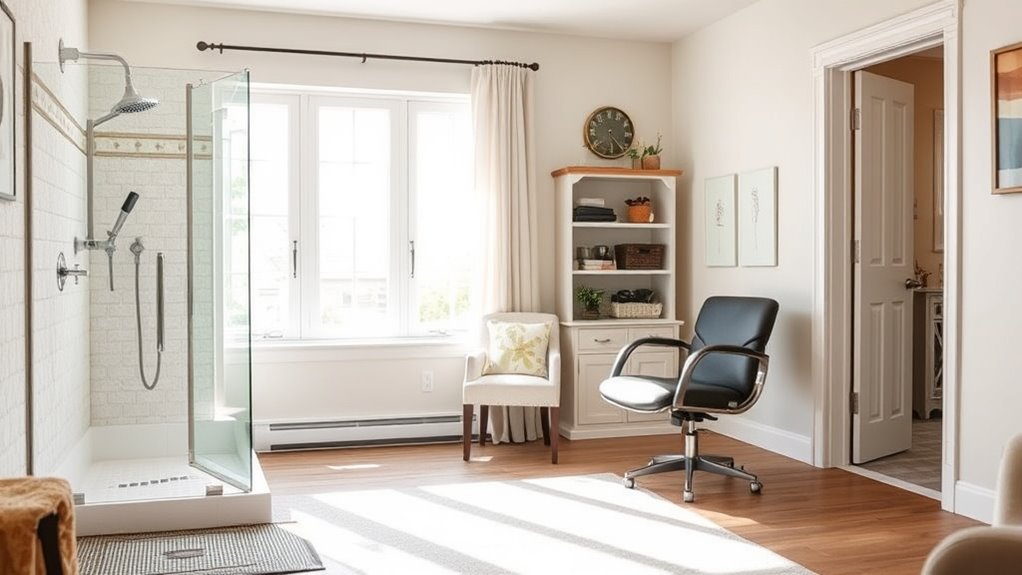
As the population ages, more seniors prefer to stay in their homes rather than move to assisted living facilities. If you’re looking to make your home safer and more accessible, there are simple DIY upgrades you can implement today. Incorporating smart home technology and universal design principles can considerably enhance your independence and comfort. These adjustments don’t have to be costly or complicated; small changes can make a big difference.
Start with smart home technology. Installing voice-activated assistants like Amazon Alexa or Google Home allows you to control lights, thermostats, and even appliances hands-free. Motion-sensor lighting is another easy upgrade that improves visibility and reduces fall risks at night. You can also consider smart locks or doorbells that enable remote access or video monitoring, providing peace of mind without needing to get up or move to answer the door. These devices are user-friendly and often require minimal setup, making them perfect for DIY projects. They not only add convenience but also create a safer environment by offering better control over your home’s security and systems.
Smart home devices like voice assistants, motion lighting, and smart locks enhance safety and convenience effortlessly.
Universal design is about creating a space that’s accessible to everyone, regardless of age or ability. You can start by removing thresholds or area rugs that might cause tripping hazards. Widening doorways or installing lever-style door handles makes it easier to navigate with mobility aids or arthritis. Installing grab bars in the bathroom near the toilet and shower provides support and stability, reducing the risk of falls. Consider replacing traditional sinks with wall-mounted or roll-under models to allow easier access if mobility becomes limited. These modifications are straightforward and often involve simple tools, making them perfect for a DIY approach. Additionally, understanding home safety principles can help guide effective modifications that promote long-term well-being.
In addition to these physical upgrades, think about organizing your space for ideal safety. Clear clutter, secure loose cords, and use non-slip mats in wet areas. Adding a stairlift or ramp outside your home can also facilitate easier access, especially if stairs are a concern. When planning these upgrades, keep your current needs in mind but also consider future changes in mobility. The goal is to create a home environment that adapts with you, giving you confidence to live independently longer.
Incorporating smart home technology and universal design principles doesn’t require professional help. With a bit of research and effort, you can make your home safer, more accessible, and comfortable. These DIY accessibility upgrades empower you to maintain your independence while enjoying the familiarity of your own space.
Frequently Asked Questions
How Do I Assess My Home’s Specific Accessibility Needs?
To assess your home’s specific accessibility needs, start by evaluating your current home safety features and identifying potential hazards. Consider aging considerations like mobility, vision, and balance challenges. Walk through each room, noting areas where modifications could improve safety, such as grab bars or ramps. Consult with an occupational therapist or accessibility expert if needed. This proactive approach helps make certain your home remains safe, functional, and comfortable as you age.
What Are Cost-Effective DIY Upgrades for Mobility?
To improve mobility affordably, consider simple DIY upgrades like installing ergonomic tools and adjustable grab bars. You can also incorporate home automation features like smart lighting and voice-activated controls to enhance safety and ease of movement. These upgrades help create a more comfortable environment, making daily routines smoother without breaking the bank. With a little effort, you’ll enjoy greater independence and peace of mind in your home.
Are There Any Safety Risks With DIY Accessibility Modifications?
Yes, there are safety risks with DIY accessibility modifications. You need to carefully conduct hazard identification to spot potential dangers like loose handrails or uneven flooring. If you overlook these risks, liability concerns could arise if someone gets injured. Always follow safety guidelines, use proper tools, and consider consulting professionals for complex tasks. This way, you minimize hazards and protect yourself from liability issues.
How Can I Personalize Upgrades to Match My Style?
Did you know that personalized spaces increase comfort and confidence? To match your style, add decorative touches like colorful grab bars or patterned non-slip mats. Integrate your decor by choosing stylish rails or subtle lighting that complements your home’s aesthetic. You can even create custom signage or artwork nearby. These upgrades blend functionality with your unique style, making your space both accessible and visually inspiring.
What Permits or Regulations Should I Be Aware Of?
You should check local building codes and zoning laws before starting your upgrades. These regulations make sure your modifications meet safety and accessibility standards. Visit your city or county’s building department website or contact them directly to get specific requirements. Permits might be needed for major changes like adding ramps or widening doorways. Staying compliant helps avoid fines or delays, so always verify what’s necessary in your area before beginning your DIY projects.
Conclusion
So, as you make these DIY accessibility upgrades, you might think you’re creating a home that’s future-proof. Ironically, the very changes meant to make aging easier could turn your house into a fortress of constant tinkering. But hey, isn’t that what makes life interesting? With a little effort now, you might just avoid those costly moves later—though, in the end, isn’t staying put what we all secretly hope for?