
For a MacBook Pro for 3D modeling and VFX, my best overall pick is the 16-inch M5 Pro with 48GB of memory: it balances a larger workspace, capable graphics, and room for demanding scenes. The 16-inch M5 Pro with 64GB is a stronger fit for heavier projects, while the 14-inch M5 Pro with 48GB offers a more portable alternative. The main tradeoff is between memory and sustained workload capacity on one side, and size and portability on the other. Renewed M4 Pro and M4 Max models may suit buyers prioritizing their chip tier, but condition and warranty deserve close attention. Read on for the full comparison and guidance on choosing a configuration for your software and projects.

Get furniture and decor delivered free with Prime
- Fast, free delivery on millions of items
- Prime Video, Amazon Music and more included
- Member-only deals all year
Complete the kit


Key Takeaways
- The 16-inch M5 Pro with 48GB is my overall pick because it pairs substantial memory with a larger work area without stepping up to the 64GB configuration.
- The 64GB M5 Pro is the clearest fit for larger scenes, multitasking, and memory-hungry workloads; it prioritizes headroom over portability.
- The 14-inch M5 Pro with 48GB offers a more compact way to get substantial memory, but its smaller display is less comfortable for long timeline and viewport sessions.
- The M4 Max models offer a higher graphics-tier option than the Pro configurations, but both listed 14-inch versions are renewed, so purchase condition and seller terms matter.
- The 16GB M5 configuration is the entry point in this group and makes more sense for lighter modeling and learning than for large scenes or sustained VFX work.



| macbook pro for 3d modeling and vfx | Processor | Storage | Display | Memory |
|---|---|---|---|---|
| Apple 16-inch MacBook Pro with | Apple M5 Pro | 1TB SSD | 16.2-inch Liquid Retina XDR | 48GB unified memory |
| Apple 2024 MacBook Pro with M4 | M4 Pro or M4 Max chip, as listed | 512GB SSD | 16.2-inch Liquid Retina XDR | — |
| Apple 2024 MacBook Pro Laptop | M4 Max | 1TB SSD | 14-inch Liquid Retina XDR | 36GB unified memory |
| Apple 2025 MacBook Pro Laptop | Apple M5 chip | 1TB SSD | 14.2-inch Liquid Retina XDR | 16GB unified memory |
| Apple 2024 MacBook Pro with M4 | M4 Max | 1TB SSD | 14.2-inch Liquid Retina XDR | 36GB |
| Apple 16-inch MacBook Pro with | M5 Pro 18-core CPU | 1TB SSD | 16-inch Liquid Retina XDR | 64GB |
| Apple MacBook Pro Laptop with | Apple M5 Pro chip with 15-core CPU | 1TB SSD | 14.2-inch Liquid Retina XDR | 48GB Unified Memory |
More Details on Our Top Picks
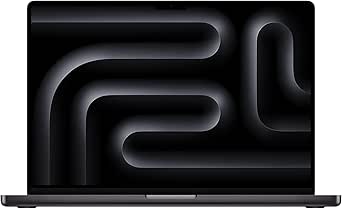
Apple 16-inch MacBook Pro with M5 Pro, 48GB Memory, 1TB SSD, Space Black
For 3D artists who want room for complex scenes and demanding effects work, this 16-inch M5 Pro configuration is the strongest all-rounder in this group. Its 18-core CPU, 20-core GPU, and 48GB unified memory give demanding creative applications more headroom than the 16GB M5 model, while the 1TB SSD leaves more working space than the renewed 16-inch M4 Pro’s 512GB drive. The 16.2-inch XDR screen also gives timelines, reference images, and interface panels more breathing room than either 14-inch M4 Max option. The tradeoff is size: this is less convenient to carry than the compact M4 Max models, and its GPU is not the M4 Max’s. I’d choose it for a balanced mobile workstation, not buyers whose software specifically benefits more from a Max-tier GPU.
Pros:- 48GB unified memory provides useful headroom for complex scenes and multitasking
- 18-core CPU and 20-core GPU suit demanding creative workloads
- 16.2-inch Liquid Retina XDR display offers generous workspace and high contrast
- 1TB SSD and broad ports support larger project libraries and connected workflows
Cons:- The 16.2-inch chassis is less convenient to carry than the 14-inch models
- M4 Max options may suit GPU-heavy workflows better
- Some Apple ecosystem features depend on other Apple devices
Best for: 3D generalists and VFX artists who need substantial memory, a large built-in display, and strong CPU/GPU capacity for professional projects.
Not ideal for: Artists who prioritize the highest available GPU tier in this lineup or need a smaller laptop for frequent travel.
- Model year:2026
- Processor:Apple M5 Pro
- CPU:18-core
- GPU:20-core
- Memory:48GB unified memory
- Storage:1TB SSD
- Display:16.2-inch Liquid Retina XDR
- Ports:3 Thunderbolt 5, MagSafe 3, SDXC card slot, HDMI, headphone jack
- External display support:Up to three displays
Our verdict“Choose this M5 Pro if you want a large-screen MacBook Pro with ample memory and balanced capacity for serious 3D and VFX work.”
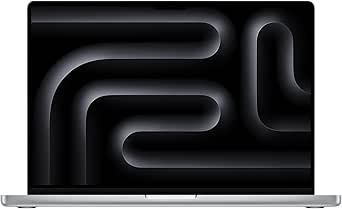
Apple 2024 MacBook Pro with M4 Pro Chip, 16-inch, 24GB RAM, 512GB SSD, Silver (Renewed)
This renewed 16-inch MacBook Pro makes sense for artists who value a roomy built-in canvas but don’t need the newest chip or the highest memory tier. The M4 Pro and 24GB RAM give it a more capable starting point for creative work than the 16GB M5 MacBook Pro, while its 16.2-inch Liquid Retina XDR display matches the screen size of the M5 Pro model. Its limitation is apparent beside that newer M5 Pro: it has half the listed storage and half the unified memory, leaving less room for large assets and simultaneous applications. The product data also lists the processor as “M4 Pro or M4 Max,” so buyers should confirm the exact configuration before purchasing. Since it is renewed, warranty coverage may differ from a new machine.
Pros:- 16.2-inch Liquid Retina XDR display provides a roomy workspace
- 24GB RAM is more headroom than the 16GB M5 model offers
- Three Thunderbolt 5 ports plus HDMI, SDXC, and MagSafe 3
- All-day battery life is listed for mobile creative work
Cons:- 512GB SSD is limited for large project files and asset libraries
- 24GB RAM falls short of the 36GB and 48GB options in this group
- Renewed condition and warranty coverage may vary, and the processor listing is ambiguous
Best for: A 3D student or independent artist who wants a large XDR display and a Pro-class chip, and is comfortable buying a renewed configuration after confirming its details.
Not ideal for: VFX professionals with memory-heavy scenes, large local asset libraries, or a preference for a clearly specified new machine.
- Processor:M4 Pro or M4 Max chip, as listed
- Display:16.2-inch Liquid Retina XDR
- RAM:24GB
- Storage:512GB SSD
- Battery life:All-day
- Ports:3 Thunderbolt 5, MagSafe 3, SDXC, HDMI, headphone jack
- Condition:Renewed
- Color:Silver
Our verdict“Pick this renewed model if you want a large-screen Pro MacBook for moderate creative projects and can verify the exact chip and warranty.”
Apple 2024 MacBook Pro Laptop with M4 Max, 14-inch, 36GB RAM, 1TB SSD, Silver
This 14-inch M4 Max is the lineup’s clearest choice for artists who want a Max-tier chip in a more compact machine. Its 36GB unified memory and 1TB SSD give it a more comfortable starting point for substantial 3D projects than the 16GB M5, while the M4 Max makes it a stronger fit for GPU-focused work than the M4 Pro renewed 16-inch model. You also get a Liquid Retina XDR display and the listed three Thunderbolt 5 ports, HDMI, and SDXC slot. The compromise is screen area: modeling and compositing interfaces have less room than on the 16-inch M5 Pro. This is also a 2024 model, and its listed weight of 4.73 pounds means “compact” here is relative, not featherlight.
Pros:- M4 Max chip is the lineup’s dedicated Max-tier option for demanding creative work
- 36GB unified memory offers more project headroom than the 16GB M5 model
- 1TB SSD provides space for active projects and working assets
- Thunderbolt 5, HDMI, and SDXC support a broad range of peripherals
Cons:- 14-inch display provides less workspace than the 16-inch MacBook Pro models
- Listed weight of 4.73 pounds is substantial for a travel-focused laptop
- 36GB memory is below the 48GB M5 Pro configurations in this roundup
Best for: Traveling 3D and VFX professionals who prioritize an M4 Max chip, 36GB memory, and 1TB storage over a larger built-in screen.
Not ideal for: Artists who need a large laptop display for detailed timelines or want more memory than 36GB for especially demanding scenes.
- Processor:M4 Max
- Display:14-inch Liquid Retina XDR
- Memory:36GB unified memory
- Storage:1TB SSD
- Weight:4.73 pounds
- Dimensions:14.01 x 9.77 x 0.66 inches
- Battery life:All-day
- Ports:3 Thunderbolt 5, MagSafe 3, SDXC, HDMI, headphone jack
Our verdict“Choose this M4 Max if GPU-focused creative work matters more to you than having a large built-in display.”
Apple 2025 MacBook Pro Laptop with M5 Chip, 14.2-inch Liquid Retina XDR Display, 16GB RAM, 1TB SSD, Space Black
This 14.2-inch M5 is the entry point in this group for people learning 3D modeling or doing lighter creative work. Its 10-core CPU and 10-core GPU, 1TB SSD, and Liquid Retina XDR display make it a capable general-purpose creative laptop, but its 16GB unified memory sets a lower ceiling than the 36GB M4 Max models and the 48GB M5 Pro. That gap matters when scenes grow, several creative apps are open, or effects workloads call for more memory. Compared with the renewed 16-inch M4 Pro, this model has a newer M5 chip and more listed storage, but it gives up screen size and has less memory. I’d treat it as a learning and lighter-project machine rather than a workstation for sustained, complex VFX jobs.
Pros:- M5 chip with a 10-core CPU and 10-core GPU supports general creative workloads
- 1TB SSD gives more local storage than the renewed 16-inch M4 Pro configuration
- 14.2-inch Liquid Retina XDR display in a more compact size than the 16-inch models
- All-day battery life is listed for mobile use
Cons:- 16GB unified memory is the lowest capacity among the reviewed configurations
- 10-core GPU is a weaker fit for demanding 3D and VFX work than the M4 Max options
- Three Thunderbolt 4 ports are an older standard than the Thunderbolt 5 ports listed on several alternatives
Best for: Students and new 3D artists building skills with smaller scenes who want a compact MacBook Pro and 1TB of storage.
Not ideal for: Working VFX artists or 3D users handling complex scenes, heavy multitasking, or memory-hungry projects.
- Processor:Apple M5 chip
- CPU:10-core
- GPU:10-core
- Display:14.2-inch Liquid Retina XDR
- Memory:16GB unified memory
- Storage:1TB SSD
- Ports:3 Thunderbolt 4, MagSafe 3, SDXC card slot, HDMI, headphone jack
- Color:Space Black
Our verdict“Choose this M5 for learning and lighter projects, but step up to a 36GB or 48GB model if your scenes or effects workloads are already demanding.”
Apple 2024 MacBook Pro with M4 Max Chip, 14-inch, 36GB RAM, 1TB SSD, Silver (Renewed)
For buyers set on an M4 Max but open to a renewed laptop, this 14-inch configuration pairs 36GB RAM with a 1TB SSD in a portable-for-its-class MacBook Pro. Those capacities make it a more convincing VFX workstation starting point than the 16GB M5, and its Max chip places it above the renewed M4 Pro when GPU-heavy work is the priority. The listed support for up to four external displays with M4 Max also suits a desk setup with multiple screens. The main reason it ranks below the new M4 Max option is purchase uncertainty: renewed condition may come with limited warranty coverage. It also shares the 14-inch screen’s space constraints, so a 16-inch M5 Pro is a better fit for artists who rely on the laptop display as their main canvas.
Pros:- M4 Max chip targets demanding professional creative workloads
- 36GB RAM and 1TB SSD provide room for active projects and assets
- Supports up to four external displays with M4 Max
- 14-inch format is easier to carry than the 16-inch alternatives
Cons:- Renewed condition may mean limited warranty coverage
- 14-inch display offers less workspace than the 16-inch M5 Pro
- 36GB RAM is less than the 48GB M5 Pro configurations
Best for: 3D and VFX professionals who want M4 Max performance, 36GB memory, and multi-display support, and are willing to assess renewed-device coverage.
Not ideal for: Buyers who need a new-device warranty, want a larger built-in workspace, or would rather have 48GB memory in an M5 Pro model.
- Processor:M4 Max
- Display:14.2-inch Liquid Retina XDR
- Memory:36GB
- Storage:1TB SSD
- Battery life:All-day
- Ports:3 Thunderbolt 5, MagSafe 3, SDXC, HDMI, headphone jack
- External display support:Up to 4 with M4 Max
- Condition:Renewed
- Color:Silver
Our verdict“Pick this renewed M4 Max if you want Max-tier capability and multi-display support in a 14-inch machine, and accept the warranty tradeoff.”
Apple 16-inch MacBook Pro with M5 Pro Chip, 64GB RAM, 1TB SSD, Space Black
For artists juggling dense scenes, large textures, and several creative apps, the 64GB of memory is the main reason to choose this 16-inch configuration. Its 18-core CPU and 20-core GPU give it more listed processing and graphics cores than the 14.2-inch M5 Pro model with a 15-core CPU and 16-core GPU, making this the stronger fit on paper for parallel workloads and GPU-accelerated tasks. The 16-inch Liquid Retina XDR display also gives timelines and reference panels more room. The tradeoff is portability: its larger body is less convenient to carry, and 1TB can fill quickly with project files and cached assets. Choose it over the 16-inch M5 Pro with 48GB RAM when memory headroom matters more than carrying weight.
Pros:- 64GB of RAM provides more headroom for complex scenes and multitasking than the listed 48GB M5 Pro configurations.
- 18-core CPU and 20-core GPU offer the highest listed core counts among these two products.
- 16-inch Liquid Retina XDR display provides more workspace for timelines, viewports, and reference material.
- 1TB SSD provides useful local capacity for active projects and applications.
Cons:- The 16-inch size makes it less convenient to carry between studios or work locations.
- The 1TB SSD may be restrictive for large asset libraries, cache files, and several active projects.
- The higher-end configuration may be more machine than lighter 3D and editing workloads need.
Best for: 3D artists and VFX editors who work with memory-hungry scenes, large assets, and multiple creative applications open at once.
Not ideal for: Frequent travelers or artists whose projects fit comfortably within less memory; the larger 16-inch chassis is less portable, and those who need more than 1TB of local project storage may need external drives.
- Processor:M5 Pro 18-core CPU
- GPU:20-core GPU
- Memory:64GB
- Storage:1TB SSD
- Display:16-inch Liquid Retina XDR
- Color:Space Black
Our verdict“Choose this 16-inch model if memory capacity and a larger work area matter more to your 3D and VFX workflow than portability.”
Apple MacBook Pro Laptop with M5 Pro Chip, 15-core CPU, 16-core GPU, 14.2-inch Liquid Retina XDR Display, 48GB RAM, 1TB SSD, Space Black
This 14.2-inch MacBook Pro makes the more portable case for serious creative work: 48GB of unified memory and a 1TB SSD give 3D artists a capable base for substantial scenes and active project files, while the smaller display and chassis are easier to take between locations. Compared with the 16-inch M5 Pro model with 64GB RAM and a 20-core GPU, it gives up memory, CPU cores, GPU cores, and screen area. That makes it less suited to the largest scenes or sustained, heavy VFX sessions, but its listed three Thunderbolt 5 ports, HDMI, and SDXC slot help connect a practical workstation setup. The display remains Liquid Retina XDR; the decision is whether portability outweighs the 16-inch model’s extra headroom.
Pros:- 48GB unified memory supports demanding creative multitasking in a more compact configuration.
- 14.2-inch Liquid Retina XDR display is easier to fit into a mobile workflow than the 16-inch alternative.
- Three Thunderbolt 5 ports, HDMI, and SDXC provide useful connections for displays and media.
- 1TB SSD offers local room for active projects and creative applications.
Cons:- Its 15-core CPU and 16-core GPU have lower listed core counts than the 16-inch M5 Pro with 18-core CPU and 20-core GPU.
- The smaller display leaves less room for a 3D viewport, timelines, and reference panels.
- The 1TB SSD can be limiting for extensive project archives and large render caches.
Best for: Mobile 3D artists, compositors, and editors who need substantial memory and built-in media connections in a smaller laptop.
Not ideal for: Artists routinely handling very large scenes, heavy simulations, or layered VFX projects who would benefit from the 16-inch model’s 64GB memory, higher listed core counts, and larger display.
- Processor:Apple M5 Pro chip with 15-core CPU
- GPU:16-core GPU
- Display:14.2-inch Liquid Retina XDR
- Memory:48GB Unified Memory
- Storage:1TB SSD
- Ports:Three Thunderbolt 5, MagSafe 3, SDXC, HDMI, headphone jack
- Connectivity:Wi-Fi 7, Bluetooth 6
- Camera:12MP Center Stage
- Battery Life:All-day
Our verdict“Pick this model if you need a more portable M5 Pro laptop with substantial memory, and accept less headroom and screen space than the 16-inch 64GB option.”

How We Picked
I compared these configurations through the demands of 3D modeling and VFX: memory capacity for scenes and applications, chip tier for graphics-heavy work, storage for project files and caches, and screen size for viewport and timeline use. I also weighed portability against the comfort of a larger display, since a laptop that travels well may be less pleasant for extended desktop sessions.
The ranking favors configurations with a practical balance of memory, graphics capability, and workspace for sustained creative use. The 16-inch M5 Pro with 48GB leads as the broadest fit, while the 64GB version moves ahead for memory-intensive projects. M4 Max options remain compelling for buyers who prioritize the higher graphics tier, but their renewed status keeps them from taking the top spot. The 16GB M5 model ranks as a lighter-workload choice rather than a strong match for demanding VFX pipelines.
| macbook pro for 3d modeling and vfx | Processor | Color |
|---|---|---|
| Apple 16-inch MacBook Pro with | Apple M5 Pro | — |
| Apple 2024 MacBook Pro with M4 | M4 Pro or M4 Max chip, as listed | Silver |
| Apple 2024 MacBook Pro Laptop | M4 Max | — |
| Apple 2025 MacBook Pro Laptop | Apple M5 chip | Space Black |
| Apple 2024 MacBook Pro with M4 | M4 Max | Silver |
| Apple 16-inch MacBook Pro with | M5 Pro 18-core CPU | Space Black |
| Apple MacBook Pro Laptop with | Apple M5 Pro chip with 15-core CPU | — |
Factors to Consider When Choosing Macbook Pro For 3d Modeling And Vfx
Before choosing among these MacBook Pro configurations, match the machine to the work that consumes the most resources in your own pipeline. A modeling-focused workflow, a compositing-heavy project, and a scene with large textures can put different pressure on memory, graphics, storage, and screen space. These broader checks can help prevent paying for the wrong kind of headroom.
Match Memory to Scene Size and App Use
Memory limits can show up as slowdowns when large scenes, textures, simulations, and several creative applications are open at once. More memory is headroom, not a substitute for a faster graphics chip, so identify which resource is actually limiting your work. If you mainly model modest assets or are learning, a lower-memory configuration may be workable; heavy scenes and multitasking favor 48GB or 64GB. A common mistake is to budget around the application alone and forget browser tabs, reference tools, and background renders. Check the requirements of your specific software and typical project files before treating any memory tier as sufficient.
Choose Pro or Max by Workload, Not Name
A higher chip tier can make sense when your renderer or effects workflow benefits from more graphics resources, but the label alone does not tell you how much faster your entire pipeline will feel. Modeling, rendering, simulation, and compositing stress hardware differently, and software support varies. Check whether your main applications use Apple silicon effectively and whether your renderer relies on the GPU, CPU, or both. If you render occasionally or rely on external render resources, a Pro configuration may be the more balanced choice. Paying for a Max tier is easier to justify when local GPU work is a regular, time-sensitive part of your process.
Treat Storage as Project and Cache Capacity
Storage fills with more than final project files: source footage, texture libraries, simulation caches, previews, and application assets all add up. One terabyte provides a useful starting point, but active VFX work can outgrow internal storage quickly. An external drive can expand capacity, though it adds another item to carry and may affect the convenience of working on the move. Avoid assuming that archived files will stay archived if you regularly reopen older projects. Estimate the size of current jobs and leave room for temporary cache files rather than planning around the operating system alone.
Decide Whether 14 Inches Is Enough Workspace
A 14-inch MacBook Pro is easier to carry between locations, but its display gives less room for a 3D viewport, node editor, timeline, and panels at once. The 16-inch model favors extended sessions, while a smaller model can be a better travel workstation or a laptop that often connects to an external monitor. Think about where you do most of your work before choosing solely by portability. Scaling interface elements down can fit more controls but may make them harder to use. If you rely on a portable setup without a separate display, screen size can matter as much as a chip upgrade.
Check Renewed-Product Terms Before Choosing a Chip Tier
A renewed M4 configuration can offer a different performance mix from a newer Pro model, but the purchase also depends on the specific seller, grading, included accessories, return window, and warranty. Compare the exact condition and support terms rather than assuming every renewed listing is equivalent. Check battery-health disclosures where available and confirm that the memory and storage match the configuration you need. This is especially relevant for the renewed M4 Max options, whose graphics tier may appeal to VFX buyers but does not remove the uncertainty tied to product condition. If predictable coverage matters more than obtaining a particular chip tier, a new model may be the simpler choice.
Plan for Your Actual Rendering Setup
A laptop choice should reflect where final renders happen, not only how quickly the machine can preview a scene. Local rendering favors stronger sustained performance, while a studio render farm or remote workstation can reduce the need to equip the laptop for every final frame. Account for travel, power access, external displays, and the time you spend waiting on previews. A portable Pro model may suit a pipeline that offloads final work, while local GPU rendering can make a Max configuration more appealing. Check your renderer’s macOS and Apple silicon support before choosing hardware around a feature your current workflow cannot use.
Frequently Asked Questions
Is 16GB of memory enough for 3D modeling and VFX?
It can suit lighter work, such as learning, modest models, and smaller projects, but it leaves less room for large scenes and several demanding apps running together. VFX work can add memory pressure through footage, caches, textures, and compositing layers. If your projects are growing or you regularly multitask, the 48GB and 64GB configurations in this roundup provide more headroom. Check the memory needs of your specific software and the size of your usual files. Choose 16GB only if your workload is genuinely modest or portability and basic creative use are the priority.
Should I choose an M4 Max or an M5 Pro for VFX?
Your renderer and effects workload should decide, not the generation or tier name by itself. The M4 Max configurations here offer a higher graphics-tier option, while the M5 Pro models pair a newer chip family with 48GB or 64GB of memory in the listed configurations. GPU-heavy local rendering may favor the Max tier, but memory-heavy scenes can make the Pro models with more memory a better fit. Confirm that your main applications support the hardware features you plan to use. Since the listed M4 Max models are renewed, weigh seller condition and warranty terms alongside performance needs.
Is the 14-inch MacBook Pro practical as my only 3D workstation?
Yes, if portability matters and you can work comfortably on a smaller screen, especially when you sometimes connect an external display. The 14-inch models in this roundup include options with 36GB or 48GB of memory, so compact size does not automatically mean low capacity. Without a second screen, interface panels and timelines can compete for space with the viewport. Consider how often you work away from a desk and whether you need several windows visible at once. If the laptop will be your main display for long sessions, the 16-inch options are easier to justify.
Does a 1TB SSD provide enough space for VFX projects?
It is a workable starting capacity, not a guarantee that you will never need external storage. Footage, texture collections, render outputs, and simulation caches can consume space quickly, especially when several jobs are active. Review the size of your recent projects and account for working copies and temporary files. An external drive can handle archives or active assets, but it adds a connection and another device to manage. If your workflow keeps large media libraries on the laptop, plan for storage expansion from the beginning.
Is a renewed MacBook Pro a sensible choice for professional work?
It can be, provided the condition and support terms are clear. The renewed M4 Pro and M4 Max options may appeal if their chip and memory configurations suit your workflow, but seller policies can differ. Check the return period, warranty coverage, battery information, and exact listed specifications before ordering. For paid work with deadlines, downtime and repair logistics matter alongside raw performance. Choose a new model if predictable coverage is more valuable to you than the specific renewed configuration.
Conclusion
For most 3D artists and VFX creators, I recommend the 16-inch M5 Pro with 48GB as the best overall balance of memory, screen space, and capability. The 16-inch M5 Pro with 64GB is my best premium pick for large scenes and heavier multitasking, while the 14-inch M5 Pro with 48GB is the best fit when portability matters more. For beginners working on smaller projects, the 14-inch M5 with 16GB is the most approachable option here, with clear limits as workloads grow. Buyers prioritizing graphics-heavy local work can look closely at the renewed 14-inch M4 Max models, while the renewed 16-inch M4 Pro may suit those seeking a larger screen and a lower-memory Pro configuration. My best-value choice depends on the renewed model’s condition and terms: compare those carefully before choosing it over a new M5 Pro.