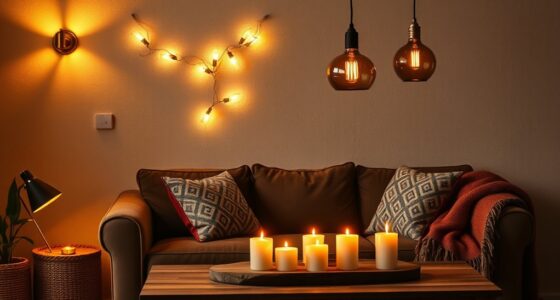
Layering rugs adds rich visual texture and depth to your space, making it more inviting and stylish. Start with a large, anchoring rug to support your furniture, then layer smaller rugs on top for contrast and interest. Play with different textures, patterns, and pile heights to create a dynamic look. Balance overlapping pieces for harmony, and consider rustic or vintage rugs for extra charm. Keep experimenting to elevate your decor—there’s plenty more to discover.
Key Takeaways
- Use a large, anchoring rug as the base to support furniture and create a foundation.
- Layer smaller rugs on top with partial overlaps or strategic placement for added visual interest.
- Incorporate rugs with varied textures, patterns, and pile heights to create tactile contrast.
- Arrange rugs asymmetrically or at angles to add movement and a dynamic feel.
- Ensure layered rugs complement your decor and do not obstruct movement or functionality.

Ever wonder how to add depth and style to your space effortlessly? Layering rugs is a fantastic way to do that, creating a rich visual texture that instantly elevates any room. When considering rugs with furniture, think beyond just matching colors or patterns. Instead, focus on how different rugs can complement your existing decor while adding dimension. The key is to use rug placement strategies that balance harmony and contrast, guiding the eye and making your space feel more inviting.
Start by selecting a primary rug that anchors your furniture layout. Usually, this rug should be large enough to fit under your main seating area, with enough space around the edges to create a defined zone. When layering, you can add smaller rugs on top, either partially overlapping or positioned strategically to highlight certain areas. For example, a textured jute rug under a sleek leather sofa can provide a natural, earthy base, while a smaller, patterned runner can be layered on top to add visual interest. This technique not only enhances the overall aesthetic but also helps to define different zones within an open-plan space.
Choose a large, anchoring rug and layer smaller rugs for added style and zone definition.
Rug placement strategies are essential for achieving a cohesive layered look. When layering, aim for a balanced composition—avoid cluttered overlaps that obscure the underlying rug. Instead, use rugs with furniture as starting points, ensuring that the larger base rug supports the main pieces, while the smaller rugs serve as accents. Position the top rugs so that they don’t completely cover the larger one, allowing the underlying textures and colors to peek through. You might also consider angles or asymmetrical placements for a more dynamic appearance, especially in contemporary settings.
Another tip is to vary textures and pile heights. Combining a flat-woven rug with a shaggy or high-pile rug can create a tactile contrast that draws attention and adds depth. When layering, keep in mind the practicality of movement and comfort—make sure that the layered rugs don’t interfere with furniture placement or make walking awkward. Use rugs with furniture to anchor your arrangement, ensuring that all pieces work together harmoniously.
Additionally, selecting rugs that are rustic and vintage-inspired can enhance the farmhouse aesthetic by adding authentic charm and character. In the end, layering rugs is about experimenting with what feels right for your space. With thoughtful rug placement strategies, you can craft a layered look that’s both stylish and functional. It’s a simple yet effective way to add personality, texture, and depth to your home, making every room more welcoming and visually interesting.
Frequently Asked Questions
How Do I Prevent Rugs From Slipping When Layered?
To prevent layered rugs from slipping, you should use non-slip rug pads underneath each rug. These pads create friction, keeping the rugs securely in place. Additionally, employ secure layering techniques like tucking the edges neatly and arranging the rugs with slight overlaps. Regularly check the pads and edges to guarantee they stay in place, especially in high-traffic areas, to maintain safety and the layered look.
What Are the Best Rug Materials for Layering?
They say, “Choose your battles wisely,” and the same applies to rug materials. Opt for natural fibers like wool or jute for durability and thickness, which add texture without slipping. Synthetic options like polypropylene are also good, offering resilience and easy maintenance. Consider rug thickness to prevent uneven stacking. Durable materials guarantee your layered look stays lush and stable, making your space inviting and stylish.
Can Layering Rugs Work in Small or Narrow Spaces?
Layering rugs can work well in small or narrow spaces if you focus on space optimization and visual cohesion. Choose lightweight, proportionate rugs that don’t overwhelm the area, and layer them carefully to add texture without clutter. You might opt for a smaller, patterned rug over a neutral base to create depth. This approach enhances the room’s style while making the space feel more inviting and unified.
How Do I Clean Layered Rugs Effectively?
To clean layered rugs effectively, start by vacuuming carefully with gentle, overlapping strokes to remove dirt without disturbing the layers. Pay special attention to corners and edges. For stain removal, act quickly with appropriate stain removal methods—blot, don’t rub, and use a mild cleaner suitable for your rug fibers. This approach preserves your rugs’ texture while ensuring they stay fresh and clean, revealing their true beauty beneath.
What Color Combinations Enhance Layered Rug Aesthetics?
To enhance your layered rug aesthetics, choose color coordination that complements your room’s palette, sticking to neutral tones or soft hues for a cohesive look. Incorporate pattern mixing by combining subtle geometric designs with solid or textured rugs to add visual interest without clashing. Balance bold and muted colors, and guarantee the patterns vary in scale. This approach creates a harmonious, inviting space that feels thoughtfully curated and vibrant.
Conclusion
Layering rugs isn’t just about style—it’s about creating a space that feels warm and inviting. Some say it’s just a trend, but evidence shows layered rugs can actually improve acoustics and add comfort. When you combine different textures and patterns, you not only boost visual interest but also craft a personalized haven. So go ahead, experiment with layering; it’s a simple way to transform your room into a cozy, stylish retreat.