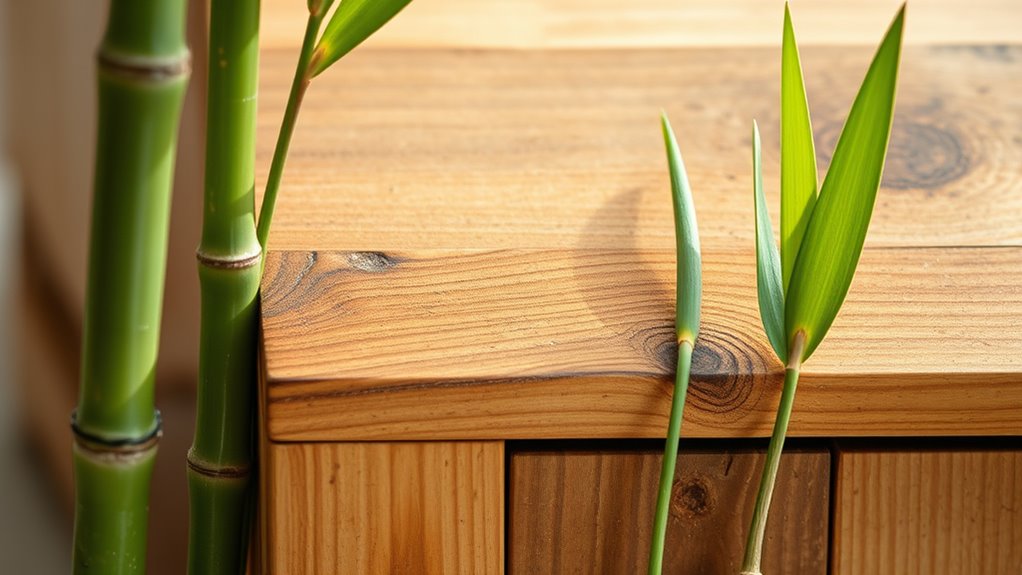

Reclaimed wood and bamboo are excellent sustainable options for eco-friendly projects. Reclaimed wood helps reduce waste, prevents deforestation, and adds unique character to furniture and décor. Bamboo grows rapidly, making it a renewable resource that supports responsible land management. Both materials decrease the demand for virgin timber and promote recycling. If you explore further, you’ll discover how these materials can transform your projects while supporting environmental conservation efforts.
Key Takeaways
- Reclaimed wood reduces waste and deforestation by repurposing materials from old structures, supporting a circular economy.
- Bamboo is a fast-growing, renewable resource that matures in 3-5 years, making it highly sustainable for various applications.
- Both materials minimize environmental footprints by decreasing demand for virgin timber and preventing landfills.
- Reclaimed wood offers unique aesthetic character, while bamboo promotes eco-friendly cultivation through selective harvesting.
- Using these materials encourages responsible land management and environmentally conscious manufacturing practices.
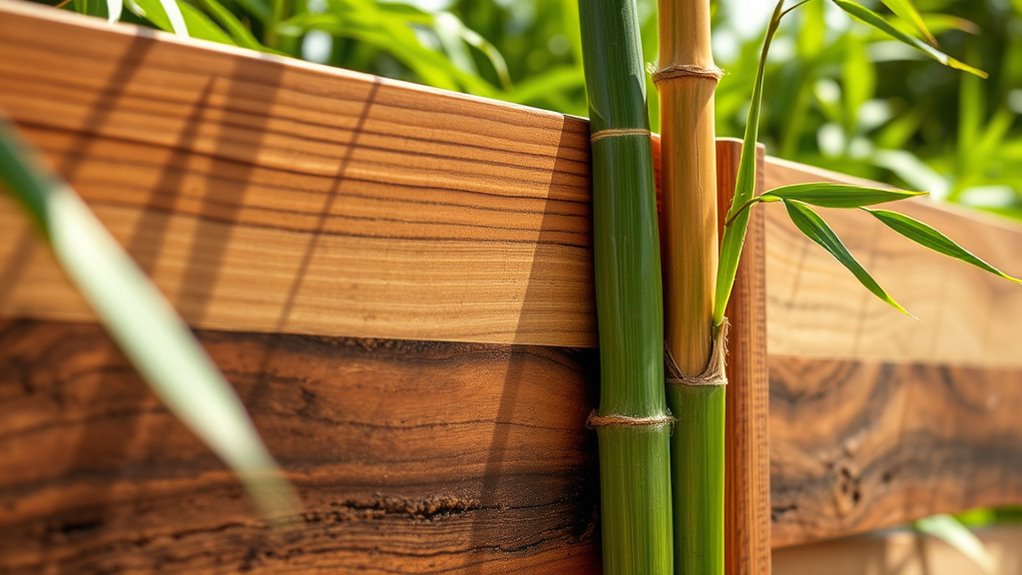
Have you ever wondered how your choices can help protect the environment? When you opt for sustainable materials like reclaimed wood and bamboo, you’re making a direct impact on reducing waste and conserving resources. Reclaimed wood uses are becoming more popular because they give new life to wood that would otherwise be discarded. Instead of cutting down fresh trees, you can choose furniture, flooring, and décor made from salvaged wood from old buildings, barns, or shipping pallets. This practice not only minimizes deforestation but also prevents the wood from ending up in landfills. By selecting reclaimed wood, you’re supporting a circular economy where materials are reused and repurposed, reducing the demand for virgin timber. It’s a smart way to enjoy natural aesthetics while helping to preserve forests and reduce the environmental footprint of manufacturing. Additionally, the use of reclaimed wood can help prevent deforestation and promote sustainable land management practices.
Bamboo cultivation methods are equally impressive in promoting sustainability. Bamboo is a fast-growing grass that can reach maturity in just three to five years, unlike traditional hardwoods that may take decades. This rapid growth rate makes bamboo an incredibly renewable resource. When you choose products crafted from bamboo, you’re supporting cultivation practices that are often designed to be eco-friendly. Many bamboo farms employ methods like selective harvesting, where only mature stalks are cut, allowing the plant to regenerate quickly without damaging the root system. Some sustainable bamboo cultivation methods also include organic farming practices that avoid harmful pesticides and chemicals, ensuring the soil remains healthy. Additionally, bamboo’s ability to grow densely means it can be harvested without disturbing the surrounding ecosystem, making it a highly efficient resource. These cultivation methods help minimize environmental impact while providing versatile materials for flooring, furniture, textiles, and more.

Coaster Home Furnishings – Harper – 3-Door Solid Reclaimed Wood Accent Cabinet with Drawers, Shelves – Farmhouse Style – Living Room, Entryway & Home Kitchen – 60-Inch – Brown – 950367
- Includes: One cabinet included
- Size: 60-inch wide accent cabinet
- Storage: Three doors with two shelves
As an affiliate, we earn on qualifying purchases.
As an affiliate, we earn on qualifying purchases.
Frequently Asked Questions
How Long Does Reclaimed Wood Typically Last in Construction?
Reclaimed wood can last 50 years or more in construction when you perform regular maintenance and follow proper durability testing. Its longevity depends on how well you care for it, including sealing, cleaning, and avoiding excessive moisture. If you stay proactive with maintenance practices, you’ll guarantee your reclaimed wood remains durable and beautiful for decades, making it a sustainable choice that stands the test of time.
Is Bamboo Cultivation Environmentally Sustainable Worldwide?
Yes, bamboo cultivation is generally environmentally sustainable worldwide. It grows quickly, requires minimal water, and doesn’t need pesticides or fertilizers, which reduces environmental impact. When you choose bamboo, you’re supporting a renewable resource that helps reduce deforestation and carbon emissions. Its fast growth cycle allows for continuous harvesting without harming ecosystems, making it an eco-friendly choice for sustainable building and product materials.
Can Reclaimed Wood Be Recycled or Reused After Demolition?
Yes, reclaimed wood can be recycled or reused after demolition, making it a durable and eco-friendly choice. Its durability guarantees it lasts for many more years, reducing waste. Reusing reclaimed wood also minimizes the impact of bamboo cultivation, which can sometimes strain local ecosystems. By choosing reclaimed wood, you help conserve resources and promote sustainable building practices, all while giving new life to materials that might otherwise be discarded.
Are There Any Health Concerns With Bamboo Flooring?
You might worry about bamboo flooring, but it’s generally safe for indoor air quality. Most bamboo floors are crafted with minimal chemical treatments, so they don’t release harmful toxins into your home. Just make sure to choose floors labeled low-VOC or VOC-free. This way, you protect your family’s health and enjoy the natural beauty of bamboo without the health concerns often associated with chemical treatments.
How Do Eco-Friendly Materials Compare in Cost to Traditional Options?
Eco-friendly materials, like reclaimed wood and bamboo, often have a higher initial investment compared to traditional options. However, their durability and sustainability can lead to savings over time, making the cost comparison favorable. You might pay more upfront, but you’ll benefit from eco-conscious choices that last longer and require less maintenance, ultimately balancing out the initial cost difference and supporting your commitment to sustainability.

JEEDESON Solid Bamboo Hardwood Flooring Planks, 37.8" x 3.78" x 0.6", Easy Tongue & Groove Floating Floor for Living Room Bedroom Study Room, 20 Planks (19.84 Sq Ft), Light Honey
- Natural Bamboo Material: Crafted from 100% natural bamboo
- Unique Natural Variations: Features slight texture and color variations
- Durable & Refinish-able: Allows multiple sand-and-refinish cycles
As an affiliate, we earn on qualifying purchases.
As an affiliate, we earn on qualifying purchases.
Conclusion
Think of sustainable and eco-friendly materials like reclaimed wood and bamboo as the heartbeat of a greener future. By choosing these natural resources, you’re planting seeds for a healthier planet—like nurturing a garden that blooms with hope and resilience. Every small step you take helps turn the tide, transforming our world into a vibrant, sustainable forest. Embrace these materials, and become part of the movement that’s rewriting the story of our environment—one eco-friendly choice at a time.

Reclaimed Vintage Wood Boxes, Set of 3 Sizes, Natural
- Set of 3 Reclaimed Wood Boxes: Three sizes in natural finish
- Versatile Home Decor: Suitable for vintage to farmhouse styles
- Decorative Storage Solution: Enhance mantels or console tables
As an affiliate, we earn on qualifying purchases.
As an affiliate, we earn on qualifying purchases.

VIVAGO Bamboo Toothbrushes 10 Pack – Soft Bristles Toothbrushes for Adults
- Eco-Friendly Bamboo Handles: Made from sustainable bamboo, fully compostable
- Family Pack of 10: Includes 10 toothbrushes, 2 per box, numbered for family members
- Gentle Bristles for Adults: Soft bristles suitable for adult use
As an affiliate, we earn on qualifying purchases.
As an affiliate, we earn on qualifying purchases.