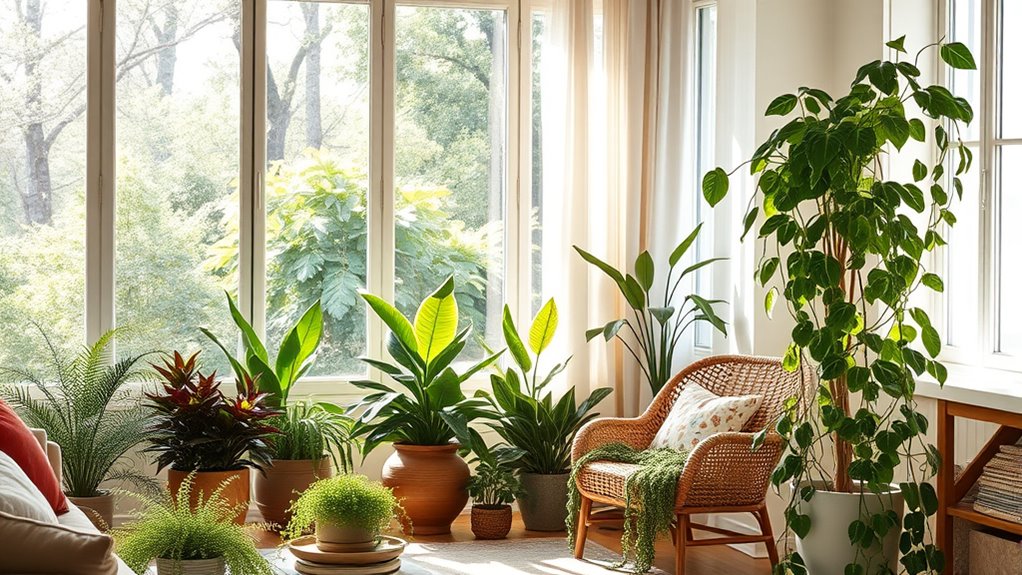

To create biophilic spaces, incorporate natural elements like indoor plants, natural light, and textured materials to reconnect with nature indoors. Choose low-maintenance plants suited to your light conditions, and enhance natural light with mirrors or light-colored walls. Use varied plant sizes and textures to add visual interest, and aim for a seamless blend of natural light and decor. Keep exploring for more ideas to transform your space into a calming, invigorating retreat that boosts well-being.

Get furniture and decor delivered free with Prime
- Fast, free delivery on millions of items
- Prime Video, Amazon Music and more included
- Member-only deals all year
Key Takeaways
- Select and incorporate low-maintenance indoor plants suited to your lighting conditions.
- Maximize natural light with reflective surfaces and light-colored walls to enhance space and plant health.
- Use natural elements like varied plant textures and sizes to mimic outdoor diversity and create visual interest.
- Integrate natural lighting and greenery to foster a calming, inviting atmosphere that supports well-being.
- Thoughtfully position plants near windows and use appropriate lighting to ensure they thrive indoors.
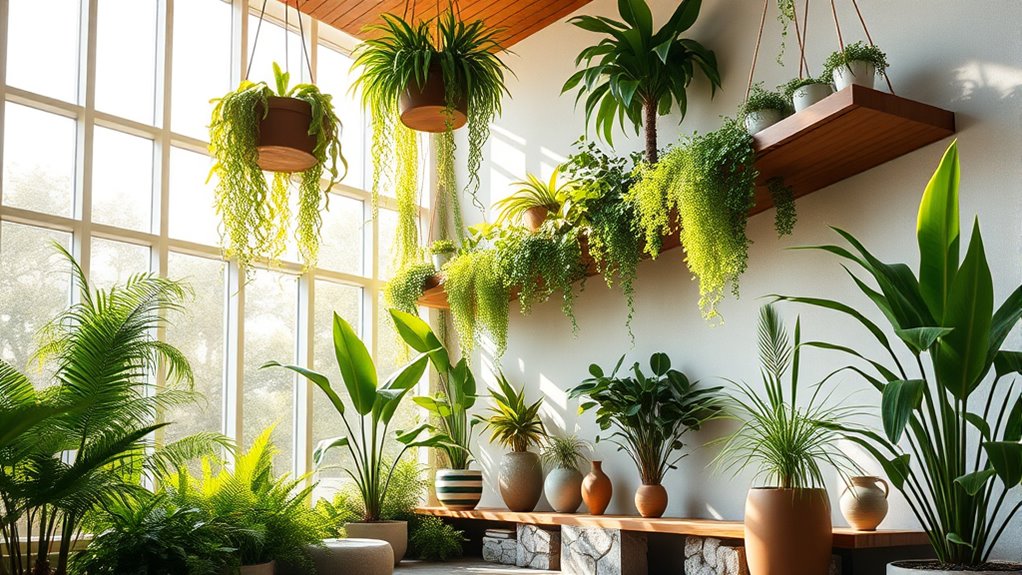
In today’s fast-paced world, creating biophilic spaces offers an essential way to reconnect with nature and enhance well-being. By thoughtfully integrating natural elements into your environment, you can transform any space into a calming, invigorating retreat. A key step in this process is selecting the right indoor plants. When choosing your indoor plant selection, consider plants that thrive indoors and require minimal maintenance. Popular options include pothos, snake plants, and peace lilies, which not only add visual interest but also improve air quality. Be mindful of your space’s lighting conditions to ensure your plants flourish; some thrive in low light, while others need bright, indirect sunlight. Incorporating a variety of plant sizes and textures can create a lush, layered look that mimics the diversity found in nature, making your space feel more alive and inviting. Additionally, understanding the importance of color accuracy in home environments can help you select complementary decor and lighting that enhance the natural aesthetic and overall atmosphere of your space.
Alongside plant selection, harness natural lighting techniques to amplify the biophilic effect. Natural light is a cornerstone of biophilic design because it influences mood and productivity. To maximize sunlight, position your plants near windows that receive ample daylight, and keep window treatments light and airy to allow sunlight to filter through without creating glare. If natural light is limited, consider using full-spectrum LED grow lights that replicate sunlight and support plant health. You can also enhance natural lighting by installing reflective surfaces like mirrors or light-colored walls that bounce light throughout the space. This not only brightens the room but also makes your indoor environment feel more open and connected to the outside world.
indoor low maintenance houseplants
As an affiliate, we earn on qualifying purchases.
As an affiliate, we earn on qualifying purchases.
Frequently Asked Questions
How Do Biophilic Designs Impact Mental Health Long-Term?
Biophilic designs positively impact your long-term mental health by reducing stress and enhancing your overall mood. When you bring natural elements indoors, you create a calming environment that promotes sustained emotional well-being. Over time, these spaces help you feel more connected to nature, which can lower anxiety and improve focus. Embracing biophilic design fosters a healthier mental state, supporting your emotional resilience and long-term happiness.
Are There Specific Plants Best Suited for Indoor Environments?
You should choose suitable houseplants like pothos, snake plants, and peace lilies for indoor environments. These indoor plant selections thrive in low light and require minimal maintenance, making them perfect for various spaces. When selecting indoor plants, consider their size, watering needs, and compatibility with your home’s conditions. Incorporating these suitable houseplants can boost your well-being and create a calming, natural atmosphere indoors.
What Are Cost-Effective Ways to Incorporate Nature Into Small Spaces?
Did you know that adding even a few plants can boost your mood and productivity by up to 15%? To incorporate nature cost-effectively in small spaces, try DIY projects like repurposing containers or hanging planters. Use budget-friendly tips such as choosing easy-care plants like succulents or pothos, which thrive indoors. These simple steps make your space greener and more inviting without breaking the bank.
How Can Biophilic Elements Improve Workplace Productivity?
Biophilic elements boost workplace productivity by reducing stress and enhancing focus. You can improve your environment with natural lighting, which energizes and elevates mood, and ergonomic seating that keeps you comfortable during long hours. Incorporating plants or natural textures also creates a calming atmosphere. These elements make your workspace more inviting, helping you stay engaged and efficient throughout the day.
What Maintenance Is Required for Indoor Natural Elements?
You need to set a consistent watering schedule to keep indoor natural elements healthy and thriving. Regularly check soil moisture and adjust watering as needed, avoiding over- or under-watering. Additionally, implement pest management strategies to prevent infestations that can harm plants. Keep leaves clean and prune when necessary. Regular maintenance guarantees your biophilic elements stay vibrant, healthy, and continue to enhance your indoor environment effectively.
full spectrum LED grow lights for indoor plants
As an affiliate, we earn on qualifying purchases.
As an affiliate, we earn on qualifying purchases.
Conclusion
By bringing nature indoors, you transform sterile spaces into vibrant havens. It’s a delicate balance—melding concrete and greenery, technology and tranquility. As you create biophilic environments, you invite calm amid chaos and inspiration within routine. Embrace the contrast, and watch how nature’s touch awakens your space and your spirit. Ultimately, fostering these connections reminds you that even in built environments, life and energy are just a breath away.
reflective wall mirrors for natural light enhancement
As an affiliate, we earn on qualifying purchases.
As an affiliate, we earn on qualifying purchases.
As an affiliate, we earn on qualifying purchases.
Columbus Day / Indigenous Peoples' Day Picks
long weekend sales
As an affiliate, we earn on qualifying purchases.