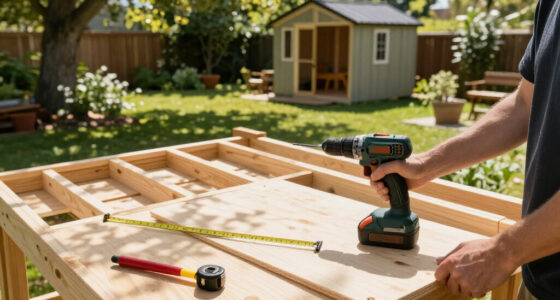
Designing a cottagecore garden with raised beds and wildflowers is all about blending rustic charm with practicality. You can create neat herb patches in handcrafted raised beds, surrounded by winding pathways lined with natural stones or bricks. Mix in wildflowers like daisies and poppies for a carefree, natural look that attracts pollinators and adds whimsy. Adding vintage touches like benches or birdbaths enhances the nostalgic atmosphere. To discover how to perfect this charming style, keep exploring these lovely ideas.

Get furniture and decor delivered free with Prime
- Fast, free delivery on millions of items
- Prime Video, Amazon Music and more included
- Member-only deals all year
Key Takeaways
- Use rustic raised beds to organize herbs like thyme, lavender, mint, and basil, enhancing accessibility and charm.
- Incorporate winding pebble pathways lined with fragrant herbs to create inviting, nostalgic routes through the garden.
- Mix wildflowers such as daisies, poppies, and Queen Anne’s lace with structured herb patches for a balanced, whimsical look.
- Add vintage-inspired features like a weathered birdbath or wooden bench to foster peaceful, charming resting spots.
- Select natural, aged materials for paths and beds to reinforce the cottagecore aesthetic and evoke a handcrafted, nostalgic atmosphere.

Creating a cottagecore garden invites you to craft a charming, whimsical space that feels both cozy and nostalgic. To start, focus on designing an inviting herb garden that serves as both a practical and decorative feature. Choose a variety of herbs like thyme, lavender, mint, and basil, planting them in neat, accessible patches or within rustic, raised beds. Raised beds not only add visual interest but also make tending your herbs easier, especially if you prefer to avoid bending down. Surround these beds with decorative pathways—winding, pebble-lined routes that invite you to wander and explore. These pathways can be made from natural stones, bricks, or gravel, giving your garden a quaint, handcrafted feel. As you walk along them, you’ll notice how they frame your herb patches and lead you through the space, creating a sense of discovery.
Incorporate decorative pathways that meander through your garden, connecting different areas like your herb garden, flower patches, and seating spots. These paths serve as both functional routes and visual elements, guiding your eye and softening the segue between different garden zones. Use materials that enhance the nostalgic charm of cottagecore style—think uneven flagstones or aged bricks that look like they’ve been there for years. Plant low-growing, fragrant herbs along the edges of these pathways to add sensory delight, filling the air with sweet or herbal scents whenever you stroll through. Additionally, incorporating local ingredients can enhance the authenticity and charm of your garden, creating a true cottagecore experience.
Beyond your herb garden, add wildflowers to enhance the garden’s natural, untamed beauty. Mix in daisies, poppies, cornflowers, and Queen Anne’s lace for a burst of color and a carefree, wild feel. These flowers thrive in less formal settings and will attract pollinators, enriching your garden’s lively atmosphere. Combine these with the more structured herb beds to strike a balance between order and whimsy, which is at the heart of cottagecore design. You might also consider adding a small, rustic bench or a vintage-looking birdbath near your pathways, inviting you to pause and enjoy the peaceful surroundings.
rustic raised garden beds for herbs
As an affiliate, we earn on qualifying purchases.
As an affiliate, we earn on qualifying purchases.
Frequently Asked Questions
What Are the Best Native Wildflowers for Cottagecore Gardens?
You should consider native wildflowers like black-eyed Susan, purple coneflower, and wild columbine for your cottagecore garden. These native wildflowers bring charming cottagecore blooms that thrive naturally and add vibrant color. They attract pollinators and create a whimsical, authentic look. Incorporate these plants into your raised beds or meadow areas to enhance the rustic, romantic vibe that defines a true cottagecore garden.
How Do I Maintain Raised Beds in Different Seasons?
To maintain your raised beds in different seasons, you should start with seasonal pruning to keep plants healthy and encourage growth. In spring and fall, enrich the soil with compost or organic matter to guarantee nutrients are replenished. During summer, water regularly and mulch to retain moisture. In winter, protect your beds with a layer of straw or cover, and remove any dead or diseased plants to prepare for the next season.
Can I Incorporate Edible Plants Into My Cottagecore Garden?
Oh, absolutely, because nothing says cottagecore like munching on your charming edible plants amid wildflowers. You can seamlessly integrate edible plants into your garden, creating a picturesque scene of beauty and bounty. Think herbs, strawberries, or even vegetables nestled among blossoms. This way, your garden becomes a delightful fusion of aesthetics and practicality, proving you’re a true connoisseur of both visual charm and fresh, garden-to-table goodness.
What Are Eco-Friendly Pest Control Options for Wildflowers?
You can use eco-friendly pest control options like companion planting and natural repellents in your wildflower garden. Plant herbs like basil or marigolds alongside your wildflowers to deter pests naturally. Additionally, spray a mixture of neem oil or garlic water as a natural repellent. These methods protect your plants without harming beneficial insects, keeping your cottagecore garden beautiful and eco-conscious.
How Do I Attract Pollinators to My Garden?
To attract pollinators, plant pollinator-friendly plants like lavender, bee balm, and coneflowers. You should also create nesting habitats, such as leaving bare soil for ground-nesting bees or providing bee hotels for solitary bees. Avoid pesticides, and provide a variety of blooms throughout the season to keep pollinators returning. These efforts will help support a thriving, vibrant garden full of buzzing activity.
wildflower seed mix for cottage garden
As an affiliate, we earn on qualifying purchases.
As an affiliate, we earn on qualifying purchases.
Conclusion
As you nurture your cottagecore garden, remember it’s your own secret garden—like Alice’s wonderland, full of surprises and charm. Embrace the wildflowers and raised beds as your personal Eden, where nature’s beauty blooms freely. With patience and love, your space will become a sanctuary, inviting peace and joy. Just as the garden’s magic unfolds, your efforts will blossom into a timeless haven—proof that nature’s simple pleasures are truly the greatest treasures.
vintage birdbath for garden decoration
As an affiliate, we earn on qualifying purchases.
As an affiliate, we earn on qualifying purchases.
As an affiliate, we earn on qualifying purchases.
Halloween Picks
halloween
As an affiliate, we earn on qualifying purchases.