Creating a calm, productive environment starts with organizing your space intentionally. Focus on reducing clutter, using natural light, and keeping essentials close to minimize distractions and stress. Incorporate mindfulness practices like deep breathing or stretching to reset during busy times. An organized, mindful workspace boosts focus, lowers anxiety, and fosters well-being. Cultivating a culture of calm not only benefits employees but also enhances overall success—continue exploring ways to transform your organization into a sanctuary of serenity.
Key Takeaways
- Designing workspaces with natural light, minimal clutter, and simple layout promotes calm and reduces stress.
- Incorporating mindfulness practices like deep breathing and mindful breaks enhances focus and emotional well-being.
- Organizing essential items within reach minimizes visual distractions, fostering order and control.
- Cultivating a culture that prioritizes wellness encourages resilience, engagement, and a healthier environment.
- An orderly, mindful workspace supports mental clarity, reduces overwhelm, and boosts overall organizational productivity.
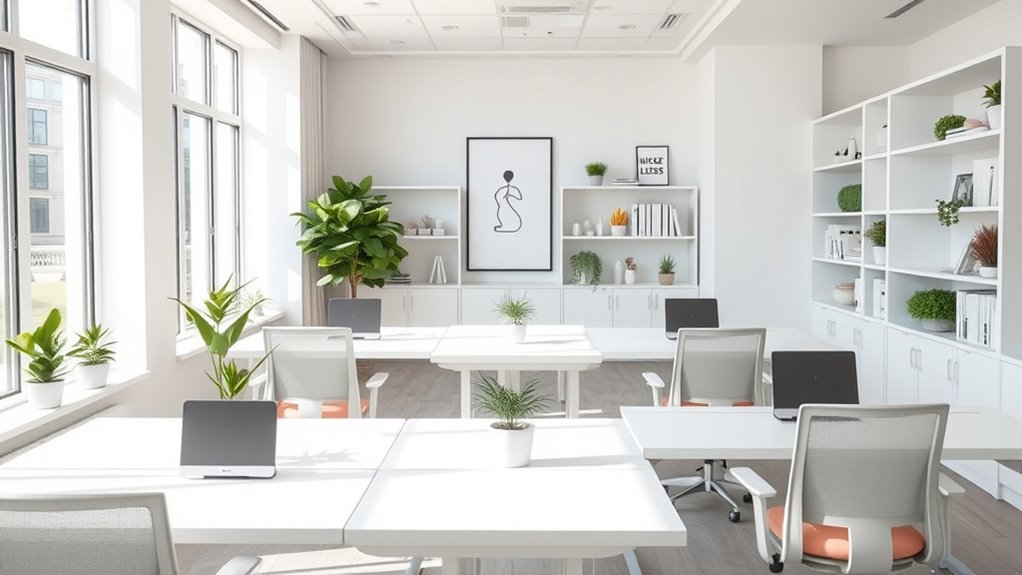
Have you ever wondered what sets successful organizations apart? It’s often their focus on creating a mindful workspace that fosters calm and boosts productivity. When your environment is designed with intention, it naturally encourages stress reduction and helps everyone stay centered. A mindful workspace isn’t just about having a clean desk; it’s about cultivating an atmosphere where mindfulness becomes second nature. This means arranging your space to minimize clutter, reduce distractions, and promote a sense of order. When your workspace is organized and intentional, your mind can focus more easily on tasks at hand, which considerably cuts down on stress. You’ll find that with less chaos around you, it’s easier to stay present and engaged, rather than overwhelmed by the noise and disorder that often dominate a hectic environment.
Creating a mindful workspace involves intentional choices about layout, lighting, and even the materials you use. Natural light, for example, has been shown to improve mood and reduce stress, so positioning your workspace near a window can make a big difference. Keeping only essential items within reach helps eliminate visual clutter, which can otherwise become a source of anxiety. When your workspace embodies clarity and simplicity, it becomes a visual cue that promotes calmness. This sense of order not only makes it easier to find what you need but also reinforces a mindset of control and focus. As a result, you’ll experience a noticeable reduction in stress levels, which contributes to overall well-being and productivity.
Incorporating mindfulness practices into your daily routine can further enhance your workspace’s calming effect. Simple habits like taking mindful breaks, deep breathing exercises, or brief stretches can help reset your mental state during busy days. These practices remind you to be present, reconnecting you with your surroundings and reducing feelings of overwhelm. Over time, this fosters a culture of stress reduction throughout your organization, where employees feel valued and supported. When everyone adopts these mindful habits, the collective atmosphere becomes more peaceful and resilient to stressors. This, in turn, improves teamwork, creativity, and overall satisfaction.
Ultimately, a wellness-oriented organization recognizes that creating a calm environment through order isn’t just about aesthetics; it’s about nurturing a space where people thrive. By designing a mindful workspace and integrating stress reduction techniques, you set the foundation for a healthier, more resilient organization. When calm and clarity become standard, productivity naturally increases, and employees feel more engaged and motivated. It’s a simple yet powerful shift that transforms chaos into calm, fostering a culture of well-being that benefits everyone.

Moragin Light Therapy Lamp, 10000 Lux Natural Light Lamp Therapy Lamp with Remote Control, Sun Lamp 3 Color Temperature & Timer, Touch Control, Daylight Lamp for Home, Office, Bedroom
360° Light Up Space: Compared to other single-sided light lamps, our sunlight lamp provides 360° brightness, and can…
As an affiliate, we earn on qualifying purchases.
As an affiliate, we earn on qualifying purchases.
Frequently Asked Questions
How Does Organizational Calm Impact Employee Mental Health?
Organizational calm considerably boosts your mental health by fostering a peaceful environment. When you implement mindfulness practices and prioritize stress reduction, you feel more centered and less overwhelmed. This calm atmosphere helps you manage anxiety better, improves focus, and enhances overall well-being. As a result, you’re more productive and satisfied at work, creating a positive cycle that promotes mental health and resilience within the organization.
What Are Common Challenges in Implementing Order for Wellness?
You often face challenges like change resistance and communication gaps when implementing order for wellness. Change resistance can make employees hesitant to adopt new routines, while communication gaps create misunderstandings about the purpose and benefits of organizational changes. To overcome these, you need clear, consistent messaging and involve employees in the process. Addressing these issues helps establish a calm, structured environment that supports mental health and overall well-being.
How Can Leaders Foster a Calm Work Environment Effectively?
Think of your workplace as a garden; regular tending keeps it calm and thriving. You can foster a calm environment by practicing mindful communication, actively listening, and addressing concerns thoughtfully. Encourage stress reduction techniques like brief mindfulness breaks or deep breathing exercises. Your leadership sets the tone—when you model calm, open dialogue, and patience, your team naturally adopts a more peaceful, focused mindset, enhancing overall wellness.
What Tools Best Support Wellness-Oriented Organizational Structures?
You should implement tools like mindfulness practices and ergonomic design to support wellness-oriented structures. Mindfulness practices, such as meditation or breathing exercises, help employees manage stress and stay focused. Ergonomic design guarantees comfortable, healthy workspaces, reducing physical strain. Together, these tools promote a calm, productive environment, showing that prioritizing well-being benefits both staff and organizational success. Incorporate them consistently for lasting positive impacts.
How Is Success Measured in Creating a Calm Organizational Culture?
You measure success in creating a calm organizational culture through workplace mindfulness and stress reduction techniques. When employees regularly practice mindfulness, you’ll notice improved focus, lower stress levels, and enhanced overall well-being. Success also shows in decreased absenteeism, better team collaboration, and a positive work environment. By consistently applying stress reduction techniques, you foster a sense of calm that boosts productivity and employee satisfaction, reflecting a truly wellness-oriented organization.

OAKOA Aesthetic Desk Organizer – Aesthetic Office Desk Accessories – Boho Pen Holder – Neutral Beige Desk Accessories – Home Office Essentials for Women – Cute Pencil Holder
Design Excellence: Elevate your workspace with our aesthetic desk organizer. Minimalist modern design complements any office decor and…
As an affiliate, we earn on qualifying purchases.
As an affiliate, we earn on qualifying purchases.
Conclusion
By embracing a wellness-oriented approach, you transform chaos into calm, turning your organization into a sanctuary of order and peace. Remember, isn’t it true that clarity breeds productivity? When you prioritize well-being through mindful structure, you don’t just improve efficiency—you create a space where everyone can thrive. So, take charge today, and let the gentle power of order guide you toward a more balanced, harmonious workplace. Your journey to calm begins with your first step.

MESMOS 366 Mindfulness Daily Flip Calendar, Undated Perpetual Calendar, Desk Decor for Men & Women, Inspirational Gifts, Self Care Quotes, Office Desk Accessories, Stress Anxiety Relief Items
Start every morning calm, focused, and intentional — flip one of 366 mindfulness self care quotes from your…
As an affiliate, we earn on qualifying purchases.
As an affiliate, we earn on qualifying purchases.

CAP Barbell Yoga Mat 1/2" Thick with Carrying Strap – High Density Exercise Mat for Yoga, Pilates, Stretching, Floor & Fitness Workouts – 68''x24''x1/2" | Black
High-Density & Extra Thick: Provides supportive cushioning for comfort and stability during poses. 68-inch by 24-inch mat.
As an affiliate, we earn on qualifying purchases.
As an affiliate, we earn on qualifying purchases.