
TL;DR
Mauve’s story runs from William Perkin’s accidental discovery of a vivid synthetic purple dye in 1856 to its current use as a muted, neutral-like interior color. The source describes a renewed interest in mauve in home design, but provides no sales figures or other data measuring the trend.
Muted mauve is gaining attention as an alternative to beige and brown in interiors, according to color specialists and designers cited by Livingetc. The soft, dusty pinkish-purple hue connects a current decorating choice to William Perkin’s accidental discovery of synthetic mauve dye in 1856, though the original dye was much brighter than the shade commonly called mauve today.

Get furniture and decor delivered free with Prime
- Fast, free delivery on millions of items
- Prime Video, Amazon Music and more included
- Member-only deals all year
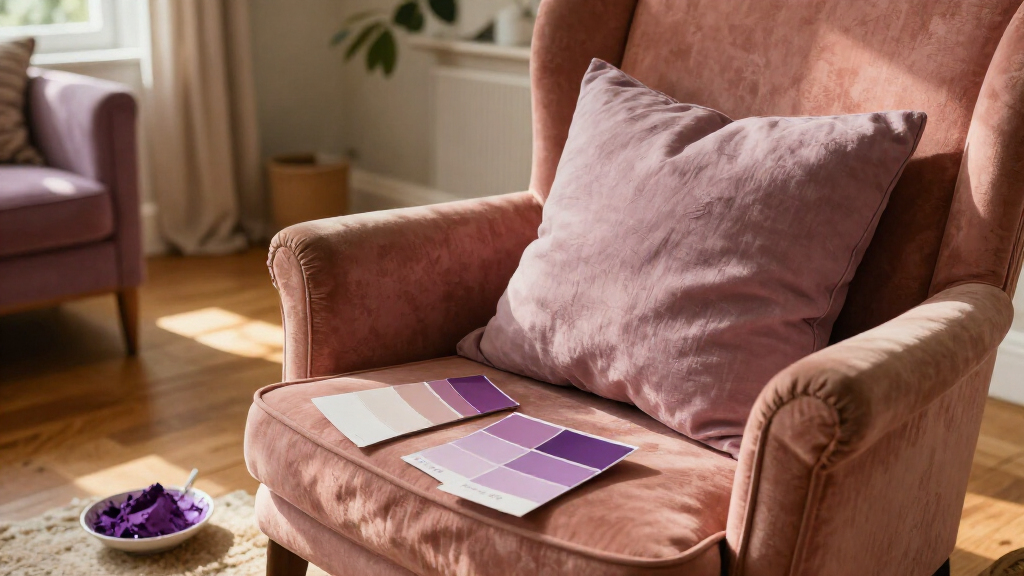
Livingetc describes contemporary mauve as a subdued mix of pink, purple, gray and sometimes brown or blue. Its muted, earthy appearance can sit close to a neutral palette while adding more color than beige. The article says the shade is appearing on walls and in other interior details, but does not provide market data to quantify its popularity.
Helen Shaw, Benjamin Moore UK’s color expert, says mauve is becoming an alternative to traditional neutrals, offering more personality than beige or brown. Cathryn Sanders, head of creative at Earthborn, describes it as a soft option for rooms where comfort matters. Those are expert assessments of the color’s character, not measured findings about consumer behavior.
Designers also emphasize how mauve can change with its surroundings. Studio Shan founder Lishan Tham says an earthy mauve can give walls a calm, enveloping quality, while Studio Braw creative director Louise McGarry says the color may read as a quiet backdrop in bright sunlight and feel more atmospheric in dimmer conditions. The effect depends on the particular paint, room and light.
Explore the history of mauve From vivid dye to modern neutral
First discovered as a synthetic dye, mauve now appears in interiors as a soft alternative to beige. Its look shifts with the shade and the room’s lighting.
A vivid beginning
William Perkin found a strong purple while experimenting with coal tar as he tried to synthesize quinine.
Cleaning a flask with alcohol revealed the vivid color.
Perkin patented the discovery and established a dye works producing mauveine.
Mauve textiles helped fuel a fashion craze in the 1860s.
Then and now
The name connects two very different shades.
- Vivid synthetic purple dye
- Used in silk and other textiles
- Associated with a 19th-century fashion craze
- Muted, dusty pinkish-purple
- Can lean gray, brown or blue
- Presented as a softer alternative to beige
A color shaped by light
Designers say mauve can read as a quiet backdrop in bright light and feel more atmospheric in dimmer conditions.
A softer backdrop
Mauve may recede into the room when sunlight is strong.
More atmosphere
The same color may feel deeper or more enveloping in the evening.
What the trend evidence shows
The story describes expert observations and interior examples, not measured consumer demand.
| Evidence | What it tells readers |
|---|---|
| Designers’ assessments | Mauve is seen as a soft alternative to traditional neutrals |
| Sales or search data | Not provided, so the scale of the trend is unclear |
| Staying power | Not established by the available evidence |
Why Designers Are Reconsidering Mauve
Mauve offers a way to add color without the visual intensity often associated with stronger purples. For people choosing paint, that makes it a potential middle ground: more distinctive than beige, yet softer than a saturated purple. Its shifts across daylight and evening conditions also mean a sample may look different from the finished room, making lighting an important part of the decision.
The color’s history adds another layer to its current appeal. What is now often treated as a quiet, earthy interior shade began as a vivid industrial dye that helped change clothing production and fashion. That contrast shows how color names and associations can evolve: the modern neutral is not the original mauve, even though the name links the two.
Products Worth Considering

Dyson V8 Cordless Vacuum

Sonos Roam Portable Bluetooth and Wi-Fi Speaker, Black

Ring Wired Doorbell Pro (3rd Gen) and Chime Plus Bundle, Deep Silver and White
As an affiliate, we earn on qualifying purchases.
From Perkin’s Dye to Mauve Decor
In 1856, 18-year-old chemistry student William Perkin was trying to synthesize quinine, then used to treat malaria. During experiments with coal tar in a makeshift laboratory in his family’s London attic, he produced a dark residue. Cleaning a flask with alcohol revealed a strong purple color. Perkin pursued the discovery, applied for a patent and established a dye works; the resulting synthetic color became known as mauveine.
The original dye was more vivid than today’s dusty mauve, according to the Livingetc account. Its use in silk and other textiles helped fuel a fashion craze in the 1860s. The source says Queen Victoria wore a mauve gown to her daughter’s wedding in 1858, and cites the period’s popular label, “the mauve decade.” By the 1890s, the fashion moment had passed and the color’s reputation had shifted.
Mauve also entered domestic interiors. Lucy Armstrong Blair, a cultural history curator at the National Trust, says Tsarina Alexandra redecorated rooms at the Alexander Palace in 1896, including a Mauve Boudoir. The walls and upholstery were described as opaline mauve, a choice Blair connects to Alexandra’s Victorian upbringing and her intention to create a comfortable family setting. This historical example predates the current design interest by more than a century.
““We’re seeing mauve become an increasingly popular alternative to traditional neutrals — it has more personality than a classic beige or brown palette, bringing a soothing and ethereal energy into spaces.””
— Helen Shaw, Benjamin Moore UK’s color expert
How Far the Mauve Trend Reaches
The source offers designers’ observations and examples of mauve interiors, but it does not include sales figures, search data or a defined time series to show how widely its use is increasing. The scale of the reported trend is therefore unclear. It also gives no single standard for modern mauve: the shade can lean pink, purple, gray, blue or brown, so products sold under the name may differ considerably.
The source does not establish that the current interest will last or that homeowners are replacing conventional neutrals at a measurable rate. Nor does it provide technical comparisons among paints or guidance on how specific finishes perform in different rooms. Descriptions such as soothing or cocooning are attributed design judgments, not universal effects.
Testing Mauve in Real Rooms
The source reports no upcoming product launch, survey or industry milestone tied to the trend. For now, the next practical step for anyone considering mauve is to compare samples in the intended room and observe them under both daylight and artificial light. Because the shade can shift across conditions, a color that looks neutral in a bright space may appear deeper or pinker in the evening.
Whether mauve becomes a lasting fixture in contemporary interiors remains to be seen. Further sales or market research would be needed to establish how widespread the shift is; the evidence presented here is a set of expert observations and historical examples.
Key Questions
What is mauve?
Mauve is commonly used today for a muted, dusty pinkish-purple. Its exact appearance varies, and some versions lean toward gray, brown or blue.
When was synthetic mauve dye discovered?
Chemistry student William Perkin discovered the dye in 1856 while trying to synthesize quinine. The source says the original shade was more vivid than modern mauve.
Why are designers using mauve as a neutral?
Designers cited by Livingetc say its soft, earthy quality can add more personality than beige while remaining gentler than a strong purple. This is a design assessment, not a measured finding about market demand.
Does mauve look the same in every light?
No. Designers quoted in the source say mauve can appear more like a background color in bright light and feel deeper or more atmospheric in dimmer conditions. Testing a sample in the room is a practical way to judge the change.
Source: livingetc.com