TL;DR
The Bayeux Tapestry’s return to England for a British Museum exhibition has brought fresh attention to tapestry, while interior designers and galleries report interest in contemporary textile wall art. Makers are drawing on historical forms and hand processes, though the source provides no sales figures or wider market data to measure the trend.
The Bayeux Tapestry is on display at the British Museum in an exhibition scheduled to run through July 11, 2027, bringing renewed attention to a form of textile art that interior designers and dealers say is finding a place in contemporary homes. Their accounts point to growing interest in handmade wall hangings, but the available material does not provide sales data to establish the scale of the trend.

Get furniture and decor delivered free with Prime
- Fast, free delivery on millions of items
- Prime Video, Amazon Music and more included
- Member-only deals all year
The roughly 70-meter-long, 50-centimeter-tall Bayeux Tapestry depicts events leading up to the Norman conquest of England and the Battle of Hastings. The source says it was likely stitched in or around Canterbury nearly a thousand years ago and that it returned to England earlier this year for the first time since leaving. The British Museum exhibition has attracted large crowds, although no visitor total is provided.
London art consultancy and collectible-design shop FELT says its work has centered on handmade textiles and objects since it launched four years ago. Co-founder Tintin Macdonald described textile wall hangings as part of a broader interest in craft-led interiors. Co-founder Francesca Wilson said artists are revisiting historical styles and adapting them for contemporary rooms, drawing on traditions that range from Ghanaian Fante Asafo flags to the work of German modernist Anni Albers.
Current examples include American artist Andrew Pierce Scott’s fabric compositions depicting shared meals and Oscar Crabb’s hand-cut, hand-dyed and sewn works, which use second-hand cloth and plant-based pigments. At East London gallery Spazio Leone, a recent solo exhibition featured Chinese-inspired textile works by Yumo Yuan. Dealer and curator Gennaro Leone said people respond to evidence of the maker’s hand and to objects that give a home a distinct character.
Why Tapestries Are Claiming Space On Home Walls
The Bayeux Tapestry’s British Museum exhibition has renewed attention to textile art. Designers and galleries report interest in handmade wall hangings, though the scale of the trend is unmeasured.
What textile art adds
Practitioners describe a tactile alternative to framed prints and mass-produced decor.
Softness and warmth
Textiles add texture and can give a room a distinct character.
Visible handwork
Stitches, irregular edges and dye variations make each work individual.
Old forms, new rooms
Artists draw on varied traditions while adapting textile art for contemporary interiors.
How artists make it current
Examples show distinct ways of combining historical references with handmade materials.
Yumo Yuan’s textile works draw on Chinese imagery associated with embroidered silk panels.
Andrew Pierce Scott composes scenes from fabric offcuts, including depictions of shared meals.
Oscar Crabb uses second-hand cloth, plant-based pigments, and hand-cutting, dyeing and sewing.
Give a large textile room
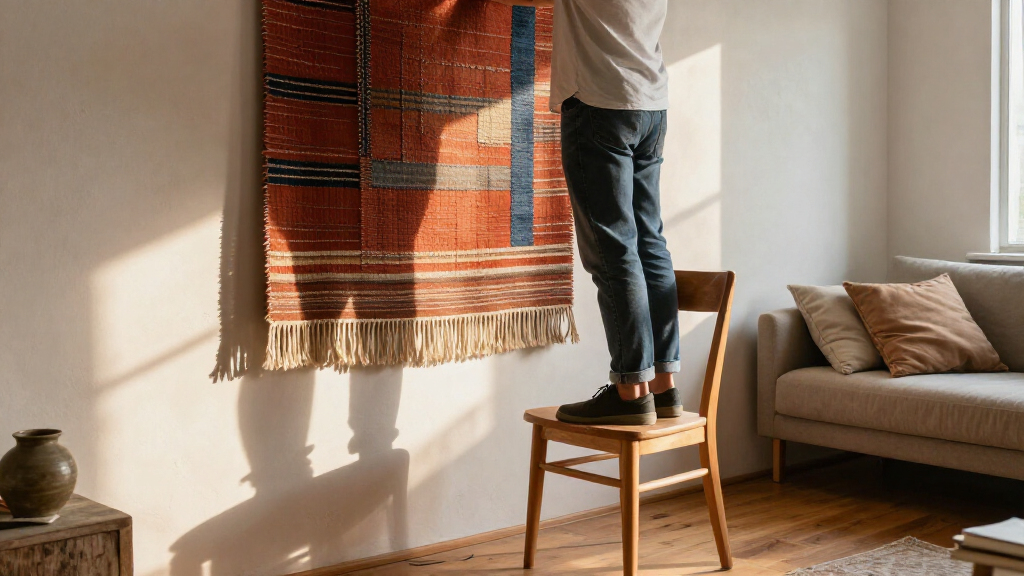
A wall hanging can anchor the space above a sofa, bed or fireplace.
- Allow enough space to appreciate the work.
- Keep it visually connected to the rest of the room.
- Its scale and strong visual presence.
- How its texture and colors relate to nearby furnishings.
What the evidence can show
The reported interest comes from design and gallery observations, with contemporary artist examples.
| Evidence in the account | What remains unclear |
|---|---|
| Designers and dealers describe interest in handmade textile art. | How widespread the interest is among homeowners. |
| The British Museum exhibition has attracted large crowds. | Visitor totals, sales data and market-wide measurements. |
| The exhibition brings the Bayeux Tapestry into public view. | Whether it directly drove purchases or home styling. |
Textiles Add Warmth and Character
Textile art offers a different surface and feel from framed prints or mass-produced wall decor. Designers cited in the source describe it as a way to add softness, warmth and texture to a room, while the visible stitches, irregular edges and variations in dye make individual works distinctive. That appeal connects interior decoration with interest in craft and handmade objects.
The shift also reflects a change in how tapestries are used. Historically, wall hangings helped insulate cold, draughty buildings; with modern heating, the source describes their role as primarily decorative art. Large textiles can fill the space above a sofa, bed or fireplace, but their scale and strong visual presence can make placement challenging. Leone advises giving a piece enough room to be appreciated while keeping it connected to the rest of the interior.
Products Worth Considering

Roborock Qrevo 2 Pro Robot Vacuum and Mop with 20,000 Pa Suction

Bose SoundLink Max Portable Bluetooth Speaker, Black

eufy Security eufyCam C35 4-Camera Kit
As an affiliate, we earn on qualifying purchases.
From Medieval Narrative to Modern Interiors
Tapestries have long carried stories and symbolism, including religious, chivalric and moral narratives. The Bayeux work is a particularly prominent example: its embroidered scenes record the lead-up to a major political and military turning point in English history. Its exhibition gives the form renewed public visibility, though the source does not establish that the show caused the reported interior-design interest.
The contemporary work described here draws on multiple histories rather than reproducing one style. Yuan’s imagery references embroidered silk panels associated with homes and temples across Asia; Scott builds scenes from fabric offcuts; and Crabb’s use of old cloth and natural dyes makes material variation part of each work. These practices sit alongside a reported interest in visible handwork and the irregular qualities that distinguish handmade pieces from factory-made decor.
“Many of the contemporary artists we work with at FELT are investigating the historical roots of particular styles and remaking them to create something that feels fresh and relevant for contemporary interiors.”
— Francesca Wilson, FELT co-founder
How Broad Is the Interior Trend?
The source reports observations from a design consultancy and a gallery, alongside examples of artists’ work, but it gives no sales figures, survey results or market-wide measurements. It is not clear how widespread the renewed interest is among homeowners or whether demand has increased over a defined period. The exhibition’s attendance is described as large, but no count or comparison is included.
The source also does not identify the year in which the exhibition opened, even though it says it opened in September and ends July 11, 2027. The exact timing of the Bayeux Tapestry’s return to England is therefore not fully specified in the material. Nor is there evidence here that the museum exhibition directly drove purchases or changes in home styling.
Exhibition Continues Through July 2027
The British Museum exhibition is scheduled to remain open through July 11, 2027. Its ongoing public display will keep the Bayeux Tapestry in view while designers and galleries continue presenting contemporary textile work. The source does not report a forthcoming market study, sales release or other measure that would establish whether interest in home wall hangings is growing beyond the examples described.
For readers considering textile art at home, the practitioners’ guidance is practical rather than prescriptive: account for the work’s scale, allow it space, and consider how its texture and colors relate to nearby furnishings. Whether the current attention becomes a sustained interior trend remains uncertain.
Key Questions
What is the Bayeux Tapestry exhibition?
It is a British Museum exhibition featuring the Bayeux Tapestry, a roughly 70-meter-long embroidered work depicting events before the Norman conquest of England and the Battle of Hastings. The source says the show is scheduled to run through July 11, 2027.
Why are designers using tapestries in homes?
Designers and dealers quoted in the source say textile wall art can add warmth, softness, texture and individuality. They also point to interest in visible handwork and craft-led interiors.
What makes contemporary textile wall art different?
Examples in the source use hand stitching, fabric offcuts, second-hand cloth and plant-based dyes. Such processes can leave uneven stitches, irregular surfaces and variations, so individual works may differ from one another.
Is tapestry definitely becoming more popular?
The source describes a revival in interest based on comments from an interior-design consultancy and a gallery, but it includes no market statistics or sales data. The breadth and pace of the trend cannot be confirmed from the available information.
Where do designers suggest hanging a large textile?
FELT co-founder Tintin Macdonald says clients often look to cover areas above a bed, sofa or fireplace. Dealer Gennaro Leone recommends giving a textile enough space to be appreciated while keeping it visually connected to the room.
Source: livingetc.com