
TL;DR
Interior designers Paige Kelly and Lindsey Walsh recommend matching window treatments to the room’s shape and function, from high-mounted curtains for a taller look to Roman shades where long panels will not fit. Their suggestions also cover balancing light and privacy, softening hard surfaces and choosing hardware that gives a finished appearance. The source does not identify a new product launch or independently test the design effects.
Interior designers Paige Kelly and Lindsey Walsh have outlined practical fixes for common window-treatment problems, including off-center or narrow windows, limited room for curtains, and competing needs for daylight and privacy. Their recommendations, published in an advice article, range from raising curtain rods and extending them beyond window frames to using Roman shades, layered treatments and fabric beyond the window itself.

Get furniture and decor delivered free with Prime
- Fast, free delivery on millions of items
- Prime Video, Amazon Music and more included
- Member-only deals all year
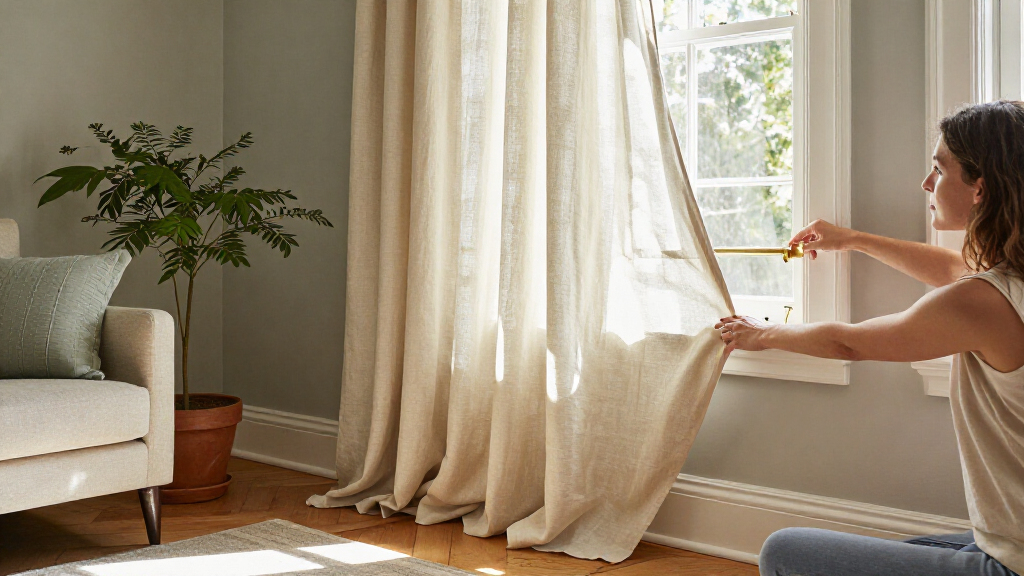
For rooms that feel short, Kelly recommends hanging curtain rods a few inches below the ceiling rather than just above the window. She says placing drapery high and wide can make a room feel bigger. Walsh advises choosing panels long enough to skim the floor, rather than stopping short. These are design recommendations, not measured results reported in the source.
To make a narrow window seem wider, Walsh suggests using fuller panels that stack to the sides, while Kelly recommends extending the rod beyond the frame. For an off-center window, a one-way draw can gather the curtain to one side and make that arrangement look deliberate. Walsh also describes carrying one pattern across walls and window treatments to soften an awkward window’s visual prominence.
When furniture, cabinetry or a radiator blocks space for long curtains, Walsh favors Roman shades, which add fabric without taking up as much wall area. A fixed fabric-covered frame called a lambrequin can sit over a functional shade for a more decorative finish. For bedrooms, Kelly suggests combining a blackout layer and a sheer layer, so occupants can block light for sleep and filter it during the day. She points to cafe curtains in kitchens and bathrooms as another option: they cover part of the window while leaving the upper portion open.
Fix Common Window Problems with the Right Treatment
Interior designers Paige Kelly and Lindsey Walsh recommend choosing window treatments around each room’s layout, light and privacy needs. Their suggestions are design advice, not measured or independently tested results.
Match the Fix to the Problem
The window’s position and nearby obstructions can shape what works best.
Hang curtains high
Kelly suggests placing the rod a few inches below the ceiling, with panels long enough to skim the floor.
Extend the rod
Fuller panels that stack to the sides can make a narrow window seem wider. A one-way draw can make an off-center layout look deliberate.
Choose a Roman shade
Shades take up less wall area when furniture, cabinetry or a radiator blocks room for long curtains.
Balance Daylight and Privacy
Layer or cover only part of the window to suit the room’s needs.
- Combine blackout and sheer layers.
- Use blackout for sleep and sheer fabric to filter daytime light.
- Cafe curtains cover part of the window.
- The upper portion stays open to the sky.
Finish Awkward Spaces
Fabric can do more than cover a window.
A fabric-covered lambrequin can sit above a functional shade.
Walsh suggests drapery around finishes such as tile, glass and marble.
A portière can separate spaces in a doorway or open passage.
Choose Before You Buy
The practical choice depends on the room and the installation.
- Measure the window and surrounding wall.
- Note nearby furniture, cabinetry or radiators.
- Decide how much daylight and privacy the room needs.
- Check installation requirements for pattern matching or custom frames.
Matching Treatments to Room Needs
The advice addresses a practical design trade-off: window coverings can affect privacy, daylight, usable space and a room’s visual balance. A floor-length curtain may suit a bedroom with room for panels, but it can obstruct furniture or sit awkwardly above a radiator. A shade can fit that same constraint, while a sheer-and-blackout combination lets occupants change how much light enters at different times.
Kelly and Walsh also suggest looking beyond appearance alone. Walsh says drapery can soften hard finishes such as tile, glass and marble, and can be used in a doorway or open passage to create separation. Kelly says fabric treatments can absorb sound and add texture. The source offers these as design observations; it provides no acoustic measurements or evidence that a particular treatment will reduce noise by a specified amount.
For readers planning a change, the central point is to identify the problem before choosing a product. A window’s position, nearby furniture, desired privacy and light levels all affect what is likely to be practical. The designers’ suggestions provide options, but the source does not establish a single best treatment for every home or window.
Products Worth Considering

iRobot Roomba 415X Robot Vacuum & Mop Combo

Ring Alarm 8-Piece Home Security System Kit

TCL 75-Inch Class 4-Series 4K UHD HDR Smart Google TV (75S446, 2022)
As an affiliate, we earn on qualifying purchases.
Seven Fixes for Awkward Windows
The source presents the designers’ advice as a set of solutions to recurring household challenges, rather than as a report on a new building standard, study or product release. Its examples range from visual adjustments—such as mounting rods higher and wider—to functional choices, including layered coverings for different light conditions.
It also describes using fabric outside conventional window frames. Walsh recommends a portière, a curtain hung in a doorway or cased opening, to separate spaces, soften an entryway or buffer cold air near an exterior door. The article names TWOPAGES products and services, including ready-to-hang cafe curtains and paper-backed fabric that can be used on walls and for window coverings. Those are company-specific details from the source, not independent product assessments.
The supplied material ends partway through its seventh suggestion, about upgrading hardware. It identifies a French return rod—a wall-mounted rod that curves back toward the wall—as Walsh’s preferred alternative to a traditional rod with finials. It does not provide the remainder of that advice, so no further claim about the hardware recommendation is included here.
“Getting the drapery high and wide is going to make a room feel bigger.”
— Paige Kelly, interior designer
Limits of the Design Advice
The source does not give the article’s publication date, identify a particular home where the suggestions were tested, or provide measurements showing how much a treatment changes perceived room size, privacy or sound. The effects are presented as the designers’ professional recommendations and observations, not as independently verified outcomes.
It is also unclear whether the advice applies equally across different window dimensions, ceiling heights, curtain fabrics and installation conditions. The source names products sold by TWOPAGES, but does not provide comparative testing, pricing or information about other suppliers. Its hardware section is incomplete, leaving the designer’s full explanation of the French return rod unavailable.
Measure Before Choosing a Treatment
The source describes no planned follow-up, product launch or next reporting milestone. For homeowners applying the advice, the practical next step is to measure the window and surrounding wall, note obstructions such as furniture or radiators, and decide how much daylight and privacy the room needs. Those details can help narrow the choice between long panels, shades, cafe curtains or a layered system.
Anyone considering wall-to-wall pattern matching or a custom frame should check the work required to align patterns and coordinate installation. The article mentions using a wallpaper installer and a window-treatment workroom for paper-backed fabric, but gives no project costs or timelines. Readers should confirm those details with installers before committing.
Key Questions
How can curtains make a room feel taller?
Kelly recommends placing the curtain rod a few inches below the ceiling rather than directly above the window. Walsh says the panels should be long enough to skim the floor. The source describes these as visual design suggestions, not guaranteed results.
What works when there is no room for long curtains?
Walsh recommends Roman shades when furniture, cabinetry or a radiator limits space for panels. She also suggests placing a decorative lambrequin above a functional shade when a more finished look is wanted.
How can a bedroom treatment balance privacy and light?
Kelly suggests layering a blackout covering and a sheer layer. The blackout layer can block light for sleep; the sheer layer can filter daylight while providing some privacy.
Can window treatments be used outside windows?
Yes. Walsh describes portières—curtains hung in doorways or open passages—as a way to soften an entryway, separate spaces or buffer cold air near an exterior door. The source also says drapery can add texture to rooms with hard surfaces.
Source: housebeautiful.com