
TL;DR
Luxury velvet throw pillows combine a dense, light-catching pile with thoughtful construction and a size, color, and insert suited to your room. Compare fiber content, seams, zipper, care label, and return policy before buying; then style velvet against contrasting textures and follow the maker’s cleaning instructions.
A velvet pillow can look dark blue at noon and almost ink-black by evening. That shifting color is part of the appeal: the fabric’s soft surface catches light as you brush or press it, bringing depth to a sofa without changing the whole room.

Get furniture and decor delivered free with Prime
- Fast, free delivery on millions of items
- Prime Video, Amazon Music and more included
- Member-only deals all year
But the word velvet tells you how the fabric is made, not whether it contains cotton, polyester, silk, or a blend. Those fibers affect feel, price, wear, and care. A polished product photo can’t tell you whether the cover has sturdy seams or a zipper that will last.
This guide helps you read those details, choose colors and sizes that suit your furniture, and decide what level of care you’re happy to give. You’ll also see how a luxury velvet throw pillow can sit comfortably beside linen, wool, or leather—without making your living room feel like a showroom.
Velvet describes a fabric construction, not one fiber; compare cotton, polyester, silk, and blends.
Check seams, backing, zipper, dimensions, insert inclusion, care label, and return policy before buying.
View colors in your room’s daylight and lamplight because velvet’s pile shifts in appearance.
Layer velvet with linen, wool, leather, or boucle, and vary pillow sizes to suit your furniture.
Follow the maker’s care label; removable covers are not always machine-washable.
What makes a velvet pillow feel truly luxurious?
A luxury velvet throw pillow pairs a dense, soft pile with careful construction, a well-finished cover, and a fabric suited to its intended use. Velvet is a woven fabric with a soft pile that reflects light differently as it shifts; that changing sheen gives color depth you don’t get from a flat, matte surface. The effect depends on how the pile is made and finished: a smoother, denser surface may read as polished, while a more relaxed pile can look softer and more casual.
Start with the fiber label. Cotton velvet offers a natural-fiber feel, while polyester velvet is often more affordable and can be easier to live with. Silk velvet is typically delicate and costly; blends can balance some qualities of different fibers. These are tendencies, not guarantees: the weave, finish, and maker’s care instructions also shape performance. A quiet reading chair and a busy family sofa may call for different choices because a fabric that feels exceptional in a low-contact spot may be inconvenient where it meets hands, pets, and spills every day.
Look beyond the fabric face. Check whether the seams lie flat, the corners hold their shape, and the zipper opens smoothly without snagging the pile. These details matter because the cover is repeatedly pulled, compressed, and handled when you insert, remove, or fluff the pillow. A flimsy backing or uneven stitching can make an otherwise handsome cover feel disappointing after a few months. For example, if you plan to move a pillow between the sofa and a guest bed, a well-sewn cover and dependable closure will matter every time you fluff it.
Price alone won’t tell you quality. Compare fiber content, dimensions, construction, included insert, care instructions, and return policy. A higher price may reflect better fabric or a distinctive design, but it doesn’t guarantee better everyday performance. The return policy matters because velvet’s color and sheen can look quite different in your room’s light than they do online. Consider how the details work together: paying more for a cover that needs professional cleaning may be worthwhile for occasional use, but a less costly, easier-care option may deliver more value on a family sofa.
Products Worth Considering

Philips Hue Play Floor Lamp, RGBWWIC LED, 53 Inch, Black

eufy Security SoloCam S340 3K Dual-Lens Solar Security Camera

Ring Battery Doorbell Plus (2nd Gen) and Chime Plus Bundle, Nickel Silver and White
As an affiliate, we earn on qualifying purchases.
Choose a velvet that suits your room and routine
Luxury velvet throw pillows work best when you match the fabric to how the pillow will be used, since fiber content affects feel, durability, care, and price. Cotton, polyester, silk, and blended velvet can all look rich; their differences show up when you sit against them, clean a spill, or use them every day. Think about where the pillow will live and how often it will be handled: the same delicate surface that feels special on an occasional chair may become a source of worry on the seat everyone uses.
For a high-traffic sofa, a durable synthetic blend and a removable cover may be a practical starting point. If you’re drawn to cotton’s natural-fiber feel, check the maker’s care guidance before you buy. Silk velvet can feel especially refined, but its delicate nature makes it better suited to a lower-contact spot, such as an accent chair that rarely sees a snack spill. This is a tradeoff between tactile preference and upkeep: choosing the more delicate fabric can make sense when the pillow is decorative, but less so if you expect it to withstand daily lounging.
Recycled polyester options are available, but sustainability depends on more than a material label. Look for specific information about fiber content and recycled-material certification. Broad environmental language won’t tell you where the fiber came from or how the finished pillow is made. A clear label gives you something concrete to compare, while still leaving questions about the rest of the product’s life cycle. Treat those claims as one part of your decision alongside longevity and care: a pillow you keep and use for years may suit your priorities better than one chosen on a single vague claim.
Ask yourself who will use the pillow. In a home with a curious cat or a young child, claws and spills may affect the pile. A washable-looking cover isn’t necessarily machine-washable, so check the care label and confirm what “removable” actually means. Removing a cover can make cleaning or replacement easier, but it doesn’t remove the need to follow its cleaning instructions. The best fabric is the one that looks good and fits your real routine, including the effort you’re willing to spend keeping it fresh.
Use color and pile direction to get the look you want
Luxury velvet throw pillows change their appearance as light and pile direction change, so view your chosen color in the room before deciding. A jewel tone can look deep and saturated under a lamp, then brighter where daylight brushes across the fibers. That subtle shift adds life to a room, much like a lake changing color as clouds pass overhead. It also means a small online color sample or a single product photo may not show the full range you’ll see across the day.
Jewel tones such as emerald, burgundy, and deep blue create a strong accent against a neutral sofa. Neutrals blend in more quietly, but pale shades tend to show shading and marks more readily. If your room already has dark walls and a charcoal sofa, a lighter velvet pillow can break up the field of color without shouting. Think about the role you want the pillow to play: a contrasting shade draws attention to the sofa, while a close match creates a quieter, more layered effect. Lighter colors can brighten a dark corner, but may ask for more attentive care.
Velvet can also show temporary pressure marks. Lean on a pillow and you may see an area where the pile lies in a different direction, making it look lighter or darker. That “crush” effect is part of velvet’s characteristic appearance. It isn’t necessarily damage, but it can make the surface look uneven until the pile is brushed or changes direction again. If it bothers you, gently brush the pile in its natural direction and see whether the shading softens.
Before committing, hold a fabric sample or pillow cover near the sofa in both daylight and lamplight. Try it beside your existing curtains or rug. A blue that looks crisp in a shop can turn nearly black in a dim corner, while a warm rust shade can glow against pale linen. This check helps you judge both the color and how much the shifting sheen will stand out in the room. Let your room’s actual light make the decision.
Pick sizes and inserts that make your sofa look balanced
Luxury velvet throw pillows look balanced when their size and shape suit the furniture rather than crowd it. Common choices include square pillows, lumbar shapes, and bolsters; each brings a different silhouette and type of support. On a small armchair, a single oversized square can swallow the seat, while a narrow lumbar pillow may add color and still leave room to sit. Scale also affects how the velvet reads: a large pillow makes its sheen and color a more prominent feature, while a smaller one works as an accent.
Try layering different sizes and shapes instead of lining up identical pillows. On a three-seat sofa, two larger squares at the ends and one smaller lumbar pillow near the middle can feel relaxed and considered. A bed can handle a deeper stack, while a compact loveseat often needs just one or two accents. Measure the usable seat area before ordering. The goal is to preserve the furniture’s function as well as its appearance; if pillows take up too much seating, the arrangement will be inconvenient no matter how well the colors work.
The insert changes the finish. Down and feather inserts tend to feel soft and compressible; polyester fills are often more affordable and may suit people avoiding animal products. Insert size and firmness influence whether the pillow looks crisp and full or soft and slouchy. A firmer, fuller insert can help the cover hold a tailored shape, while a softer one is easier to lean against and may need more frequent fluffing. Check whether the cover includes an insert, since a listing may price the cover alone.
A useful starting point is to check the maker’s suggested insert size and compare it with the cover dimensions. If you want a plush look, a well-sized insert helps the cover keep its shape; if you want a relaxed pillow to lean on, a softer fill may feel better. Fit matters because an insert that is too small can leave the corners limp, while one that is too large may strain the seams or make the pillow feel stiff. Sit down and test the arrangement. A room should look inviting when you use it, not just when nobody is home.
Mix velvet with textures that make it feel at home
Velvet feels most natural when you set it beside contrasting textures such as linen, wool, leather, or boucle. Its soft sheen gives the eye something to land on; rougher or more matte fabrics keep that shine from taking over. The contrast works because it gives each surface a distinct role: velvet contributes depth and softness, while the other materials add visual quiet or a more tactile counterpoint. Think of one velvet pillow as a rich brushstroke against a calm canvas.
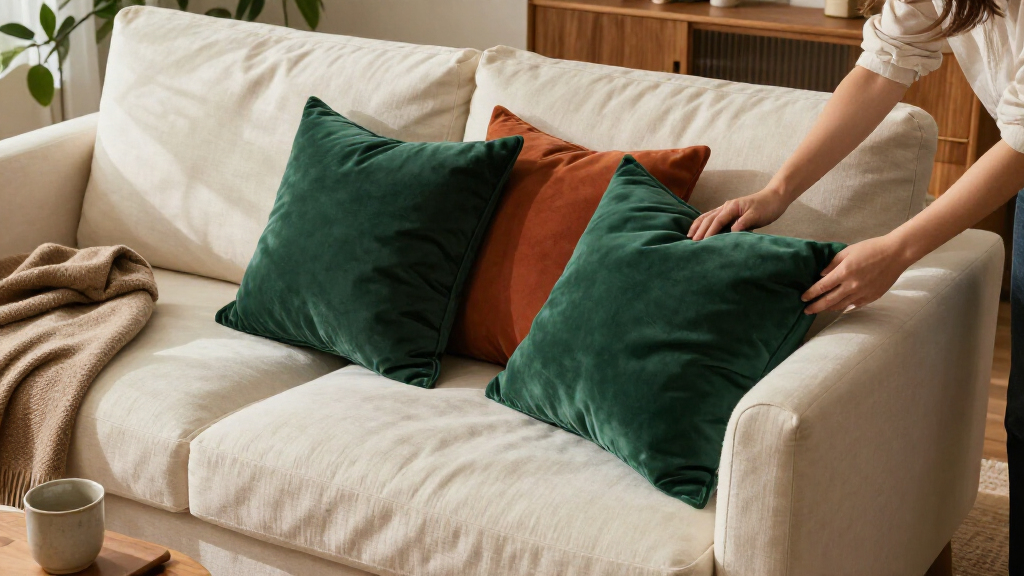
For example, try a dark green velvet square on a pale linen sofa, then add a nubby wool throw. The linen gives the arrangement breathing room, while the wool adds warmth you can feel when you reach for it on a chilly evening. On a leather sofa, velvet can soften the sharper surface and introduce color without adding another shiny material. The combination also helps balance comfort and upkeep: a velvet accent can bring softness to leather without requiring every surface in the room to be delicate.
If you’re wondering why velvet pillows change the mood so quickly, texture is a big part of the answer. They add softness and visual depth in a small area, so you can make a room feel more layered without replacing your furniture. Recent home décor trends have favored tactile materials, saturated colors, and comfortable, layered interiors—conditions that suit velvet well. Still, a trend is only useful if it works with the room you have; one pillow can test the look without committing the whole sofa to a short-lived style.
Use restraint. A few coordinated pillows often look more intentional than many identical ones. Choose one shared color link, such as the rust in a rug, then vary the fabrics and shapes. Repeating a color ties the grouping together, while changing texture and silhouette keeps it from feeling like a matching set. If every seat is covered in matching velvet, the room can lose the contrast that made the fabric special in the first place.
Keep velvet fresh with care that matches the label
To keep a velvet throw pillow looking fresh, follow the manufacturer’s care label, fluff the insert, and gently brush the pile when needed. A removable cover may be easier to handle, but that alone does not mean you can put it in the washing machine. Fiber, dye, backing, and construction all affect what cleaning method is safe. The stakes are practical: an unsuitable wash can shrink the cover, alter its color, or leave the pile looking uneven, so the label is part of the product’s value, not an afterthought.
If a spill lands on the cover, check the care instructions before reaching for a cleaner. Avoid rubbing, heat, or harsh chemicals unless the maker recommends them; they can disturb the pile or leave a visible patch. On a busy family sofa, it’s smart to check the cleaning guidance before buying rather than discovering the limits after the first juice spill. A quick response can help, but the safe response depends on the fabric, so avoid assuming that a method that worked on another velvet will work on this one.
Gentle brushing in the direction of the pile can help restore its appearance. Give the insert a fluff now and then, especially after someone has leaned on the pillow for an afternoon. These small steps address different kinds of wear: brushing evens the surface, while fluffing redistributes the fill and helps the pillow recover its shape. If the cover needs professional cleaning, include that cost and effort in your buying decision. A luxurious textile still has to work with your household.
Pets and children don’t automatically rule velvet out, but frequent contact, claws, and accidents can affect the surface. If you expect hard daily use, look for a durable synthetic blend and a cover with care instructions you can follow. No fiber makes a pillow immune to snags or spills, so weigh the look you want against the likelihood of marks and the effort required to address them. A beautiful pillow you’re afraid to use may not be the right pillow for your home.
Compare the full value before you pay
The best value comes from comparing what the price includes with how the pillow will perform in your room. A high-end cover may cost more because of its fabric, construction, or design, yet still require a separately purchased insert or professional cleaning. The number on the tag is only one part of the decision. A lower price can also mean a less substantial insert or less information about care, so compare the finished pillow and the ongoing effort, not just the cover cost.
Before you buy, work through these checks:
- Read the fiber label. Note whether the cover is cotton, polyester, silk, or a blend, then consider whether that feel and care profile suit the pillow’s location.
- Check the construction. Look at the seams, backing, corners, and zipper finish; these are the parts that face repeated handling and help the cover keep its shape.
- Confirm the dimensions. Match the size to your sofa, bed, or chair and the look you want, while leaving enough room for people to sit comfortably.
- Check the insert. Find out whether one is included and what fill it uses; the insert affects comfort, shape, and the final price.
- Read the care label and return policy. Make sure both work for your routine and confidence level. Velvet’s appearance can change in different lighting, so a workable return policy can matter if the color looks wrong at home.
Imagine two pillows that look almost identical online. One costs less but includes a polyester insert and a removable cover that still requires special cleaning; the other costs more and gives clear care instructions but sells the insert separately. Which is better value depends on what you already own and how often the pillow will be used. If the pillow will be handled daily, the more convenient care may justify the higher total cost; if it will sit mostly undisturbed, paying for easier cleaning may offer little benefit.
Don’t treat price as a shortcut for judging quality. Compare the details that affect touch, longevity, comfort, and upkeep. A thoughtful purchase is one you’ll still enjoy when the afternoon light reveals every little shift in the pile.
Frequently Asked Questions
What makes a velvet pillow “luxury”?
A luxury feel usually comes from a combination of fabric quality, pile, backing, careful seams, design, and finishing. Price alone doesn’t prove that a pillow will wear well or suit your home. Compare the fiber content and construction with the way you plan to use it.
Is velvet durable enough for everyday use?
It can be, depending on the fiber, construction, and amount of use. A durable synthetic blend and a cover with care instructions that fit your routine may suit a busy sofa. For frequent spills or heavy wear, check the maker’s guidance before you buy.
Why does my velvet pillow look lighter or darker in places?
Pressure can change the direction of the pile, which changes how it reflects light. That shading or “crush” mark is characteristic of velvet and may soften when you gently brush the pile in its natural direction. Test a small area and follow the care label.
Can I put a velvet throw pillow cover in the washing machine?
Only if the manufacturer’s care instructions say it’s safe. A removable cover is not automatically machine-washable; fiber, backing, and construction matter. Follow the label and avoid heat or harsh cleaners unless the maker recommends them.
Which is better for pillows: cotton, polyester, or silk velvet?
There is no single best choice for every room. Cotton offers a natural-fiber feel, polyester is often practical and budget-friendly, and silk is typically delicate and costly. Blends can balance some qualities, so choose based on feel, use, care, and price.
Are velvet pillows a good choice if I have pets or children?
They can be, but claws, spills, and frequent contact may affect the pile. Consider a durable cover with care instructions that suit your household, and check the maker’s guidance before treating stains. If upkeep would make you hesitant to use the pillow, choose a fabric that fits your daily routine better.
Conclusion
Choose a velvet pillow by how it’s made, how it will be used, and how it looks in your room’s own light. Check the fiber, construction, insert, and care label before you buy, then give the velvet a contrasting texture to play against.
One well-chosen pillow can turn a plain sofa corner into the place your eye—and your hand—keeps returning to.