
TL;DR
A Hunker report describes a DIY by Atix Home that repurposes an empty Pringles can as a small countertop storage container. The project uses paint, a knob attached to the lid and a decorative label; the report does not provide a verified cost comparison or durability testing.
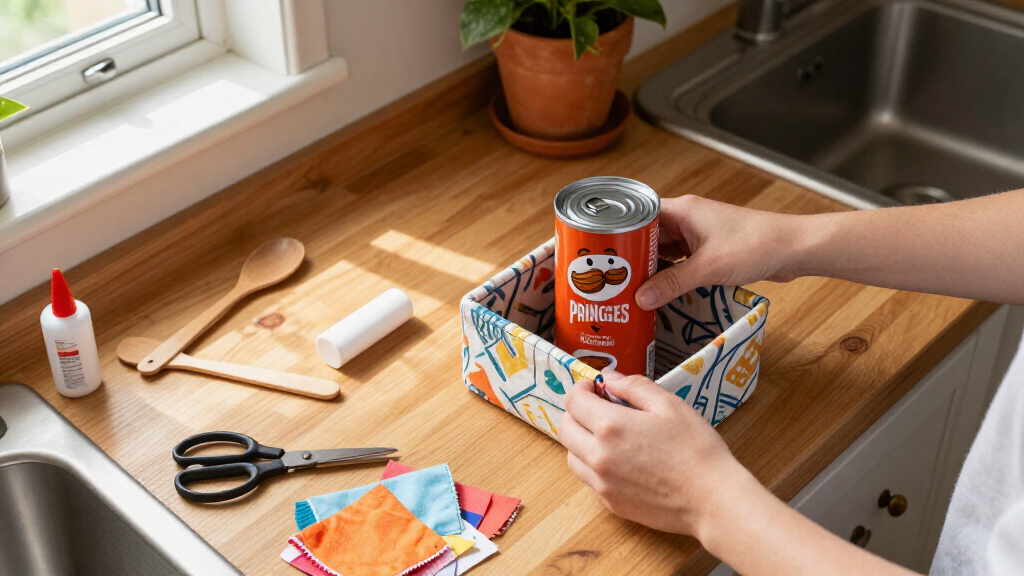
Hunker has highlighted a DIY from Atix Home that turns an empty Pringles can into a countertop container for small items such as hair ties, rubber bands or bobby pins. The project repurposes the packaging with paint, a knob attached to the lid and a decorative label, offering readers a simple alternative to buying a small storage canister.

Get furniture and decor delivered free with Prime
- Fast, free delivery on millions of items
- Prime Video, Amazon Music and more included
- Member-only deals all year
The steps described in Hunker begin with cleaning the can and removing crumbs. The container and its lid are then painted in a color chosen to suit the room. After the first coat dries, Atix Home uses a small sponge to dab on additional paint around the can’s perimeter, creating a textured finish.
For the final touches, the DIY attaches a small knob to the lid with a glue gun and adds a decorative adhesive label to the side. The label can identify what is stored inside. Hunker describes the finished example as a bathroom canister styled with a wooden tray, towel and faux plant.
The report lists a cleaning product or damp cloth, paint, a brush, a sponge, a glue gun, a knob and an adhesive label among the materials. It mentions that the project can avoid the cost of store-bought canisters, but provides no receipts, itemized project budget or independent price comparison.
A Second Use for Snack Packaging
The idea addresses a familiar household problem: small accessories are easy to misplace when they lack a designated storage spot. Reusing a container already on hand may give these items a visible home while keeping the packaging out of the trash for longer. The practical appeal is the combination of reuse and organization, rather than a demonstrated financial saving.
For readers deciding whether to try it, the project also offers a way to customize a container to match a bathroom or other room. Hunker presents the finished canister as decorative as well as functional. That is an example from the report, not evidence that every version will suit every surface or withstand regular use.
Products Worth Considering

Dyson V15 Detect Cordless Stick Vacuum

Samsung 65-Inch M70H Series 4K Mini LED Smart TV (2026)

LG 55-Inch QNED73B Mini LED 4K Smart TV (2026)
As an affiliate, we earn on qualifying purchases.
How the Canister Gets Its Finish
The Hunker article frames the project as an alternative to buying countertop containers for small household items. It cites canisters priced around $20 each and sets costing roughly $50 to $60, but does not identify specific products, retailers, locations or the date those prices were checked. Those figures should be treated as the report’s examples, not a current market survey.
Atix Home’s example uses a painted finish and a knob-topped lid to make the original food container resemble home décor. The source does not report formal testing of the materials or provide a measured estimate for how long the project takes. It also does not establish that the finished container is suitable for food storage; the described use is for small household accessories.
““You know those containers we all look for and that are very expensive? You can make them by recycling Pringles cans.””
— Atix Home, in the caption accompanying its TikTok video
Costs and Durability Are Unverified
The source does not state when Atix Home posted the video or when Hunker published its report. It also does not give a project total, compare the cost of materials with named retail products, or verify the cited canister prices against current listings. The amount saved, if any, will depend on supplies a person already owns and what they need to buy.
There is no reported information about how well the paint or knob holds up with repeated handling, how the can should be cleaned after decorating, or whether the materials are appropriate for particular contents. The example is described as a bathroom organizer, but the report does not establish that the finished canister is waterproof or intended for food contact.
Choose a Use Before Decorating
Readers who want to try the project can first decide what they plan to store, then clean and dry the can before painting it. The report’s sequence is to paint the container and lid, let the initial coat dry, add the sponged texture, and attach the knob and label. Anyone following that approach will need to check that the knob is secured and that the container suits its intended household use.
Atix Home’s example is presented as an individual DIY, not a product launch or a tested storage system. The source provides no announced follow-up, performance review or additional measurements, so the next practical step is for readers to assess the result for themselves and use appropriate craft products according to their labels.
Key Questions
What does the Pringles-can DIY make?
It turns an empty can into a decorated container for small household items, such as hair ties, bobby pins or rubber bands.
What materials does the project use?
Hunker lists a cleaning solution or damp cloth, paint, a brush, a small sponge, a glue gun, a knob and a decorative adhesive label.
Does the project prove that making a canister is cheaper?
No. Hunker cites example prices for store-bought containers but gives no itemized DIY cost or current product comparison. Savings depend on the materials a person already has.
Is the finished canister suitable for food?
The report describes it as storage for small household accessories and does not say that the painted, decorated container is suitable for food.
Source: rss