When choosing between matte and glossy finishes for your home, consider how you want the space to look and function. Matte finishes are ideal for soft, muted aesthetics, hiding imperfections and reducing glare, perfect for bedrooms or living rooms. Glossy finishes add vibrancy, reflect light, and are easier to clean, making them great for kitchens and bathrooms. Understanding when each works best helps you create a balanced and stylish environment—if you want to explore more, keep going.
Key Takeaways
- Use matte finishes in bedrooms or ceilings to reduce glare and create a soft, cozy atmosphere.
- Choose glossy finishes for kitchens and bathrooms to enhance cleanliness and reflect light for a brighter space.
- Opt for matte surfaces to hide imperfections and fingerprints, minimizing maintenance.
- Select glossy finishes to add vibrancy, sharpness, and a modern look to furniture and accent walls.
- Match the finish to your desired aesthetic: matte for subdued, tactile elegance; glossy for sleek, lively designs.
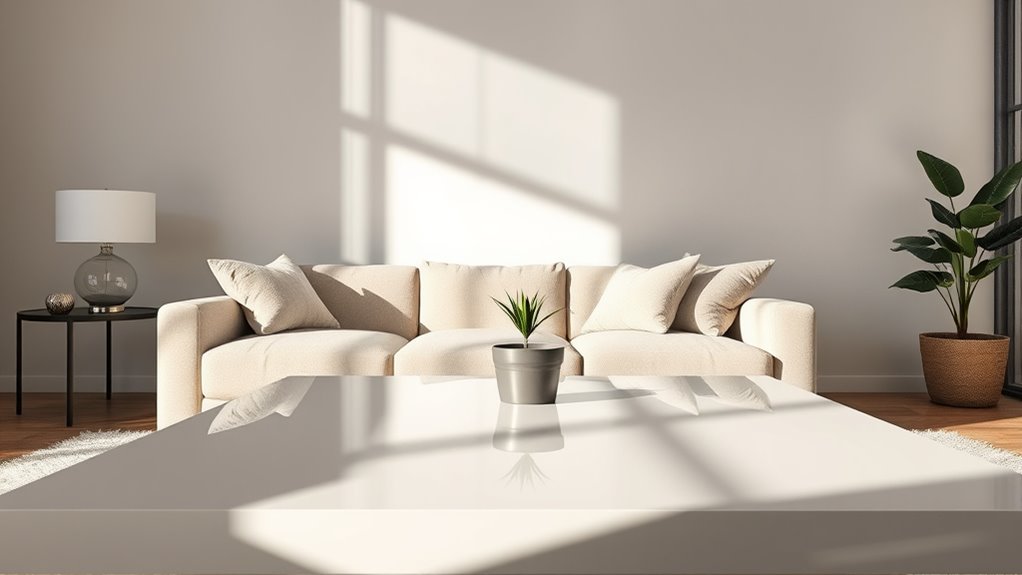
When choosing between matte and glossy finishes, understanding their differences can help you select the best option for your project. The decision often hinges on how each finish affects the room’s overall look and feel, especially in terms of textural impact and light reflection. Matte finishes have a velvety surface that minimizes glare, creating a soft, muted appearance. They absorb light rather than reflect it, which means surfaces with matte finishes don’t showcase fingerprints, smudges, or scratches as readily. This quality makes matte ideal for areas where you want a subtle, understated aesthetic or where surface imperfections might be more visible with a glossy finish.
On the other hand, glossy finishes are known for their high light reflection, producing a shiny, polished look that instantly adds vibrancy and a sense of sophistication to a space. Their reflective quality accentuates color and detail, making surfaces look more vivid and lively. This enhanced light reflection also helps brighten rooms, especially those with limited natural light, giving them an airy, open feel. However, the same reflective surface can highlight imperfections and fingerprints, which means you’ll need to be more diligent in cleaning and maintenance.
When considering textural impact, matte finishes tend to lend a more subdued, tactile quality to walls, furniture, or fixtures. They absorb light, which softens shadows and creates a cozy, intimate atmosphere. Glossy finishes, in contrast, produce a sleek and smooth surface that can elevate modern or contemporary designs. They reflect light sharply, emphasizing sharp edges and giving surfaces a more dimensional appearance. If you want a surface that catches the eye and adds depth through its shine, glossy is your best choice.
In terms of practical application, matte finishes work well in bedrooms, living rooms, or ceilings where you want to minimize glare and create a calm environment. They’re also excellent for hiding surface flaws, making them perfect for walls with imperfections. Glossy finishes excel in kitchens, bathrooms, or furniture where a polished, easy-to-clean surface is desired. Their reflective property makes cleaning easier, as dirt and grime are more visible but can be wiped away easily.
Additionally, understanding how different finishes interact with ambient lighting can help you create the desired mood in your space, as lighting effects significantly influence the perception of matte versus glossy surfaces.
Ultimately, the choice between matte and glossy depends on your desired aesthetic and how you want the space to feel. If you’re aiming for a soft, understated look with less maintenance, matte is the way to go. If you want a vibrant, eye-catching finish that adds brightness, glossy finishes will serve you better. Understanding how each finish influences light reflection and textural impact helps you make an informed decision that aligns with your interior design goals.
Frequently Asked Questions
How Do Finishes Affect Paint Durability Over Time?
Finish choices directly impact paint durability over time. A high-quality finish improves paint adhesion, helping it stick better to surfaces. Matte finishes tend to hide imperfections but may show wear faster, especially in high-traffic areas. Glossy finishes resist finish wear longer because they’re more durable and easier to clean. Your choice influences how well your paint maintains its appearance, so select finishes based on your room’s activity level and desired look.
Are Matte or Glossy Finishes Better for High-Traffic Areas?
It’s no coincidence that choosing between matte vs glossy finishes impacts your home’s durability in high-traffic areas. You’ll find that a glossy finish resists stains and is easier to clean, making it ideal for busy spaces. Matte finishes hide imperfections but may show wear faster. For high-traffic zones, a durable, washable glossy finish is your best bet, balancing style with practicality in your home’s design.
Can Finishes Be Mixed Within a Single Room?
Yes, you can mix finishes within a single room to create interesting finish combinations. Just guarantee you maintain room design harmony by balancing matte and glossy surfaces thoughtfully. For example, pair glossy accents with matte walls or furniture to add contrast without overwhelming the space. Experimenting with different finishes can enhance your room’s visual appeal, making it feel more dynamic and personalized while keeping the overall design cohesive.
Do Different Finishes Impact the Room’S Perceived Size?
Ever wondered how your room’s finishes influence its size? Different finishes do impact your visual perception, especially through lighting effects—glossy surfaces reflect more light, making spaces seem larger, while matte finishes absorb light, creating a cozier feel. By mixing finishes thoughtfully, you can enhance the room’s depth and dimension. So, choosing the right combination helps you control the ambiance and perceived size effortlessly.
How Do Finishes Influence the Ease of Cleaning Walls?
You’ll find that finishes greatly affect how easy it is to clean your walls. Glossy finishes reflect more light and are smoother, making dirt and stains easier to wipe away. Matte finishes, with their textured surface, trap dust and grime, requiring more effort to clean. When selecting a finish, consider texture considerations and how light reflection impacts maintenance, especially in high-traffic areas or spaces prone to splashes.
Conclusion
Ultimately, choosing between matte and glossy finishes is like selecting the right brushstroke for your masterpiece. Matte offers a calming, understated canvas, perfect for creating a cozy, intimate space. Glossy, on the other hand, reflects light like a mirror, adding vibrancy and energy. Think of each finish as a symbol—matte as serenity, glossy as boldness. Your home’s story unfolds with your choice, turning your space into a true reflection of your style and personality.