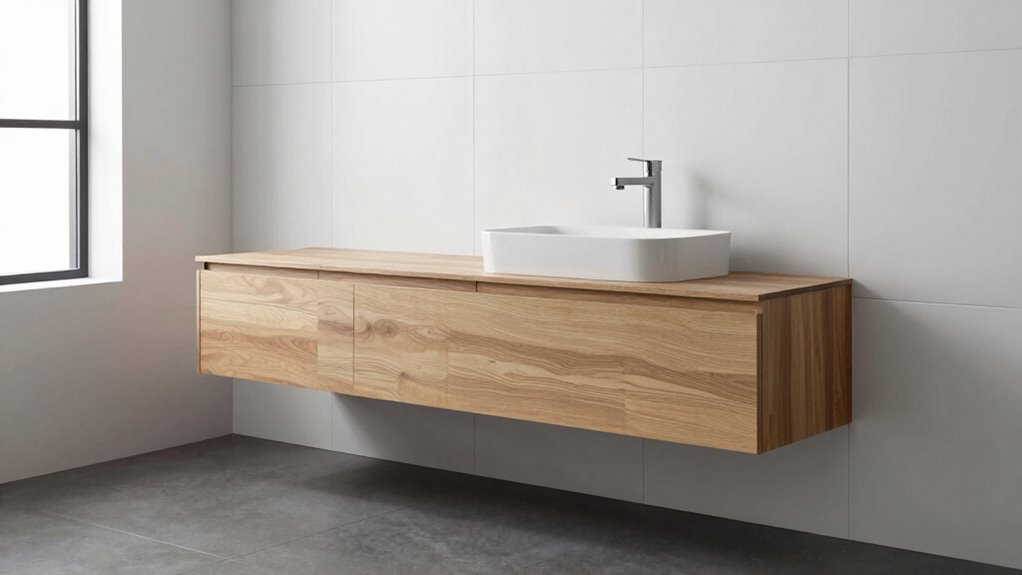

To create a more open look with a floating bathroom vanity, install it higher off the floor to enhance the sense of space. Choose light-colored materials like quartz or high-quality MDF with a sleek finish to keep the area bright and airy. Keep the space underneath clear of clutter for a clean, minimalist effect. Adding good lighting and coordinating fixtures can further amplify the modern vibe. If you keep these tips in mind, you’ll discover even more ways to maximize your bathroom’s openness.

Get furniture and decor delivered free with Prime
- Fast, free delivery on millions of items
- Prime Video, Amazon Music and more included
- Member-only deals all year
Key Takeaways
- Mount the vanity higher on the wall to maximize visible floor space and enhance the open feel.
- Choose a light-colored or reflective countertop material to brighten the area and create an airy atmosphere.
- Keep the space underneath clear of clutter for a cleaner, more spacious appearance.
- Incorporate ample, well-placed lighting to highlight the floating design and add depth.
- Select sleek, minimal hardware and fixtures to maintain a modern, unobstructed look.
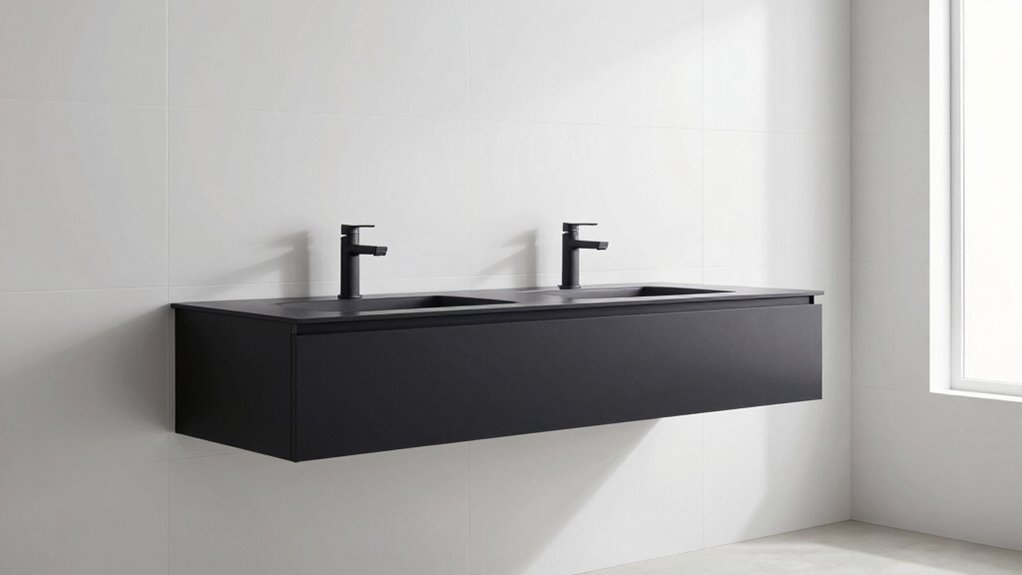
Are you wondering how to make the most of a floating bathroom vanity? If you’re aiming for a more open, airy feel in your bathroom, a floating vanity can be a game-changer. Its sleek design creates the illusion of more space by lifting the unit off the floor, making your bathroom appear larger and less cluttered. To maximize this effect, it’s essential to focus on material choices and maintenance tips that keep your vanity looking fresh and stylish.
When selecting a floating vanity, material choices matter. Opt for materials that complement your overall bathroom style while also being durable and easy to clean. Solid wood options like oak or teak bring warmth and natural beauty, but they require regular sealing to prevent water damage. If you prefer a low-maintenance option, consider high-quality MDF or plywood with a water-resistant laminate or veneer finish. For a modern, sleek look, consider materials like quartz, marble, or porcelain for the countertop, which resist stains and scratches. Metal accents, such as stainless steel or matte black fixtures, can also enhance the contemporary vibe of your floating vanity.
Choose durable, stylish materials like quartz or teak for a sleek, low-maintenance floating vanity.
Maintenance tips are just as crucial as the material selection. To keep your vanity looking pristine, wipe down surfaces regularly with a soft, damp cloth to remove soap scum, water spots, and dust. Avoid harsh chemicals that can damage finishes; instead, use gentle cleaners suitable for the material. For wooden vanities, periodically apply a protective sealant or polish to maintain their luster and resist moisture. For stone or composite countertops, follow manufacturer guidelines for cleaning and sealing to prevent staining or etching. Keep the area underneath clear of clutter to prevent dust buildup and make cleaning easier. Additionally, understanding material choices can help you select suitable mounting options and ensure a secure installation. Incorporating indoor air quality considerations, such as using low-VOC finishes or ensuring proper ventilation, can also help maintain a healthy bathroom environment. Adding proper lighting can further enhance the visual appeal and functionality of your floating vanity, making it a true focal point in your bathroom. Regularly inspecting and tightening fixtures will also extend the lifespan of your vanity, ensuring it remains both functional and attractive over time.
Products Worth Considering

Philips Hue Bridge Pro Smart Lighting Hub, 1-Pack

TCL 85-Inch QM64L QD-Mini LED 4K Smart Fire TV

Philips Hue Play Floor Lamp, RGBWWIC LED, 53 Inch, Black
As an affiliate, we earn on qualifying purchases.
Frequently Asked Questions
Can I Install a Floating Vanity in Small Bathrooms?
Yes, you can install a floating vanity in small bathrooms. It enhances bathroom aesthetics by creating an illusion of more space, making the room feel less cramped. Keep in mind, installation challenges may include ensuring proper wall support and plumbing adjustments. With careful planning and a skilled installer, a floating vanity can seamlessly improve your bathroom’s look while maximizing the limited space.
What Materials Are Best for Floating Vanities?
Ever wonder what materials make a floating vanity last and look great? Opt for solid wood or high-quality MDF with a waterproof finish to guarantee durability and design compatibility. Metal frames, like stainless steel, also work well for support and style. These materials withstand moisture, maintain their appearance over time, and seamlessly blend with your bathroom decor. Isn’t it worth choosing the best to create a sleek, lasting focal point?
How Do I Maintain a Floating Vanity?
To maintain your floating vanity, regularly clean it with gentle cleaners to prevent buildup, especially around the decorative lighting. Wipe down surfaces weekly to keep them looking fresh and avoid water damage. Check the mounting hardware periodically to guarantee stability. Use soft cloths to avoid scratches, and incorporate ambient lighting to highlight its sleek design. Proper upkeep keeps your floating vanity stylish and functional, enhancing your bathroom’s open, modern look.
Are Floating Vanities Suitable for Heavy Countertop Materials?
Floating vanities can handle heavy countertop materials if you consider weight capacity and installation challenges. You need to guarantee the wall can support the extra weight and that the mounting brackets are strong enough. Proper installation is essential to prevent damage or failure. If you’re unsure, consult a professional to assess your wall’s capacity, so your heavy countertop, like stone or concrete, stays securely in place and maintains that sleek, open look.
Can I Add Storage Under a Floating Vanity?
Imagine your bathroom’s sleek design, with hidden storage seamlessly blending in. Yes, you can add storage under a floating vanity by choosing lightweight materials like plywood or MDF. These materials keep the structure stable while offering space for hidden compartments or baskets. This setup keeps your bathroom organized without sacrificing the open, airy feel, making the most of every inch while maintaining a modern, clutter-free look.
Conclusion
A floating bathroom vanity instantly modernizes your space and creates an open, airy feel. By keeping it sleek and minimal, you make the room appear larger and more inviting. Plus, it’s easier to clean and adds a touch of sophistication. So, why not embrace this stylish upgrade and transform your bathroom into a contemporary retreat? With just a few simple steps, you can enjoy a more spacious and elegant vibe every day.