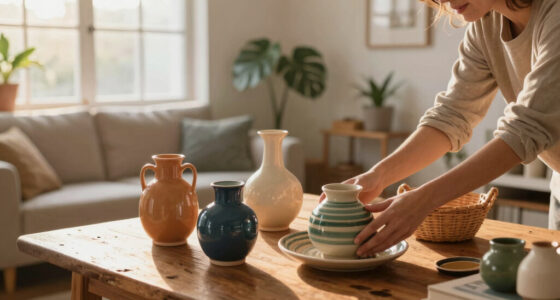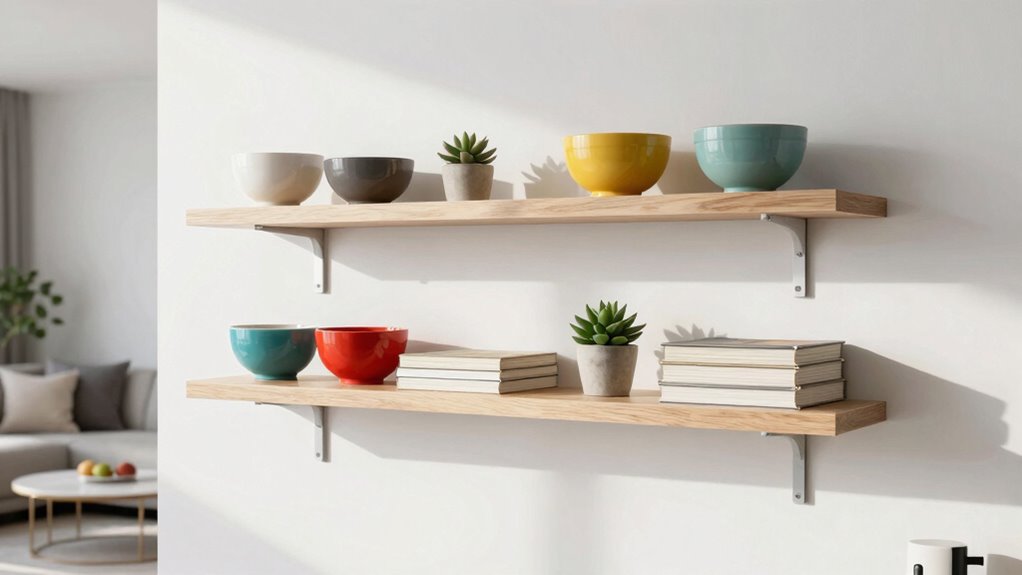

To style floating shelves in kitchens and living rooms, choose statement pieces that reflect your personality or complement your decor, like plants, vases, or baskets. Arrange items with a focus on balance, mixing heights and textures for visual interest while avoiding clutter. Incorporate layering and natural elements to add warmth, and rotate pieces seasonally to keep displays fresh. Keep practicality in mind, and you’ll create shelves that are both beautiful and functional—exploring these tips further will help you perfect your space.

Get furniture and decor delivered free with Prime
- Fast, free delivery on millions of items
- Prime Video, Amazon Music and more included
- Member-only deals all year
Key Takeaways
- Select statement accents that reflect your personality and add color or texture without cluttering shelves.
- Arrange items with balanced asymmetry, mixing heights and shapes for visual interest.
- Incorporate functional objects like jars, books, or plants to combine practicality and decor.
- Use layering, color coordination, and natural textures to create a cohesive and warm display.
- Regularly update and rotate decor to keep the shelves fresh and aligned with your evolving style.

Have you ever wondered how to turn plain floating shelves into eye-catching displays? It’s easier than you might think. The key lies in carefully selecting your decorative accents and balancing them with practical organization. When you approach styling your shelves thoughtfully, you create a space that’s both functional and visually appealing. Start by choosing a few statement pieces that reflect your personality or complement your existing decor. These could be unique vases, framed photos, or small sculptures. Incorporate decorative accents that add color, texture, or interest, but avoid cluttering the shelves. The goal is to draw attention to key pieces without overwhelming the space.
Transform plain floating shelves into stylish displays by selecting statement pieces and balancing decor with practical organization.
Next, think about the arrangement. You don’t want everything to be perfectly symmetrical, as that can look stiff and predictable. Instead, aim for a balanced asymmetry, placing larger items off-center and filling in with smaller objects around them. Mix heights and shapes to create visual movement that guides the eye across the shelves. For practical organization, don’t forget to include functional items too. For example, in a kitchen, you might display stylish jars, cookbooks, or a small basket for utensils. In a living room, add a stack of books, a decorative tray, or a small plant. These items serve a purpose and keep your space tidy while adding to the overall aesthetic. Additionally, incorporating outdoor elements like natural materials or botanical accents can bring a fresh and lively feel, even in interior spaces.
Layering is another effective technique. Place some objects directly on the shelf and lean others against the wall or behind taller pieces. This adds depth and richness to your display. Use trays or boxes to corral smaller items, making the arrangement look curated rather than cluttered. When choosing decorative accents, consider your color palette and try to include a few complementary tones that unify the display. Natural elements like plants or wooden accessories can add warmth and texture, making your shelves feel inviting. Additionally, understanding content formats can help you present your items in more engaging ways, enhancing the overall visual interest.
Adding visual hierarchy to your shelf styling will help emphasize your favorite pieces and create a more dynamic display. You might also consider varying the display techniques to keep the arrangement feeling fresh and interesting. Don’t forget to pay attention to proportion and scale to ensure your objects are balanced and harmonious. Finally, don’t be afraid to switch things up over time. Rotate your decorative accents seasonally or when you find new pieces you love. Regular updates keep your shelves fresh and engaging. Remember, styling floating shelves isn’t about perfection; it’s about creating a space that reflects your taste, balances practicality with beauty, and invites you to enjoy your home more fully. With a little thought and some intentional choices, your shelves will become a focal point that enhances your kitchen or living room effortlessly.
Products Worth Considering

Levoit Core 300S-P Smart Wi-Fi Air Purifier

Philips Hue Play Floor Lamp, RGBWWIC LED, 53 Inch, Black

eufy Security SoloCam S340 3K Dual-Lens Solar Security Camera
As an affiliate, we earn on qualifying purchases.
Frequently Asked Questions
How High Should Floating Shelves Be Installed?
You should install floating shelves about 4 to 5 feet above the floor, depending on your ceiling height and room size. This height allows you to create a balanced shelf arrangement while keeping decorative accessories within easy reach. When placing shelves, make sure they don’t interfere with windows or artwork. Use a mix of decorative accessories and functional items to enhance the shelf arrangement, making your space both stylish and practical.
What Weight Can Floating Shelves Support?
Think of your floating shelves as the backbone of your decorative accessories and shelf organization. Typically, they support between 15 to 30 pounds, depending on the material and mounting method. When you load them with books, plants, or dishes, make sure to distribute weight evenly. Proper installation guarantees your shelves can hold your favorite items securely, transforming your space into a well-organized showcase without risking a collapse.
How to Prevent Floating Shelves From Wobbling?
To prevent floating shelves from wobbling, make certain you securely anchor them into wall studs using appropriate hardware. Use sturdy shelf materials like solid wood or metal, which provide better stability. Add decorative accessories thoughtfully, avoiding overcrowding, to keep the weight evenly distributed. Double-check that brackets or supports are tight and properly installed. Regularly inspect the shelves for any looseness and tighten screws as needed to maintain stability and prevent wobbling.
Can Floating Shelves Be Used Outdoors?
Yes, you can use floating shelves outdoors, but you need to take into account outdoor durability and weather resistance. Choose materials like treated wood, metal, or weatherproof composites that withstand rain, sun, and temperature changes. Proper sealing and protective finishes help prevent rot and rust. Installing sturdy brackets and anchoring securely ensures they stay stable despite outdoor elements. With the right materials and care, floating shelves can enhance your outdoor space beautifully and durably.
What Are the Best Lighting Options for Floating Shelves?
The best lighting options for floating shelves include ambient lighting and accent lighting, which work together to create a balanced and inviting atmosphere. You can install LED strip lights underneath the shelves for a subtle glow or spotlights to highlight decorative items. Use dimmable fixtures to adjust brightness as needed. Combining these lighting types enhances both functionality and aesthetic appeal, making your shelves a focal point in your space.
Conclusion
So, the next time you’re arranging your floating shelves, remember that sometimes the best styles come from unexpected moments—like finding that perfect vintage book or a cherished photo during a tidy-up. It’s no coincidence that these personal touches make your space truly yours. Embrace the little surprises, and your shelves will not only look great but also tell your story. After all, it’s these subtle details that turn a house into a home.