

Labeling helps you organize better by creating a clear system that reduces mental clutter and makes it easier to find items quickly. It guides you to evaluate what’s truly important, which can overcome emotional attachments. Well-labeled items provide structure, making it less overwhelming to manage large volumes of data. If you want to understand how developing a labeling system can boost your organization skills and address emotional barriers, keep exploring these ideas further.
Key Takeaways
- Labeling provides clarity, making it easier for some to quickly identify and access digital items.
- It creates a structured system that supports consistent organization habits.
- For individuals with emotional attachments, labels help evaluate items’ true importance.
- Clear labels reduce decision fatigue, enabling more efficient decluttering and organization.
- The ability to reflect on labels fosters mindful choices and emotional processing.
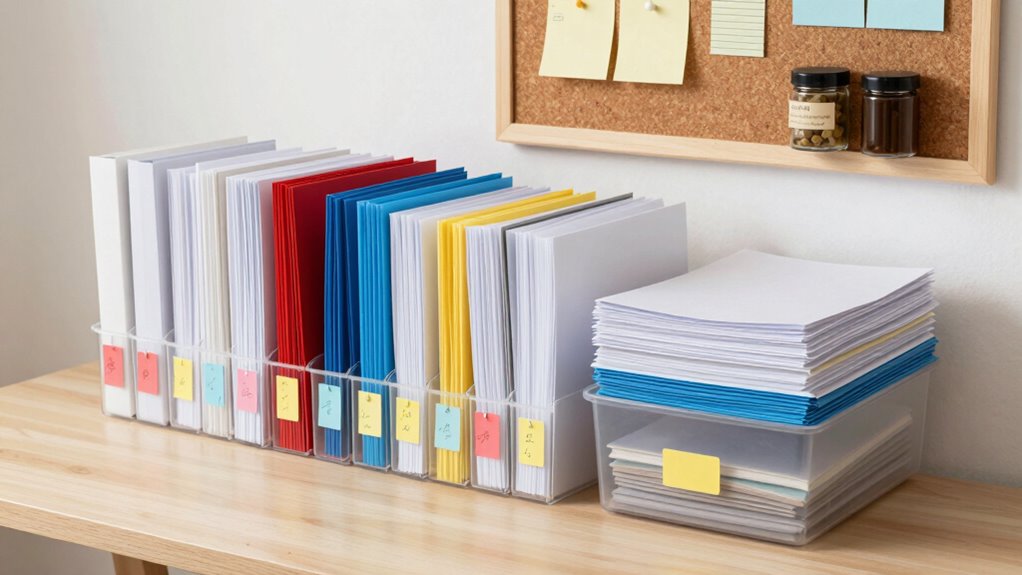
Have you ever felt overwhelmed by clutter or struggled to find what you need quickly? It’s a common experience, especially in a world filled with digital clutter. Files, photos, emails, and apps pile up so fast that it becomes hard to keep track. And as you sift through this digital chaos, you might notice that emotional attachment plays a role. You keep certain files or items because they hold sentimental value, even if they’re no longer useful. That emotional connection makes it harder to let go, and without clear organization, digital clutter just grows. That’s where labeling can make a huge difference.
When you label your files, folders, or storage spaces, you create a system that’s easier to understand and navigate. Instead of guessing what’s inside or wasting time opening multiple files, a clear label tells you exactly what to expect. For many people, this reduces frustration and saves precious time. But for others, labeling isn’t enough because of emotional attachment. You might have a folder labeled “Old Projects” or “Memories,” but still hesitate to delete or reorganize because of sentimental value. The labels act as a reminder of what’s there, but emotional attachment can still make you hesitant to fully declutter.
What makes labeling truly effective is recognizing that it’s not just about clarity—it’s about setting boundaries on what to keep and what to let go. If you’re attached to certain digital items, labeling can help you decide whether they deserve a permanent place or if they can be archived or deleted. It also encourages a mindful approach to digital clutter, helping you evaluate what truly holds significance. Developing a consistent labeling system can also foster better habits and reduce the mental fatigue associated with disorganized data. Additionally, understanding the importance of digital organization can motivate you to establish consistent labeling practices that enhance both efficiency and emotional well-being. Incorporating accessible tools designed for digital organization can further support maintaining a structured system effortlessly. Establishing a structured system can also reduce the mental load associated with managing large amounts of data, making it easier to stay organized in the long run. For others, it’s a step toward understanding why they hold onto certain things, helping them process feelings associated with emotional attachment.
Ultimately, labeling acts as a bridge between practicality and emotion. It helps you organize better by giving structure to your digital clutter, but it also prompts reflection on what you truly need and what’s worth holding onto. Whether you’re naturally organized or tend to struggle with digital clutter, effective labeling can be a game-changer. It’s not just about tidiness—it’s about creating a system that respects your emotional attachments while making your daily life smoother. When you approach organization with clear labels, you empower yourself to manage digital clutter more intentionally and with greater peace of mind.

2.1 in Electronic Shelf Label, Digital Label Holders, Blank Labels, Business Signs with Android and iOS APP One Stop Solution System for Retail, Storage, Black+White+Red e Ink Screen,1pc (BLE)
APP ONE STOP OPERATION SYSTEM ONLY – All operation of the electronic bluetooth tag can be finished on…
As an affiliate, we earn on qualifying purchases.
As an affiliate, we earn on qualifying purchases.
Frequently Asked Questions
How Does Labeling Affect Memory Retention?
Labeling improves your memory retention by creating stronger cognitive associations, making information easier to recall. When you use mnemonic devices or specific labels, you link new data to familiar concepts, boosting your ability to remember. This process helps your brain organize information more effectively, so you’re more likely to retrieve it later. By actively labeling items, you enhance your overall memory, making learning more efficient and less overwhelming.
Can Too Many Labels Hinder Organization?
Imagine a cluttered desk overwhelmed with sticky notes, each labeled with too many details. Overlabeling causes confusion, making it harder to find what you need. While simplified categorization helps, too many labels can backfire, drowning you in details and reducing clarity. Ultimately, a balance is key—clear, strategic labels guide your organization without overwhelming your mind or creating chaos.
What Types of Labels Are Most Effective?
The most effective labels use clear visual cues and emotional associations. You should opt for labels with distinct colors or symbols to aid visual categorization, making items quickly recognizable. Incorporate emotional associations, like positive words or images, to motivate you and create a stronger mental link. This combination helps you stay organized because it appeals to both your visual perception and emotional motivation, making your system more intuitive and memorable.
Does Age Influence the Effectiveness of Labeling?
Age can definitely influence how effective labeling is for you, as perception and developmental stages shape your understanding. When you’re young, labels help create clarity and a sense of order, but as you grow, you might see labels as limiting. Recognizing your stage of development allows you to tailor labels to boost organization without feeling boxed in. In the end, it’s about finding what works best for your evolving needs.
How Do Cultural Differences Impact Labeling Strategies?
Cultural differences profoundly impact your labeling strategies, especially through cultural communication and hierarchy. In some cultures, direct labeling reflects respect and clarity, while others prefer subtle or indirect cues to maintain harmony. Understanding cultural hierarchy helps you tailor labels that resonate, avoiding offense or confusion. By respecting these differences, your labels become more effective, fostering better organization and smoother interactions across diverse cultural contexts.

Nelko Label Maker Machine with Tape, P21 Bluetooth Label Printer, Wireless Mini Label Makers with Multiple Templates for School Office Home, White
2026 New Version: Compared with traditional label makers, Nelko P21 label maker has half the weight and size,…
As an affiliate, we earn on qualifying purchases.
As an affiliate, we earn on qualifying purchases.
Conclusion
By labeling items and tasks, you can streamline your organization and reduce stress. It’s a simple yet powerful tool that works differently for everyone—some find it essential, while others may not. Notably, a study shows that people who label their belongings are 30% more likely to feel in control of their space. So, try labeling your stuff—you might just discover a new way to stay organized and boost your productivity.

Pack of 4 Expandable File Folder,10"x5.5" Portable Accordion Document Pocket, Office Desk Organizer-13 Pockets,for Receipts, Coupons and Tickets, Check Size Water Resistant-Assorted Color
Value pack,Top Quality , Thick : comes with indexed labels and Bungee Closure. Made of durable poly material,…
As an affiliate, we earn on qualifying purchases.
As an affiliate, we earn on qualifying purchases.

The Sentimental Person's Guide to Decluttering
As an affiliate, we earn on qualifying purchases.
As an affiliate, we earn on qualifying purchases.