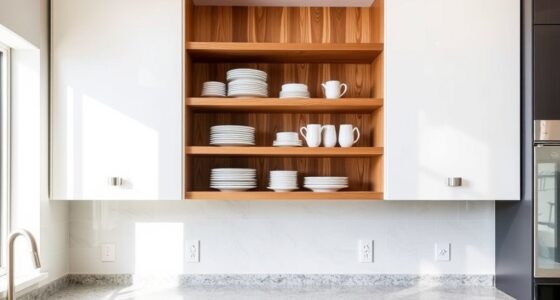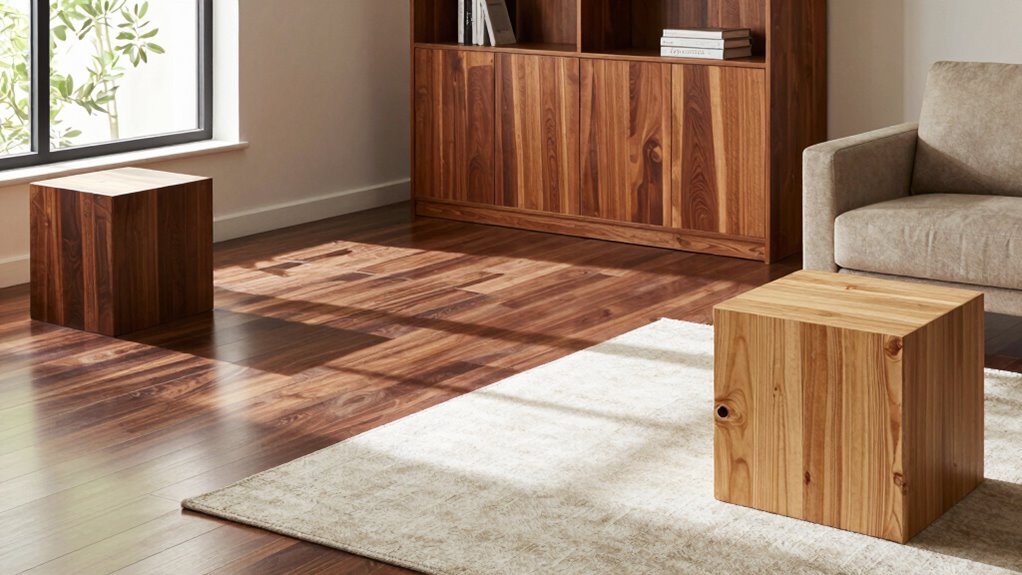

Before mixing wood tones in one space, pay attention to undertones—warm, golden, or cool shades—to create harmony. Think about contrast; pairing dark and light woods can add interest if balanced carefully. Consider finishes and textures, as they influence how tones blend together. Use design principles to guide your choices and incorporate textiles or art to unify different woods. If you continue exploring, you’ll discover more ways to achieve a cohesive and stylish look.
Key Takeaways
- Consider the undertones of each wood (warm vs. cool) to create a harmonious mix.
- Use contrasting wood tones (dark with light) thoughtfully for visual interest and balance.
- Incorporate textiles, rugs, or art to unify different wood finishes and enhance cohesion.
- Maintain consistent finishes and textures to support a cohesive and refined look.
- Apply design principles by balancing color, undertones, and material choices for a unified space.
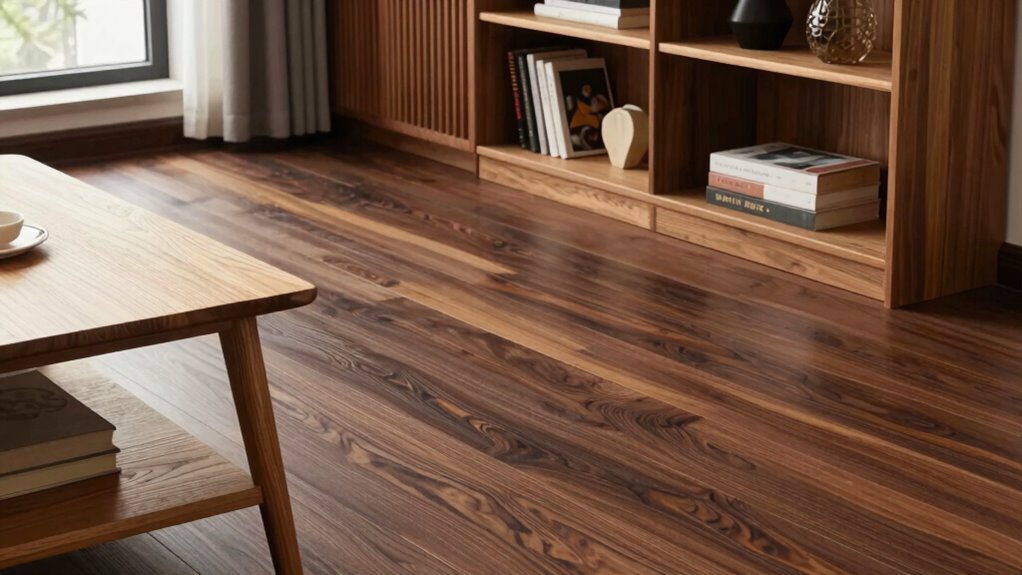
Mixing different wood tones in a single space can add warmth and visual interest, but it also requires careful planning to avoid a cluttered or mismatched look. When you’re considering combining various wood finishes, pay close attention to color coordination. Think about the undertones of each wood—whether they lean toward warm, golden hues or cooler, ash-like shades—and aim for a harmonious balance. If your floors are a rich, dark walnut, for example, lighter woods like oak or maple can create a pleasing contrast without clashing. Conversely, if your floors are light, introducing darker furniture pieces can anchor the room and create depth. The key is to find a common thread, like similar undertones or a shared warmth, so different woods complement each other rather than compete.
Furniture contrast plays an essential role in achieving an appealing look when mixing wood tones. You want to create visual layers that add interest but don’t overwhelm the space. For instance, pairing a sleek, dark wood dining table with lighter chairs can produce a striking contrast that highlights the table’s richness while keeping the overall look balanced. Similarly, mixing a medium-tone wood coffee table with darker side tables can add dimension without feeling disjointed. Remember, contrast doesn’t mean chaos; it means thoughtfully balancing different tones to generate visual harmony. You might also consider introducing other materials or colors—like textiles, rugs, or wall art—that tie the different wood tones together, creating a cohesive aesthetic. Paying attention to color coordination can help ensure a unified look even amid diverse wood choices. Additionally, understanding wood undertones can help you select complementary pieces that enhance the overall harmony. Incorporating an awareness of design principles can further guide your selections for a balanced and cohesive space. To achieve a truly harmonious environment, it’s also beneficial to consider the finish and texture of your wood pieces, as they can influence how the tones are perceived and how well they blend together.

Furniture Clinic Wood Stain | Dark Oak | Water Based | Fast Drying, Low Odor, & Non-Toxic | for Indoor & Outdoor Furniture and More | Multiple Finishes | (8.5oz / 250ml)
EFFECTIVE ON ALL WOOD SURFACES and QUICK DRYING: Furniture Clinic Wood Stain is a fast drying and highly…
As an affiliate, we earn on qualifying purchases.
As an affiliate, we earn on qualifying purchases.
Frequently Asked Questions
Can Mixing Wood Tones Make a Room Feel Smaller?
Mixing wood tones can make a room feel smaller if you don’t pay attention to color coordination and texture variation. Using too many contrasting or dark wood shades can create visual clutter, shrinking the space. To avoid this, blend similar tones and incorporate texture variation to add depth without overwhelming the room. This balanced approach keeps the space feeling open and cohesive, even with multiple wood finishes.
What Are the Best Wood Tones for a Modern Look?
Imagine walking into a sleek space where modern wood accents set the tone. For a contemporary look, opt for light to medium wood tones like ash, oak, or maple, which create a bright, airy feel. To achieve wood tone harmony, combine these with darker accents like walnut or espresso for depth. These choices balance warmth with modern minimalism, making your space feel fresh, stylish, and inviting.
How Do Lighting Conditions Affect Wood Tone Mixing?
Lighting effects greatly influence how wood tones appear and blend in your space. Bright, natural light enhances contrast and highlights differences, which can disrupt tone harmony. Conversely, warm or dim lighting softens the contrast, making mixed wood tones look more cohesive. To achieve a balanced look, consider the lighting conditions and how they’ll interact with your chosen wood tones, adjusting lighting or tone choices accordingly for a harmonious environment.
Is It Better to Match Wood Tones Exactly or Contrast?
It’s better to contrast wood tones rather than match them exactly, as it creates visual interest and depth. Focus on color coordination by choosing shades that complement each other, while incorporating texture variation to add dimension. Mixing different wood tones intentionally, with thoughtful contrast, prevents your space from looking monotonous and helps each piece stand out. Trust your eye, and don’t be afraid to experiment with different combinations.
Can Different Wood Finishes Clash in the Same Space?
Think of your space as a symphony; different wood finishes can clash if they’re not in harmony. Yes, mismatched finishes can create visual discord, especially if they don’t align with your overall color coordination and furniture styles. To avoid this, choose woods with similar undertones or intentionally contrast with purpose. When done thoughtfully, mixing finishes adds depth, but haphazard combinations risk making your room feel chaotic.

ALELION Acacia Wood Napkin Holder for Table, Wooden Upright Napkin Holders for Kitchen, Standing Napkin Dispenser for Kitchen Dining Room Party Cocktail Outdoor Use
NAPKIN HOLDER FOR TABLE – Elevate your table's appearance with this stylish acacia napkin holder, suitable for kitchen…
As an affiliate, we earn on qualifying purchases.
As an affiliate, we earn on qualifying purchases.
Conclusion
Mixing wood tones can add warmth and character to your space, but it’s essential to do so thoughtfully. A well-balanced mix creates a sophisticated, inviting atmosphere, while mismatched tones can feel chaotic. Curiously, studies show that homes with varied wood finishes tend to be perceived as more stylish and lived-in, boosting overall appeal. So, trust your eye, experiment confidently, and embrace the rich diversity that different wood tones can bring to your design.
wood undertone color coordination
As an affiliate, we earn on qualifying purchases.
As an affiliate, we earn on qualifying purchases.
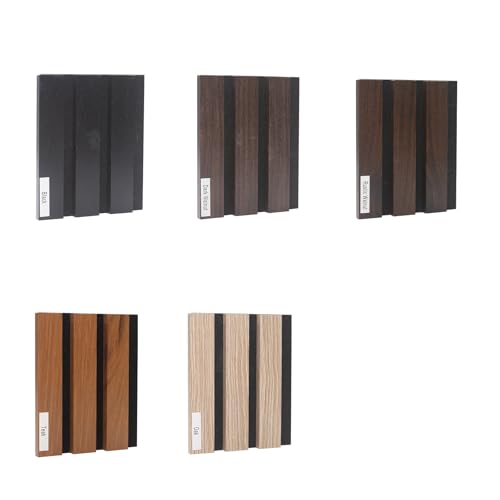
NeatiEase Wood Panels for Wall Color Samples Pack, Soundproof Wood Slat Wall Panel for Interior Wall Decor Noise Cancelling
Modern and Elegant Design – The wood slat wall panels have been carefully designed to effortlessly transform any…
As an affiliate, we earn on qualifying purchases.
As an affiliate, we earn on qualifying purchases.